HardwareFor this job
By the Empty Vapes trade desk. Published 2026-08-21, last updated 2026-08-21. How we write these.
Stock is cash converted into a bet on a forecast. Too little stops the line; too much freezes money in a form that is hard to reverse. The question is not how much is right in general, it is which of your own numbers set the answer.
Stock buys exactly one thing: the ability to fill an order today instead of in eight weeks. Everything else is cost. Cash locked up, warehouse space, insurance, handling, damage, obsolescence when the design changes, and write-off when a rule moves under a printed carton.
So a larger buffer is not caution, it is a purchase: what an out-of-stock week costs you against the holding cost of the units that would have prevented it. A stockout where the retailer buys a competitor once and returns next month is a different number from one that loses a listing permanently.
Five figures, none of which come from a guide. They come from your own records and from a direct question to your supplier.
| Number | What it is | Where you get it | What goes wrong if you guess it |
|---|---|---|---|
| Demand rate | Units sold per week, per SKU, not across the range | Your sales history. For a launch, committed orders, not a hope | The plan is scaled from this, so an error multiplies through every other line |
| Replenishment lead time | Order placed to goods on your shelf, including approval, freight and clearance | Your supplier, in writing, stage by stage | You reorder too late. Quoted production time is only the middle of the chain |
| Order minimum | The smallest quantity you can buy for that variant and decoration | Your supplier, per variant, not per purchase order | You plan an order the supplier will not accept, then take a larger one unbudgeted |
| Demand variability | How wrong your forecast usually is, in both directions | Your history. The spread of past weeks, not the average | Safety stock becomes a number someone liked rather than one that covers anything |
| Cost of being out | What a week without stock costs in margin, listings and credibility | Your commercial judgement, written down before you need it | Every buffer argument becomes opinion, with nothing to compare |
The second one is where most plans fail. A quoted production time is not a lead time. Made-to-order runs take around six weeks after sign-off, but sign-off sits behind quoting, artwork, proofing and sample approval, and freight and customs sit in front of delivery. The lead time guide breaks the chain into stages and the Incoterms guide covers who owns which part.
A reorder point is a quantity, not a date. When stock on hand falls to it, you order. Calendar reviews fail because demand does not consult the calendar; a threshold does not.
Every figure below is invented, round and used only to show the arithmetic. These are not market figures and not a recommendation. Replace them with your own.
| Line | Value | Where it came from |
|---|---|---|
| Demand rate | 400 units per week | Placeholder |
| Full replenishment lead time | 8 weeks | Placeholder |
| Buffer chosen | 4 weeks of cover | Placeholder |
| Supplier order minimum | 2,000 units | Placeholder |
| Pipeline cover | 3,200 units | 400 x 8 |
| Safety stock | 1,600 units | 400 x 4 |
| Reorder point | 4,800 units | 3,200 + 1,600 |
| Order quantity chosen | 4,000 units | Ten weeks of cover, above the minimum |
| Average stock held | 3,600 units | 1,600 safety + half the order |
Read two things off that table rather than the reorder point. The buffer, at 1,600 units, is under half the stock carried, so the order quantity does most of the work and the minimum set it. And 3,600 units is the figure to multiply by your unit cost to see what the policy costs. Put it next to the per-unit lines in the unit economics guide.
The most useful move is not a better quantity, it is a better form to hold it in. Hold inventory at the last point where it can still become several different things.
For hardware that usually means unprinted devices with the branded element applied later, or one printed carton with the variable information on a small label. You lose some design freedom and gain the ability to be wrong about which variant sells without paying for it in scrap. The print and colour matching guide covers which decoration steps can be deferred. The same applies to the range: each SKU is a separate buffer, so three variants carry three chances to be wrong. Our first SKU guide covers narrowing that down.
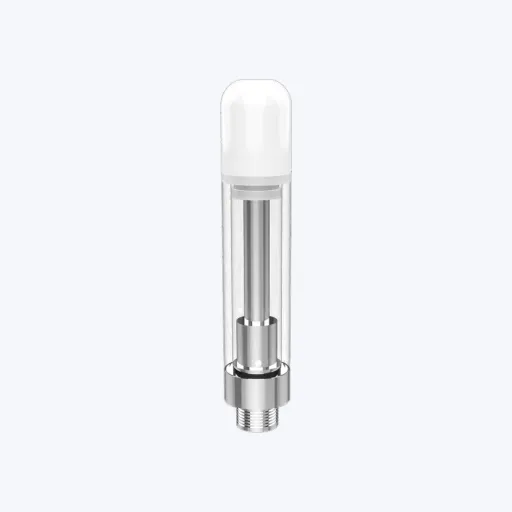
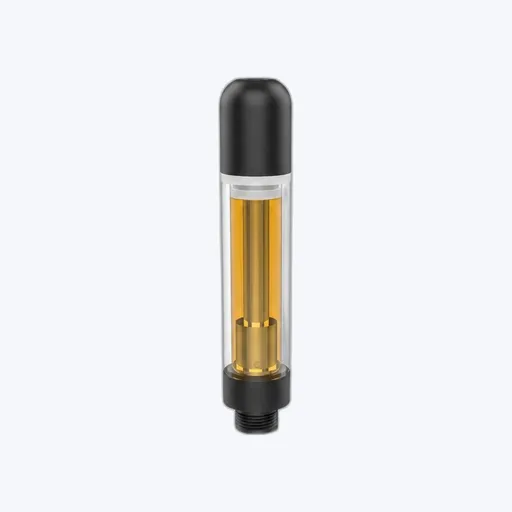
Producer obligations run on their own clock, not your stock clock. Registration under WEEE and under Regulation (EU) 2023/1542 on batteries, and the responsible person under GPSR, must be in place before goods reach an end user, so start them at order. See compliance, or browse 510 cartridges and 510 batteries.
Trade guidance for B2B buyers, not legal advice. We sell empty hardware only; you are responsible for the fill and for finished-product compliance in your market.
Browse the range in the shop, full specs, trade pricing after a free account, and CE and compliance docs on request.
Browse the catalogueGive us the hardware, the quantity and the market. We reply with a price, a specification and a lead time. A request for a quote is not an order.
Empty hardware only. No cannabinoids and no e-liquid. We sell to companies only.