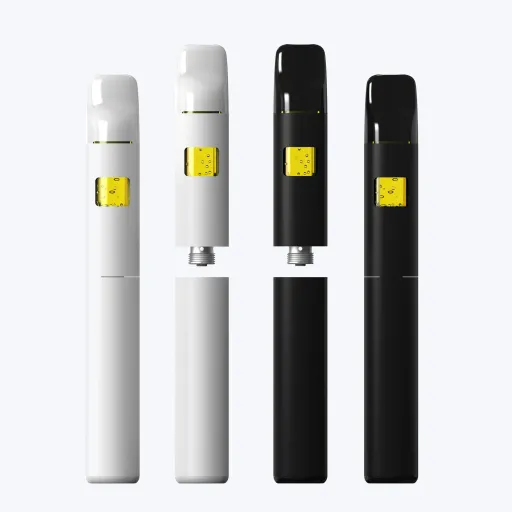
HardwareFor this job
By the Empty Vapes trade desk. Published 2026-08-21, last updated 2026-08-21. How we write these.
Most first runs are priced off the hardware quote and nothing else. The model below has the other lines in it, built on placeholder figures you replace with your own.
Every line in a vape brand's cost stack is one of two things, and mixing them is what produces a wrong number.
Per-unit costs scale with volume. Hardware, packaging, the fill, filling labour, freight, storage and the reject allowance all cost roughly N times as much for N units. One-off costs do not scale. Artwork, print setup, lab testing, samples and market registrations cost about the same for 500 units as for 10,000. They still land on the unit cost, but only after you divide them by the run.
The consequence is that unit cost is not a property of the product. It is a property of the product and the run size, and quoting one without the other is meaningless. That is also why minimum order quantities exist at all, which is covered in MOQ explained.
Read this before the table. Every figure in the placeholder column is invented. The numbers were chosen because they are round and the arithmetic is easy to follow. They are not Empty Vapes prices, not quotes, and not market rates, and no line should be used as a benchmark. Replace each one with a figure from your own hardware supplier, filler, freight forwarder, printer and compliance adviser. The point of the table is the list of rows, not the values in them.
The example assumes a run of 2,000 units of a single branded SKU in one market.
| Cost line | Type | Who quotes it | Placeholder (not a price) |
|---|---|---|---|
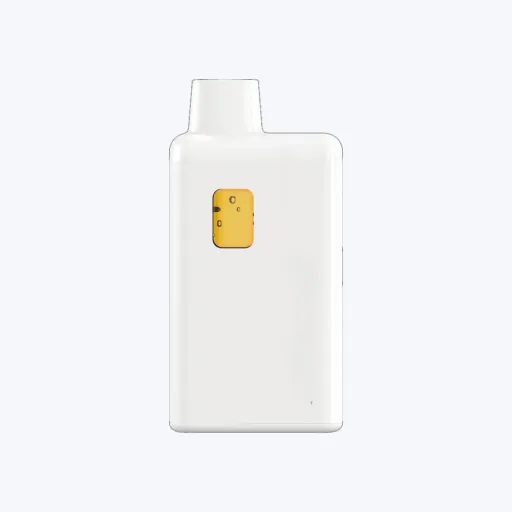
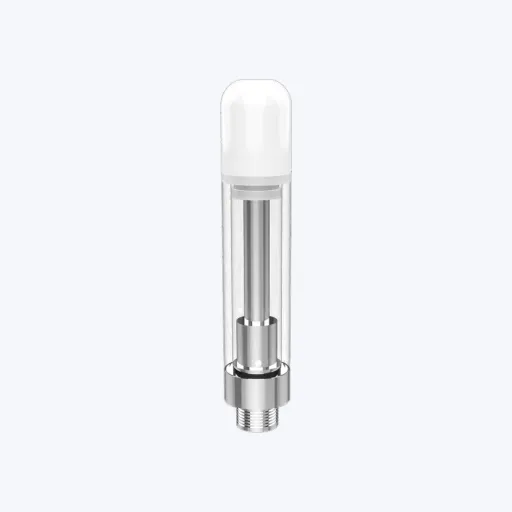
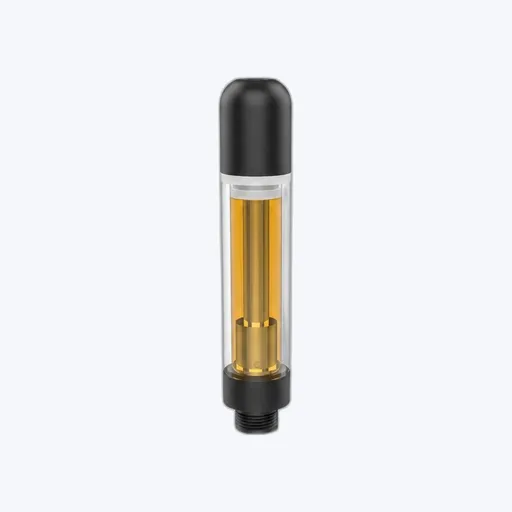
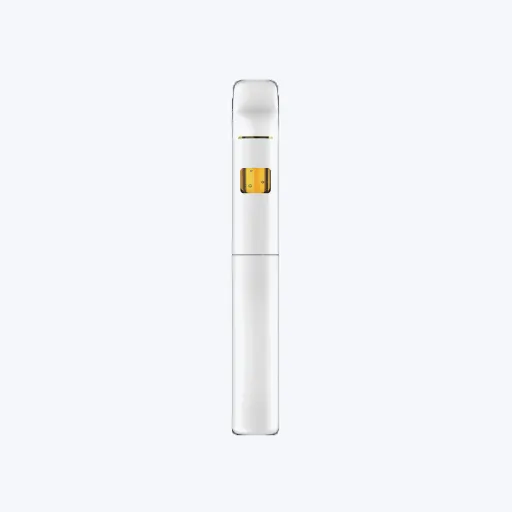
| Empty hardware | Per unit | Hardware supplier | 1.00 |
| Printed retail packaging | Per unit | Printer or hardware supplier | 0.30 |
| Child-resistant outer, where required | Per unit | Packaging supplier | 0.20 |
| Inbound freight and import duty | Per unit | Freight forwarder and customs broker | 0.10 |
| The fill | Per unit | Your extractor or formulator | 2.00 |
| Filling, capping and cure labour | Per unit | Your filler or your own line | 0.25 |
| Reject, shrink and QC allowance | Per unit | You, from your own inspection data | 0.15 |
| Warehousing, pick and pack | Per unit | Your 3PL or your own site | 0.10 |
| Brand, artwork and dielines | One-off | Designer | 1,000 |
| Print plates, laser or colour setup | One-off | Printer or hardware supplier | 400 |
| Samples and first-article approval | One-off | Hardware supplier | 200 |
| Finished-product lab testing | One-off | Test laboratory | 600 |
| Market registrations, per market | One-off, per market | Compliance adviser or scheme | 1,000 |
Using the placeholders exactly as written, the per-unit lines add to 4.10. The one-off lines add to 3,200, which across a 2,000 unit run is 1.60 per unit. Total cost to have a saleable unit on the shelf is therefore 5.70.
Two observations that hold whatever numbers you substitute. First, the hardware is rarely the biggest line. In this example it is under a fifth of the total, and the fill is the largest single input. Buyers who negotiate hard on hardware and casually on the fill are optimising the wrong variable. Second, the one-off share, at 1.60, is larger than the hardware itself. Leave the one-off block out of the model, as most first-time brands do, and you will underprice by roughly 28 per cent in this example.
From cost to shelf, add your own margin and your channel's. If you sell wholesale at twice cost and your retailer doubles again, 5.70 becomes 11.40 to the retailer and 22.80 on the shelf. Whether that shelf price is competitive in your market is the question the model is there to answer before you commit to a run, not after.
Hold the placeholders constant and change only the run size. The per-unit block stays at 4.10. The one-off block of 3,200 gets divided differently.
Between the smallest and largest run the unit cost falls by more than half, and not one of the per-unit lines changed. This is the trade a first order actually makes: a small run is expensive per unit and cheap to be wrong about; a large run is the reverse. Low minimums from around 500 units and no container requirement mean you can choose to be wrong cheaply, and that option has a real price attached, visible in the first row above.
Lead time belongs in the same decision. Made-to-order branded hardware runs at around six weeks, so cash leaves the business roughly two months before the first unit can be invoiced, and longer once filling, testing and distribution are added. Model the cash cycle alongside the margin. A run that is profitable on paper and unfundable in practice is still a failure. See vape hardware lead times.
Treat the table as a floor rather than a complete picture. Costs that commonly sit outside it include duty and VAT treatment specific to your route, covered in import duty on vape hardware; the cost of holding stock that does not sell; returns and warranty replacement; and the second and third market registrations, since WEEE and battery EPR registration is national and repeats in every market you sell into. Being established somewhere in the EU is not the same as being registered in each of them, so budget registration per market rather than once. What each framework requires is set out on the compliance pillar.
Build the model before you choose the SKU rather than after, and start from empty 510 cartridges and packaging quotes for the same target volume so the two lines are comparable. There is a wider sequencing checklist in the EU launch checklist.
Trade guidance for B2B buyers, not legal advice. We sell empty hardware only; you are responsible for the fill and for finished-product compliance in your market.
Browse the range in the shop, full specs, trade pricing after a free account, and CE and compliance docs on request.
Browse the catalogueGive us the hardware, the quantity and the market. We reply with a price, a specification and a lead time. A request for a quote is not an order.
Empty hardware only. No cannabinoids and no e-liquid. We sell to companies only.