HardwareFor this job
By the Empty Vapes trade desk. Published 2026-08-21, last updated 2026-08-21. How we write these.
This page describes the mechanism and the roles. It gives no rates and no commodity codes, because those depend on your goods, your origin and your member state, and belong with a customs broker.
Three separate charges land on an import, and they are often collapsed into one number on a forwarder's invoice.
Customs duty. A percentage applied to the customs value of the goods. The percentage is not a property of vape hardware in general. It follows from how the item is classified and where it originates, and items in one shipment can carry different rates. Confirm the rate with your customs broker.
Import VAT. Charged by the member state where the goods are released into free circulation, at that state's rate, on a base including the customs value plus the duty. The common EU framework is Council Directive 2006/112/EC, but the rate and the accounting mechanism are national. For a VAT-registered business it is normally a cashflow cost rather than a permanent one. Ask your accountant which scheme applies where you import, since it changes how much cash you need at clearance.
Charges for the work itself. Clearance fees, handling, storage if the consignment is held, and any disbursement fee where a third party advances the duty for you. These are commercial charges, not taxes, and they are negotiable in a way the other two are not.
Two further possibilities have to be checked rather than assumed. Trade defence measures such as anti-dumping duties apply to particular goods from particular origins. And lithium cells carry transport requirements separate from duty, covered in UN 38.3 and battery shipping.
Most import problems are role problems: someone assumed a party in the chain was handling something it never had.
| Party | What they do | What you cannot delegate to them |
|---|---|---|
| Seller or exporter | Produces the goods, issues the invoice and packing list, handles export formalities at dispatch | The accuracy of the description your declaration is built from |
| Freight forwarder | Books and coordinates the movement, arranges documents, often subcontracts clearance | Deciding your commodity code. A forwarder repeats what it is given |
| Carrier | Moves the consignment under its own conditions of carriage | Anything about tax. An advance of duty is a credit arrangement, not advice |
| Customs representative or broker | Lodges the declaration, applies classification and origin, advises on procedures and reliefs | Ownership of the facts. They declare what your documents tell them |
| Customs authority | Accepts or challenges the declaration, checks value and origin, releases or detains the goods | Nothing. It is the party that audits the rest |
| Tax authority in your member state | Administers import VAT and whatever deferment or postponed accounting scheme applies locally | Registration and returns, which stay with you and your accountant |
| Importer of record, normally you | Holds the EORI number, is named as declarant, pays the charges and keeps the records | This is where unpaid duty, a wrong code and a missing document come back to |
Two mechanics behind that table matter. Customs representation: the Union Customs Code, Regulation (EU) No 952/2013, provides for a representative acting in your name and for one acting in its own name, and the liability differs between them. Ask your broker in writing which capacity it acts in. Incoterms 2020, published by the International Chamber of Commerce, settles who arranges and pays for carriage and formalities, but it does not override customs law on who may act as declarant.
Duty is a percentage of a value, so the value is half the answer. Under the Union Customs Code the primary basis is the transaction value, the price actually paid or payable for the goods, with defined adjustments. Transport and insurance to the point at which the goods enter the customs territory are part of that picture. Other costs are excluded when separately shown and when they meet the conditions in the legislation.
Two consequences follow. Your freight terms move your duty, because a price containing carriage into the EU is a different starting point from an ex-works price with freight billed separately. And tooling contributions, moulds supplied free of charge, royalties and later price adjustments all need raising with your broker first.
Classification assigns a commodity code to each item, and the code drives the duty rate and any measure attached to those goods. Vape hardware is not one thing here: an empty cartridge, a battery, a complete device and printed packaging are separate articles and need not share a code. Get codes confirmed against the actual goods, in writing, before the shipment leaves, because a reclassification at the border holds the consignment. Where the amounts justify it, ask your broker about a binding tariff decision, which agrees classification with the authority in advance.
Origin is not where the goods were shipped from. It is where they were produced or last substantially transformed, under rules in the legislation and in any applicable trade agreement. Preferential rates exist only where an agreement covers the origin and the goods, and only where you hold the proof it requires. A supplier stating an origin on an invoice is not proof. Ask what document supports it, and confirm the whole position with a broker before you commit to a shipment. The comparison between importing yourself and buying inside the EU is in importing vape hardware from China or the EU.
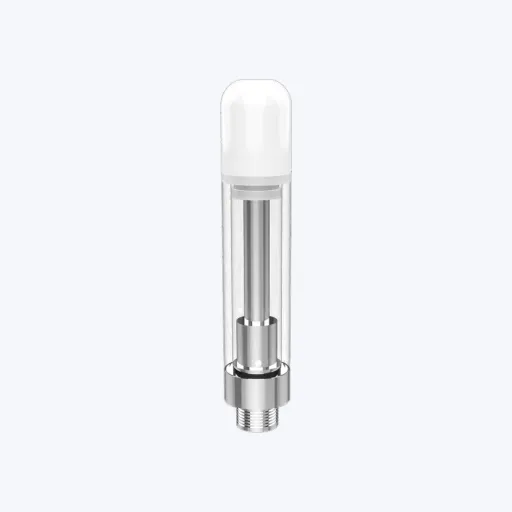
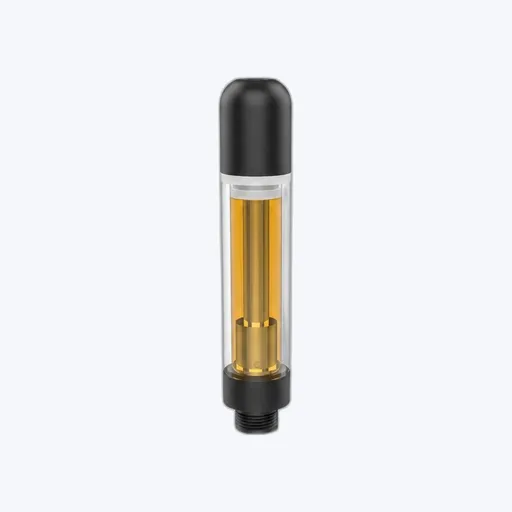
Buying goods already in free circulation in the EU removes this sequence from your side. Someone has already been the importer, and you buy on an EU invoice with EU delivery and no container minimums. That is a transfer rather than a saving: the cost sits in the supplier's price, and what you get is a fixed workload taken off a small first order. Either way, producer registration and market compliance stay with you, under EU compliance. Ranges start at empty 510 cartridges.
Trade guidance for B2B buyers, not legal advice. We sell empty hardware only; you are responsible for the fill and for finished-product compliance in your market.
Browse the range in the shop, full specs, trade pricing after a free account, and CE and compliance docs on request.
Browse the catalogueGive us the hardware, the quantity and the market. We reply with a price, a specification and a lead time. A request for a quote is not an order.
Empty hardware only. No cannabinoids and no e-liquid. We sell to companies only.