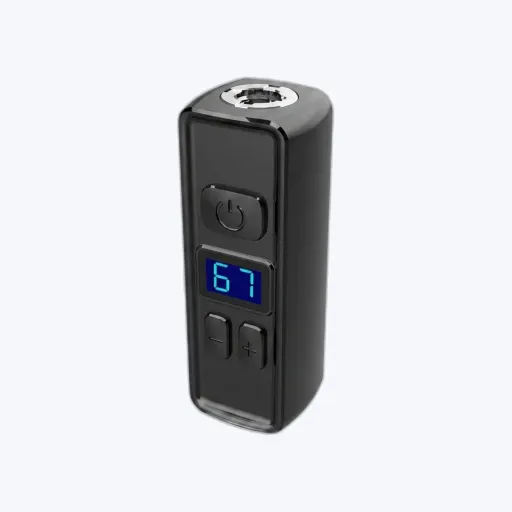
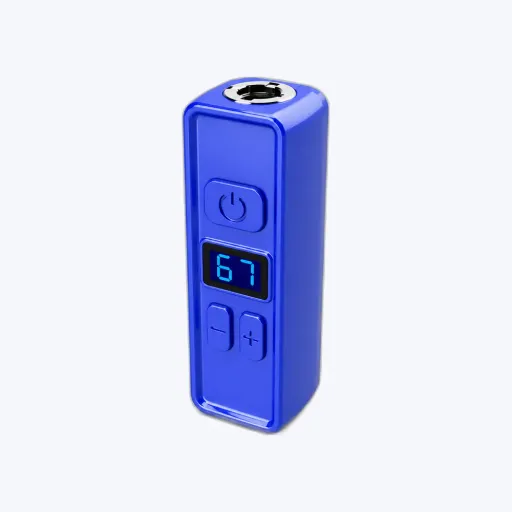
HardwareFor this job
By C. Chai, Empty Vapes Published 2026-08-20, last updated 2026-08-21. How we write these.
Regulation (EU) 2023/1542 covers the cell inside every vape battery, rechargeable device and disposable body. Its duties sit with the producer, which is the business that puts the branded product on a national market, not with the company that supplied the empty hardware.
Regulation (EU) 2023/1542 repealed the earlier EU batteries framework, Directive 2006/66/EC, with effect from 18 August 2025, and applies to batteries placed on the EU market, including batteries built into another product. A 510 battery, a rechargeable pen and the cell inside an empty disposable body are portable batteries incorporated in an appliance. Shipping the device empty removes the fill from the picture. It does not remove the cell.
The regulation entered into force on 17 August 2023 and has applied since 18 February 2024. Those are two different dates and summaries often conflate them. Its individual duties then phase in through to 2027: the waste-battery chapter that carries producer registration and EPR from 18 August 2025, labelling from 18 August 2026 or eighteen months after the implementing act if that is later, and the removability requirement and the battery passport from 18 February 2027. The practical question is therefore not whether it applies to your product but which obligations are live on the date you place stock on a given market. Deadlines have moved before: Regulation (EU) 2025/1561 of 18 July 2025 pushed the battery due-diligence obligations in Article 48 from 18 August 2025 to 18 August 2027. Confirm the current position with your national authority or your compliance scheme rather than working from a summary, including this one.
The regulation places its duties on the producer. In outline, that is the business that first makes a battery available on the market of a member state, under its own name or trademark, whether or not the battery is inside another product. If you buy empty hardware, brand it and sell it in Germany, you are the producer in Germany. If you then open a Spanish account, you are a producer in Spain as well, with a separate registration.
Whether you must appoint an authorised representative for extended producer responsibility depends on how you sell, not simply on where you are established. Article 56(3) requires the appointment from a producer that sells by distance contract directly to end users in a member state where it is not established, and that appointment is per country. Selling to distributors in that market is a different case. Confirm your own position with the national register before you assume either answer. As at August 2026 this rule is also the subject of a live Commission proposal to suspend it, COM(2025) 982, which is not law and does not change the position today. Empty Vapes supplies documented empty hardware and collects the accompanying paperwork on request. It does not become the producer of your branded product and cannot hold your registrations for you. The same split is set out on the EU compliance pillar.
Extended producer responsibility is an ongoing financing and reporting duty, not a certificate you obtain once. Across member states it generally means registering with the national register or an approved scheme, reporting the quantity of batteries you place on that market, contributing to the cost of collection and treatment, and supporting take-back arrangements. The register, the reporting cycle, the fee basis and the evidence each scheme accepts differ by country. Do not assume that the answer you were given in the Netherlands transfers to Italy. Ask each scheme directly, in writing, and keep the reply.
The regulation sets labelling and information duties, and these are phased. The main labelling article applies from 18 August 2026, or eighteen months after the relevant implementing act if that falls later. Expect to deal with the separate collection symbol, chemical symbols where a relevant substance is present, capacity and performance information, and a QR code that links to the information the regulation requires. There are provisions for cases where the item itself is too small to carry the marks, which is common on vape hardware, and the information then moves to the packaging or the accompanying documents.
Two things follow for a buyer. Confirm with your scheme which marks are live for your product and where they must sit, because getting this from a printer is not the same as getting it from the authority. Then settle the artwork once, with the battery marks, the crossed-out bin mark and your own branding on the same proof, so the job runs a single time. See packaging for how that is handled on a production run.
The regulation contains a design requirement aimed at portable batteries incorporated in appliances being removable and replaceable by the end user. It carries conditions and derogations, and it has its own application date rather than following the rest of the regulation: Article 11 applies from 18 February 2027. Treat it as an open design question for anything you are commissioning now.
Most vape hardware today seals the cell inside the body. Whether a given device meets the requirement, or falls inside a derogation, is a legal question about that device. Put it to your own adviser and to the factory in writing before you tool a housing or commit to a large order. Do not accept a verbal assurance from a supplier, including this one, that a sealed device is fine.
| Task | Who carries it | What you should hold |
|---|---|---|
| Cell specification and safety testing | Cell maker and device factory | Battery datasheet, test evidence |
| UN38.3 transport testing | Factory, checked by your forwarder | Current UN38.3 test report |
| EPR registration per member state | You, as producer of the branded product | Registration number for each market |
| Authorised representative where required | You, appointed in that member state | Signed appointment, scheme confirmation |
| Volume reporting and scheme fees | You | Unit weights and shipped quantities |
| Battery marks and QR on artwork | You approve, supplier prints | Signed artwork proof |
| Take-back arrangements | You, through your scheme | Scheme membership evidence |
A supplier cannot register for you, but it can put you in a position to register accurately. Ask for the cell datasheet, the chemistry and rated capacity, the UN38.3 test report, the unit weight of the battery and of the whole device, and artwork proofs showing where the marks fall. The wider list is in the guide to the document pack to demand from any hardware supplier, and the national registration side runs in parallel with WEEE registration, which is a separate scheme with its own number.
Trade guidance for B2B buyers, not legal advice. We sell empty hardware only; you are responsible for the fill and for finished-product compliance in your market. The buyer that brands the device and places the finished product on the market carries the national registrations and should take its own legal advice.
Browse the range in the shop, full specs, trade pricing after a free account, and CE and compliance docs on request.
Browse the catalogueGive us the hardware, the quantity and the market. We reply with a price, a specification and a lead time. A request for a quote is not an order.
Empty hardware only. No cannabinoids and no e-liquid. We sell to companies only.