Raw crystalline THCA content in freshly pressed 25 to 37 um bubble hash live rosin
Sealed Jar Tech oven window (145 F to 160 F) for 24 to 48 hours at 8 to 15 psi
Centrifuge speed through a 25 um nylon bag to separate liquid HTE from 95%+ THCA cake
Freezer slide crash test to verify zero THCA recrystallization before filling
1. Why raw live rosin is solid at room temperature (badder and cold-cure)
Freshly pressed bubble hash live rosin pressed from 25 um to 37 um trichome heads contains 65% to 80% raw THCA (tetrahydrocannabinolic acid), 6% to 12% native volatile monoterpenes and sesquiterpenes, and 2% to 4% cuticular plant waxes and lipids. Unlike neutral Delta-9 THC, raw THCA has a carboxylic acid group (-COOH) that forms rigid intermolecular hydrogen bonds. At room temperature (20 C), pure THCA is a crystalline solid powder, not a liquid oil.
When raw rosin sits at 20 C during cold curing, THCA molecules nucleate into a dense microscopic crystal lattice suspended in terpenes, producing an opaque, butter-like badder. If a filler melts raw badder briefly at 45 C and injects it directly into a vape cartridge without breaking that crystal lattice, the THCA crashes out into solid white sugar crystals inside the tank within 24 to 72 hours. The liquid terpene fraction drains away first, leaving solid THCA crystals stranded on the glass walls and starving the heating core.
2. How labs make live rosin liquidish without cutting agents (PG, VG, MCT or squalane are banned)
In authentic solventless extraction, adding external cutting agents or viscosity thinners such as propylene glycol (PG), vegetable glycerin (VG), medium-chain triglycerides (MCT coconut oil), squalane or vitamin E acetate is strictly banned. Cutting agents destroy solventless purity, alter terpene flavour, and introduce severe inhalation safety liabilities.
Instead, extraction chemists use the rosin's own cannabinoid phase behaviour. While raw THCA is a crystalline solid at 20 C, neutral Delta-9 THC is a viscous, non-crystallizing liquid oil at room temperature. More importantly, liquid Delta-9 THC acts as a powerful natural anti-crystallization co-solvent for any remaining unconverted THCA. Once a lab thermally cleaves the carboxyl group (releasing carbon dioxide, CO2) on 35% to 50%+ of the THCA molecules while keeping the 6% to 12% native monoterpenes trapped inside the oil, the mixture crosses a permanent eutectic threshold: the remaining THCA can no longer pack into a crystal lattice, and the entire rosin stays a translucent, amber, pourable liquid oil at 20 C.
3. The 5-step lab comparison: Sealed Jar Tech vs Mechanical Centrifuge Separation
| Step / Parameter | Method A: Sealed "Jar Tech" Partial Decarboxylation (90% of Craft Labs) | Method B: Mechanical Centrifuge Separation & Cold Recombination (Industrial Labs) |
|---|---|---|
| 1. Vessel / Separation | Fill a heavy-wall pressure-rated borosilicate jar 30% to 50% full with cold-cure rosin (25 to 37 um hash) and seal airtight with a PTFE-lined cap. | Spin cold-cure rosin inside a 25 um nylon rosin bag in a laboratory centrifuge at 3,000 to 4,000 RPM for 20 to 40 min at 20 C to mechanically separate liquid HTE (High-Terpene Extract) from dry 95%+ THCA crystalline cake. |
| 2. Thermal Conversion (Solid THCA to Liquid THC) | Place sealed jar in a precision lab oven at 63 C to 71 C (145 F to 160 F) for 24 to 48 hours. Cleaving CO2 raises internal jar pressure (8 to 15 psi), preventing monoterpenes from boiling off while 35% to 50% of solid THCA melts into liquid Delta-9 THC. | Decarboxylate only the dry solid THCA cake in an oven at 105 C to 115 C for 30 to 45 minutes until CO2 bubbling stops (98%+ conversion to liquid Delta-9 THC), while keeping the raw liquid terpene fraction (HTE) cold and unheated. |
| 3. Cooling & Recombination | Remove from oven when bubbling slows and the oil is water-clear amber. Cool sealed jar to 20 C before opening so headspace terpene vapours re-condense into the liquid oil. | Cool the liquid THC oil to 40 C to 45 C, fold the unheated raw HTE (12% to 18% by weight) back in under a low-shear homogenizer (400 RPM). |
| 4. Stability Proof (Freezer Crash Test) | Place a drop on a glass slide at -18 C for 20 minutes; if it stays clear and glossy with zero cloudiness or sugar grains, the THCA lattice is permanently broken. | Same -18 C 20-minute slide test; because 98%+ of THCA was converted to liquid THC, recrystallization is impossible even at 0 C. |
| 5. Warm Filling & Hardware Match | Heat syringe/hopper to 45 C to 50 C (800 to 2,000 cP while warm; returns to a stable 25,000 to 55,000 cP liquid oil at 20 C). Fill into Postless cotton-free disposables or 4 x 2.0 mm full-ceramic 510 cartridges run at 1.8 V to 2.2 V (1.4 to 1.6 ohm). | Same warm dispense at 45 C to 50 C into Postless or 4 x 2.0 mm ceramic hardware with 30 to 60 minutes upright dwell before capping. |
4. Proving stability (-18 C freezer crash test) and warm dispensing (45 C to 50 C)
Never fill a production batch of 500 or 5,000 cartridges by visual clarity alone. Freshly heated rosin can appear transparent at 45 C even if only 20% of the THCA has converted, and it will still sugar up inside customer devices a week later. Before loading the filling machine, place a single drop of the cooled 20 C rosin oil onto a glass microscope slide and place it in a -18 C freezer for 20 minutes. Inspect under 10x magnification as it warms back to 20 C: if the drop stays glass-clear and glossy with zero cloudy halos or gritty crystal nuclei, the batch is permanently stable.
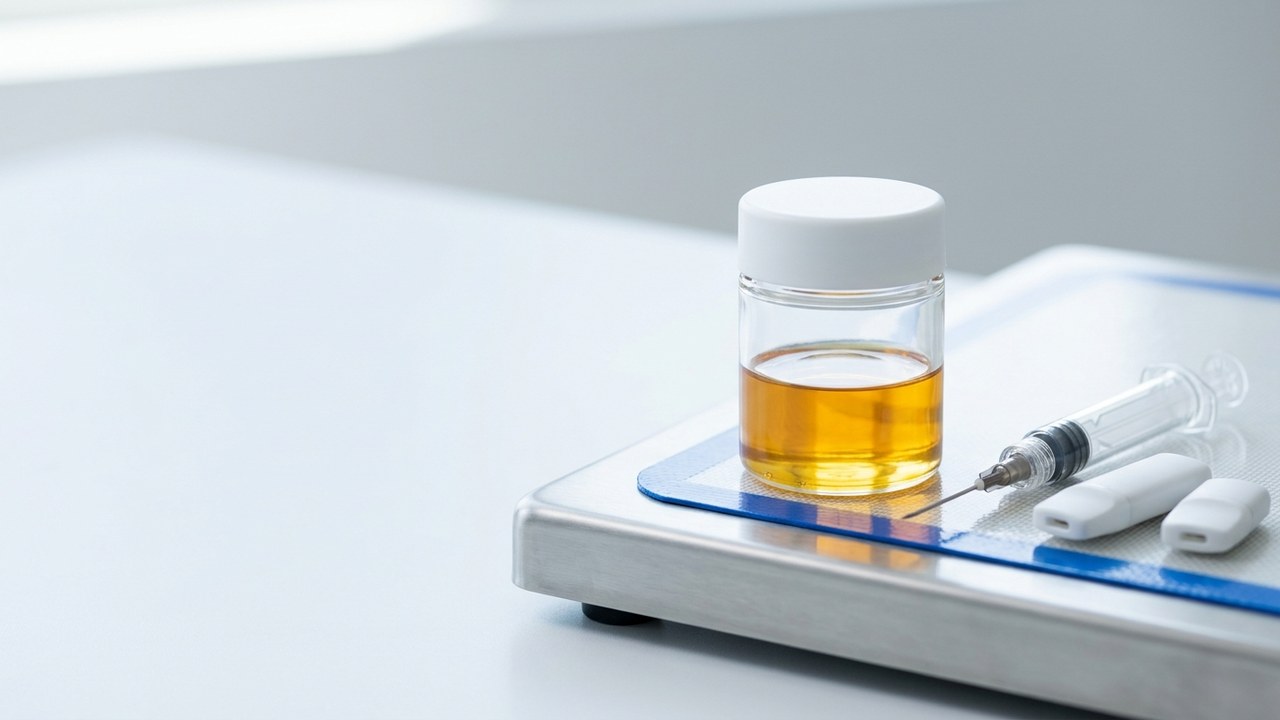
For dispensing, warm the liquefied live rosin gently to 45 C to 50 C (never above 55 C in an open hopper). At 45 C to 50 C, its viscosity drops from 25,000 to 55,000 cP down to 800 to 2,000 cP, allowing a 14G or 15G blunt stainless-steel needle to fill each reservoir cleanly without air bubbles. Once the filled cartridge cools back to 20 C, the oil returns to its golden 25,000 to 55,000 cP liquid state.
5. Why liquefied live rosin requires Postless or 4 x 2.0 mm ceramic hardware (1.8 V to 2.2 V)
Even after Jar Tech or centrifuge liquefaction, solventless live rosin retains 2% to 4% native plant waxes and lipids because it has never been winterized in ethanol. In a traditional 510 cartridge with an organic cotton blanket wrapped around the ceramic core, those lipids accumulate inside the cotton fibres after 0.3 ml to 0.5 ml of consumption and carbonize above 210 C, turning the oil dark and imparting a burnt taste.
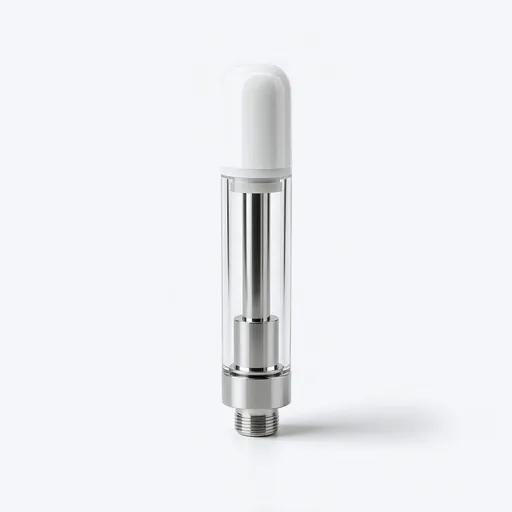
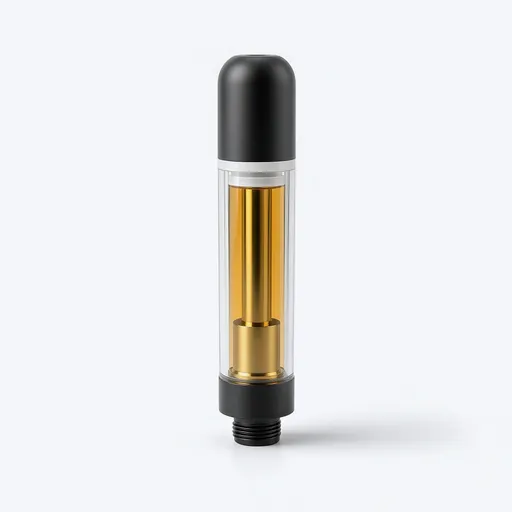
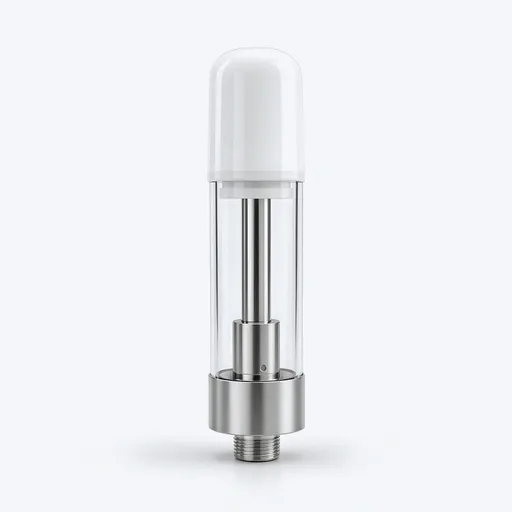
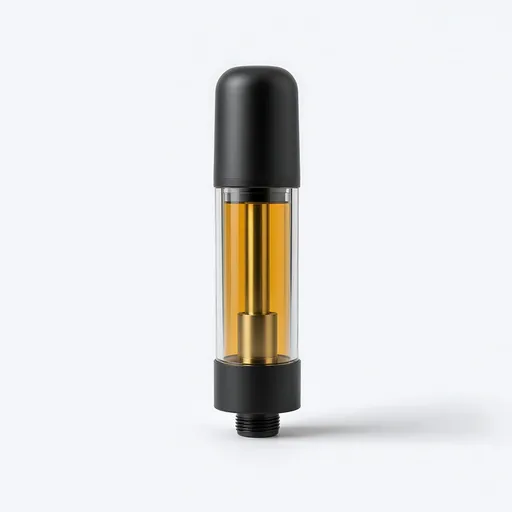
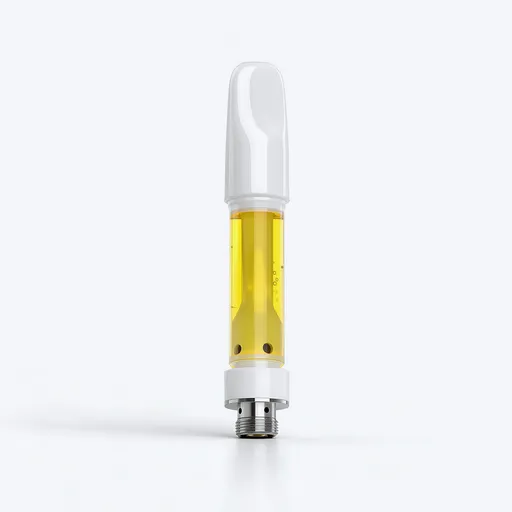
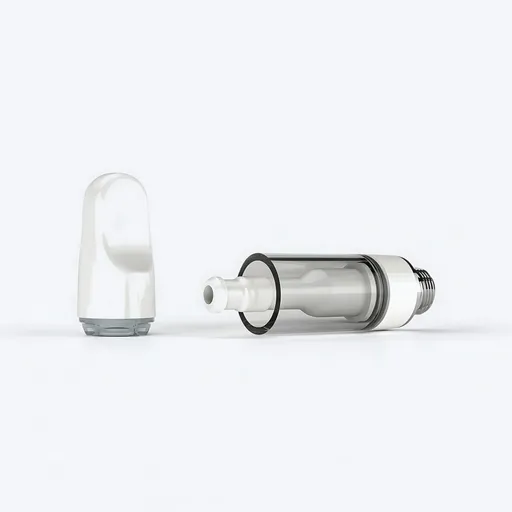
To prevent lipid scorching, pair liquefied live rosin with either a Postless cotton-free all-in-one disposable (where the oil sits directly on a flat bottom-fed porous ceramic plate with zero cotton and zero centre post) or a full-ceramic 510 cartridge with 4 x 2.0 mm intake apertures and a 1.4 to 1.6 ohm coil driven at 1.8 V to 2.2 V (5.0 mL to 1.0 mL format recommended so the full tank is consumed fresh). Use our interactive Viscosity & Intake Aperture Calculator to verify your exact cP and terpene match.
FAQ
- Why can't I just melt solid live rosin badder at 45 C and put it straight into a vape cartridge?
- Brief warming at 45 C only softens the rosin temporarily without cleaving the carboxyl group on raw THCA. Within 24 to 72 hours at 20 C, the 65% to 80% THCA recrystallizes into solid white sugar grains inside the cartridge, separating from the terpenes and starving the wick. You must convert 35% to 50%+ of the THCA into liquid Delta-9 THC via sealed Jar Tech (63 C to 71 C for 24 to 48 hours) or centrifuge separation first.
- Why must the borosilicate jar remain sealed until it cools back to 20 C?
- At 63 C to 71 C, volatile monoterpenes (myrcene, limonene, pinene) exist partly as pressurized vapour in the headspace of the jar (8 to 15 psi). Opening the jar while hot vents those terpene vapours into the room, robbing the rosin of both flavour and natural fluidity. Cooling the sealed jar to 20 C condenses the terpene vapours back into the liquid oil.
Sources
- Directive 2011/65/EU on the restriction of the use of certain hazardous substances in electrical and electronic equipment (RoHS) (recast), the official text on EUR-Lex.
- Regulation (EC) No 1907/2006 concerning the Registration, Evaluation, Authorisation and Restriction of Chemicals (REACH), the official text on EUR-Lex.
- Regulation (EU) 2023/1542 concerning batteries and waste batteries, the official text on EUR-Lex.
Trade guidance for B2B buyers, not legal advice. We sell empty hardware only; you are responsible for the fill and for finished-product compliance in your market.