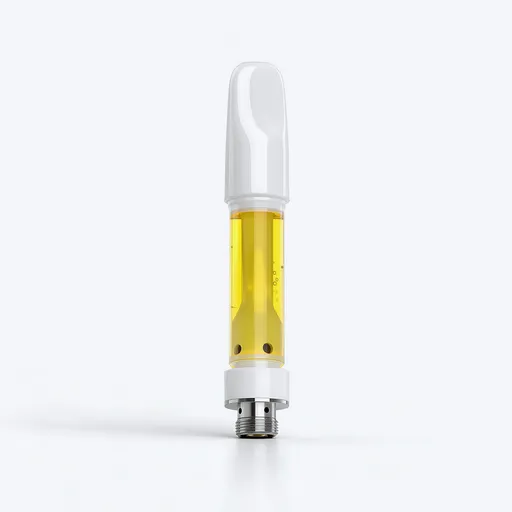
Converting 35% to 50% of crystalline THCA into amorphous liquid Delta-9 THC disrupts crystal nucleation permanently without cutting agents.
Heat hash rosin (25 - 37 um) in a sealed borosilicate jar filled 40% full, then cool to 20 C before unsealing to re-condense volatile monoterpenes.
Spin cold-cure rosin in a 25 um nylon bag to separate liquid HTE terpenes from solid THCA, decarb only the THCA at 110 C, and recombine below 45 C.
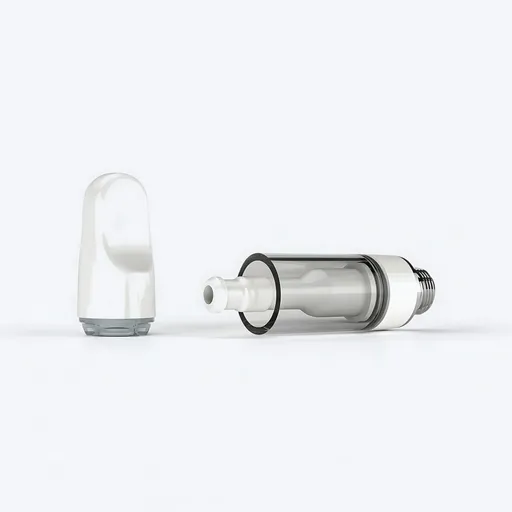
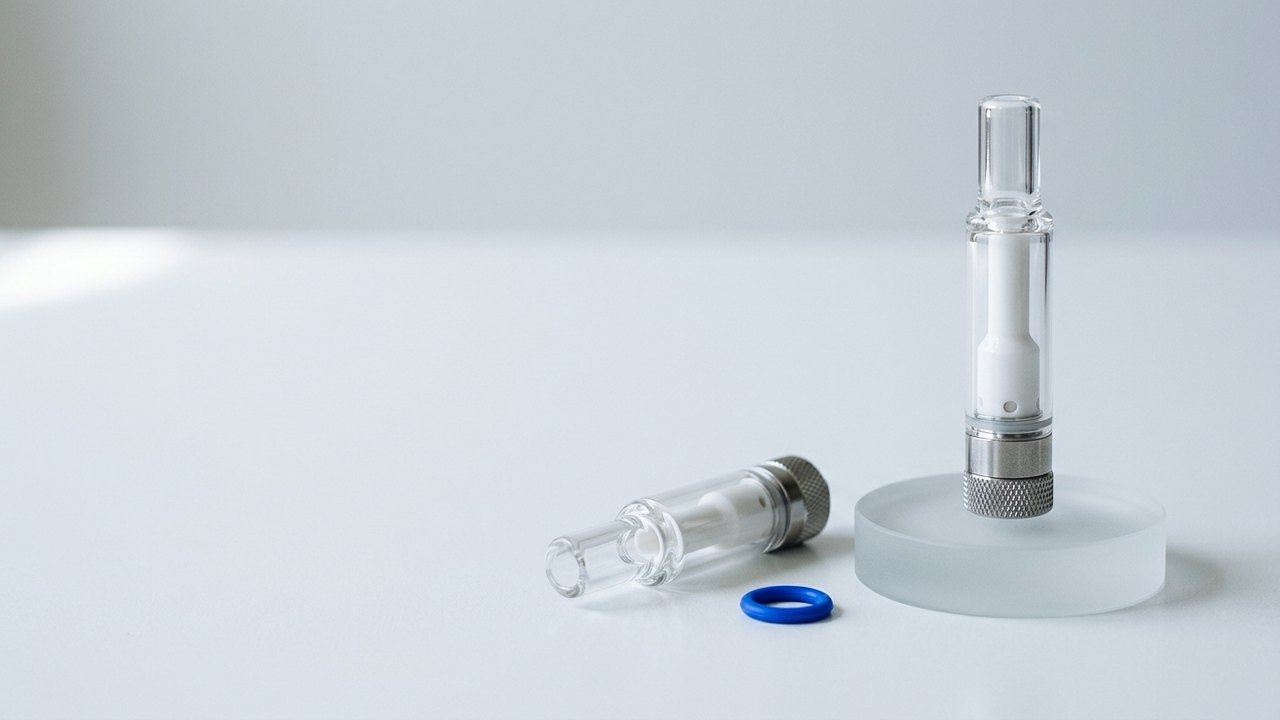
Liquefied live rosin (25,000 - 55,000 cP with 2% - 4% plant waxes) requires cotton-free postless buckets or 4 x 2.0 mm ceramic cores at 1.4 - 1.6 ohm.
Why raw live rosin is solid at room temperature (65% to 80% THCA)
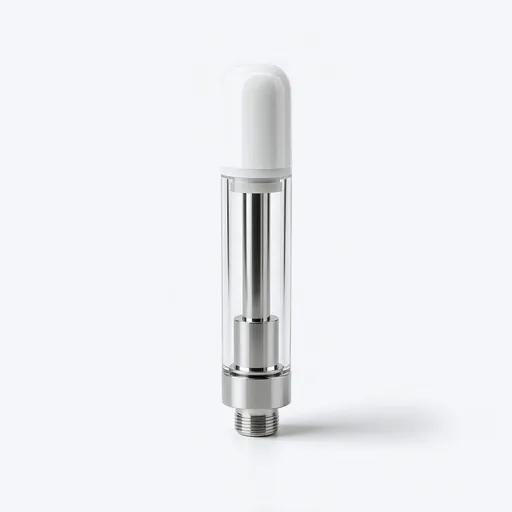
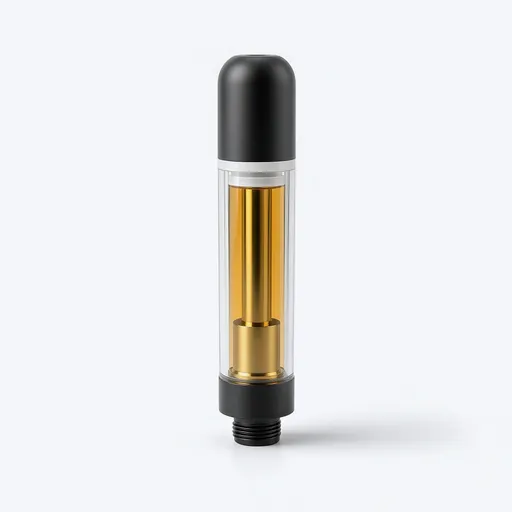
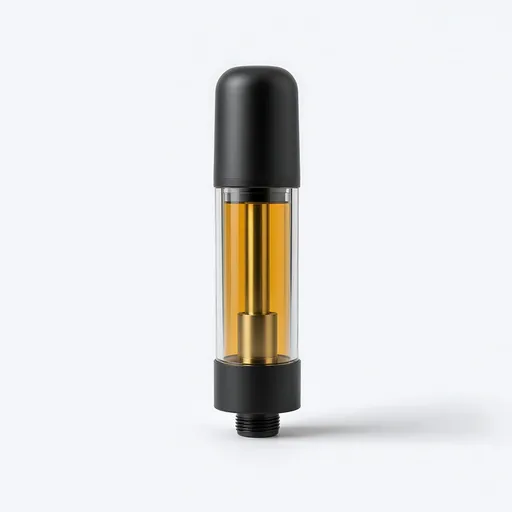
When buyers see a live rosin vape cartridge for the first time, the most common question is simple: raw live rosin is a solid, butter-like paste (cold-cure badder) or a brittle, glassy slab (fresh press) at 20 C, so how does it sit inside a cartridge looking like a clear, golden liquid without any cutting agents? The answer lies in the physical chemistry of tetrahydrocannabinolic acid (THCA) versus decarboxylated Delta-9 THC.
In freshly pressed ice-water hash rosin (pressed from 73 to 120 um trichome heads through a 25 um or 37 um rosin filter bag), 65% to 80% of the extract weight is raw THCA, alongside 6% to 14% native cannabis terpenes and 2% to 4% plant lipids and cuticular waxes. Pure THCA is a crystalline solid at room temperature with a melting point around 140 C to 145 C before decomposition. Whenever THCA exceeds roughly 45% to 50% of a terpene-rich solution at 20 C, the THCA molecules lock into hydrogen-bonded crystal lattices. If a filler simply warms raw live rosin to 50 C for 10 minutes to make it runny enough for a syringe and injects it into a cartridge, the THCA crashes out of solution within 24 to 72 hours. The tank turns into opaque sugar crystals, the liquid terpene fraction separates to the top, and the ceramic coil burns dry.
Method 1: Sealed Jar Tech partial decarboxylation (63 C to 71 C for 24 to 48 hours)
The primary commercial method used by solventless extraction labs to turn solid live rosin into a permanent, translucent liquid oil without adding any external diluents is sealed partial decarboxylation, universally known in the industry as Jar Tech. When THCA is heated, thermal energy cleaves the carboxyl group (-COOH) off the molecule as carbon dioxide gas (CO2), converting solid crystalline THCA into neutral Delta-9 THC. Unlike THCA, neutral Delta-9 THC cannot form crystals at room temperature; it is a clear, amber, amorphous viscous liquid. Better still, Delta-9 THC acts as a natural anti-crystallization co-solvent that permanently disrupts the crystal lattice of the remaining un-decarboxylated THCA.
You do not need to decarboxylate 100% of the THCA, which would over-cook the delicate monoterpenes. Instead, the laboratory places cold-cure or fresh-press live rosin into a thick-walled, pressure-rated borosilicate glass jar with a PTFE-lined hermetically sealed cap, filling only 30% to 50% of the jar volume to allow headspace for CO2 pressure. The sealed jar is placed in a calibrated laboratory convection oven (or water bath) at 63 C to 71 C (145 F to 160 F) for 24 to 48 hours. During the first 6 to 12 hours, the opaque badder melts into a cloudy foam as CO2 micro-bubbles rise. By hour 24 to 48, 35% to 50% of the THCA has converted into liquid Delta-9 THC, the bubbling subsides into a glass-clear golden pool, and the internal headspace pressure (8 to 15 psi) prevents volatile monoterpenes from escaping.
Two rules govern the end of a Jar Tech cycle. First, never unscrew the jar while it is above 25 C: cooling the sealed jar down to 20 C (68 F) forces the pressurized terpene vapor in the headspace to condense back into the liquid oil, preserving the strain's fresh nose. Second, run the -18 C freezer slide crash test: place one drop of cooled oil onto a glass microscope slide, hold it in a -18 C freezer for 20 minutes, and inspect it at 40x magnification. If zero micro-crystals appear, the batch has crossed the eutectic stability threshold and will stay liquid inside a vape cartridge for 12+ months.
Method 2: Mechanical centrifuge terpene separation (3,000 to 4,000 RPM) and cold recombination
For exotic cultivars rich in ultra-volatile monoterpenes, esters and volatile sulfur compounds (VSCs) that can mute even during a 65 C Jar Tech cure, flagship solventless labs use mechanical centrifuge separation. Cold-cured live rosin is packed into a 25 um nylon rosin filter bag and placed inside a stainless-steel centrifuge rotor tube. The centrifuge spins at 3,000 to 4,000 RPM for 20 to 40 minutes at 20 C (ambient or slightly chilled, with zero heat applied).
High G-force squeezes the liquid High-Terpene Extract (HTE) fraction through the 25 um mesh into the collection cup, leaving behind a dry, chalk-white cake of 95%+ pure crystalline THCA inside the bag. Because the delicate HTE terpene fraction is now physically separated and stored cold in a sealed vial, the lab can decarboxylate the solid THCA cake rapidly at 105 C to 115 C (220 F to 240 F) for 30 to 45 minutes until CO2 bubbling stops completely (nearly 100% conversion to liquid Delta-9 THC). Once the clear THC oil cools to 40 C to 45 C, the unheated raw HTE terpene fraction is folded back in at 12% to 18% by weight, yielding a crystal-stable, liquidish solventless oil with unheated live terpene aromatics.
Comparison: Sealed Jar Tech vs Centrifuge separation vs Uncured fill
| Process Parameter | Method 1: Sealed Jar Tech | Method 2: Centrifuge + Recombine | Uncured / Flash-Warmed Rosin (Fail) |
|---|---|---|---|
| Thermal exposure | 63 C - 71 C for 24 - 48 h (sealed) | 20 C spin (3,500 RPM); 110 C THCA only | 50 C for 10 min before syringe fill |
| Final THCA : Delta-9 THC ratio | 50 : 50 to 60 : 40 (eutectic liquid) | 10 : 90 (nearly full THC + raw HTE) | 75 : 25 (unstable supersaturated solid) |
| Viscosity at 20 C after cure | 32,000 - 55,000 cP (translucent amber) | 22,000 - 38,000 cP (high-terpene fluid) | > 250,000 cP (sugars out in 24 - 72 h) |
| Hardware failure rate (1,000 units) | < 0.8% in postless / 4 x 2.0 mm ceramic | < 0.5% in postless / 4 x 2.0 mm ceramic | 65% - 90% dry-hit failure within 7 days |
Why postless cotton-free hardware and 1.8 V to 2.2 V prevent lipid scorching
Liquefying the THCA is only half the engineering equation. Even after a flawless 65 C Jar Tech cure or centrifuge recombination, solventless live rosin differs from solvent-extracted distillate in two critical ways: it sits at 25,000 to 55,000 cP at 20 C, and it retains 2% to 4% native plant lipids, fatty acids and cuticular waxes. In a traditional 510 cartridge that wraps a layer of organic cotton around the ceramic core, those plant waxes accumulate in the cotton fibers like a coffee filter. Within 30 to 50 puffs, the trapped lipids carbonize against the heating element, turning the oil in the tank dark brown and producing an acrid, burnt taste.
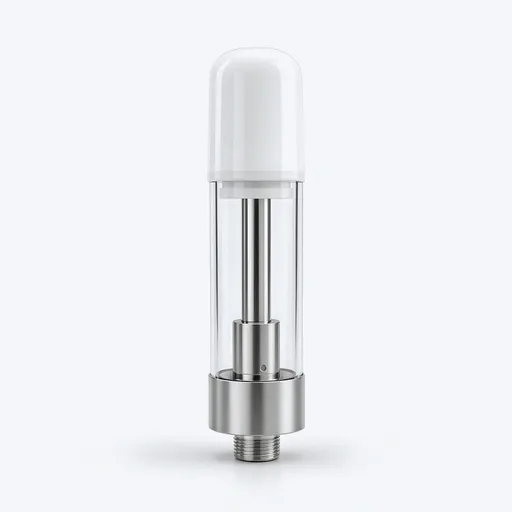
Two hardware architectures eliminate this failure mode. First, postless cotton-free all-in-one disposables remove the central metal airway post and remove 100% of organic cotton wicking; the liquefied rosin rests directly on a wide, bottom-fed micro-porous sintered ceramic heating bucket driven by gravity. Second, for 510-thread cartridges, specify a full-zirconia ceramic cartridge with 4 x 2.0 mm circular or oval intake apertures, a high-porosity sintered ceramic core (55% to 62% porosity), and a 1.4 to 1.6 ohm coil paired with a low-voltage 510 battery set to 1.8 V to 2.2 V (4.0 W to 5.5 W). Dispense the liquefied rosin at 45 C to 50 C through a 14G blunt needle in 0.5 ml or 1.0 ml formats so the entire fill is consumed before lipid oxidation can build up.
FAQ
- Do commercial brands add PG, VG or MCT oil to make solid live rosin liquid in a vape?
- No. Authentic solventless live rosin vapes contain zero PG, VG, MCT, squalane or distillate. Liquefaction is achieved purely by converting 35% to 50% of the solid crystalline THCA into amorphous liquid Delta-9 THC via sealed 65 C Jar Tech or centrifuge separation, allowing the extract's own native terpenes (8% to 14%) to maintain a stable liquid state.
- Why did my live rosin cartridge turn cloudy and solid 48 hours after filling?
- Because the THCA conversion ratio was below 30%. When raw rosin is only warmed briefly to syringe it into a tank without completing a 24 to 48 hour sealed partial decarboxylation at 63 C to 71 C, the remaining 60%+ THCA nucleates into sugar crystals inside the cartridge within 2 days.
- Why are 0.5 ml and 1.0 ml formats preferred over 2.0 ml for solventless live rosin?
- Solventless live rosin contains 2% to 4% natural plant waxes and lipids. Across 150 to 250 heat cycles (0.5 ml to 1.0 ml), a postless or full-ceramic coil vaporizes the oil cleanly; pushing a single coil past 400 heat cycles (2.0 ml) increases cumulative lipid residue and mutes the delicate top-note terpenes in the second gram.
Sources
- Directive 2011/65/EU on the restriction of the use of certain hazardous substances in electrical and electronic equipment (RoHS) (recast), the official text on EUR-Lex.
- Regulation (EC) No 1907/2006 concerning the Registration, Evaluation, Authorisation and Restriction of Chemicals (REACH), the official text on EUR-Lex.
- Regulation (EU) 2023/1542 concerning batteries and waste batteries, the official text on EUR-Lex.
Trade guidance for B2B buyers, not legal advice. We sell empty hardware only; you are responsible for the fill and for finished-product compliance in your market.