HardwareFor this job
By the Empty Vapes trade desk. Published 2026-08-20, last updated 2026-08-20. How we write these.
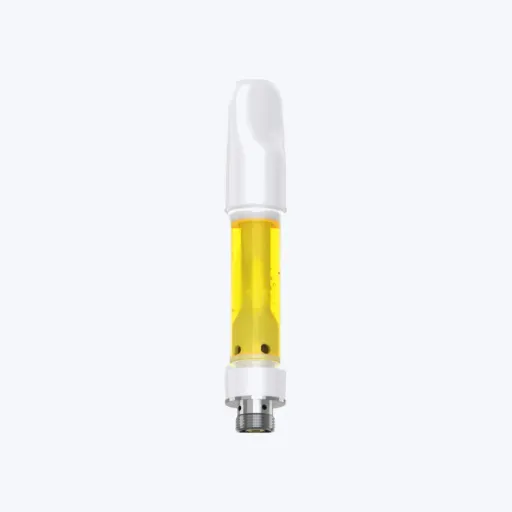
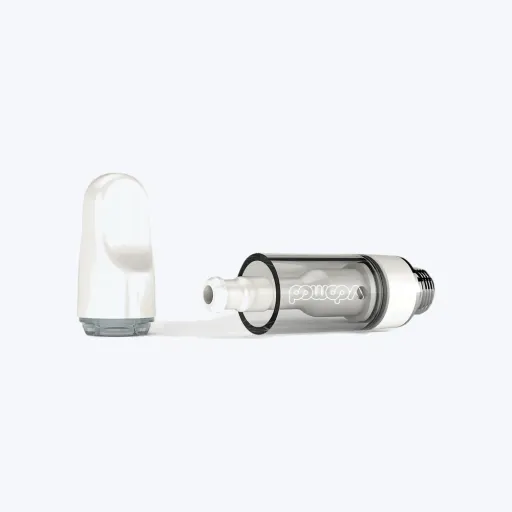
Cartridge intake for thick oil is a fitting problem, not a quality problem. The same hardware that performs on distillate will starve on rosin, and the same hardware that performs on rosin will seep on distillate.
Extract categories are marketing labels with wide internal ranges. Two products both sold as live resin can differ in flow behaviour by an order of magnitude depending on terpene content, cannabinoid ratio, residual solvent and how they were purged. The property that decides whether a fill will move through a 1.2 mm opening is viscosity at the temperature of use, and nothing else in the label tells you that.
So the useful question to put to your extractor is not "is this rosin", it is "what is the viscosity, at what temperature, and how much does it change over the ten degrees either side". If they cannot answer, fill six 510 cartridges across two or three intake sizes and find out empirically. That is faster than arguing about it.
Use the table as a first guess to narrow a test, not as a specification. Every row assumes the cartridge is filled warm and used at room temperature.
| Fill type | Flow behaviour at room temperature | Intake starting point |
|---|---|---|
| Distillate, cut with a diluent | Pours freely, close to a light oil | 0.8 to 1.0 mm |
| Distillate, uncut | Thick but self-levelling over minutes | 1.0 to 1.2 mm |
| Distillate with reintroduced terpenes | Noticeably thinner than uncut distillate | 1.0 mm |
| Live resin, sauce-like | Slow, does not self-level cold | 1.2 to 1.5 mm |
| Live rosin, undiluted | Holds its shape until heated | 1.8 to 2.0 mm |
Viscosity falls steeply as an extract warms and climbs again as it cools. That is why a fill that behaves at a 40 °C filling station can refuse to feed the core in an unheated warehouse in February. The cartridge did not change. The oil did.
Size the intake for the coldest realistic condition in the product's life, not for the warm oil in front of you at the filling bench. In practice that means testing a filled sample after it has sat overnight at the low end of your expected storage range, then drawing on it cold. If the first three draws taste scorched and the fourth is normal, the core is not re-wetting fast enough and the intake is too small for that fill at that temperature.
If leaks are already the symptom you are chasing, work through why vape cartridges leak before changing intake size, because intake is only one of the five causes and it is not the most common one.
Order the same cartridge body in two or three intake sizes and fill each with your actual production oil, not a stand-in. Fill at your production temperature, cap, and leave the units upright for 24 hours and on their side for another 24. Inspect for seepage at the base and at the mouthpiece. Then draw cold. Keep the units that neither starve nor seep, and only then place the volume order.
Our MOQ starts at around 500 units with no container minimums, so running two intake variants side by side is a normal order rather than a special request. Made-to-order runs take around six weeks. Core material interacts with intake size, so read zirconia, ceramic and quartz cartridge cores before you fix the specification, and check compliance for the CE, RoHS, REACH and EU Battery Regulation documentation we can supply on request.
Trade guidance for B2B buyers, not legal advice. We sell empty hardware only; you are responsible for the fill and for finished-product compliance in your market.
Browse the range in the shop, full specs, trade pricing after a free account, and CE and compliance docs on request.
Browse the catalogueGive us the hardware, the quantity and the market. We reply with a price, a specification and a lead time. A request for a quote is not an order.
Empty hardware only. No cannabinoids and no e-liquid. We sell to companies only.