HardwareFor this job
By the Empty Vapes trade desk. Published 2026-08-21, last updated 2026-08-21. How we write these.
Charging standard is three separate things wearing one name. Separating them is what turns a vague datasheet line into a specification you can hold a supplier to, and it decides whether a cable belongs in the box.
Read any device datasheet and the charging line will be one of these three, without saying which.
These are independent. A device can carry a modern connector and a basic charging profile, or a legacy connector and a careful one. When a supplier writes that a device supports fast charging, ask which of the three they are describing, because only the second one is a property of the hardware you are buying.
The cable carries power. It does not decide how the cell is charged. A circuit inside the device sets the current it draws, the voltage it charges up to and the point at which it stops, and that circuit is the same whichever compliant cable is plugged in.
Two things follow for a trade buyer.
Record the device input rating, not a charger recommendation. Input voltage and input current are figures you can compare across suppliers and check on a sample. A recommended brand of charger is not.
Ask whether the device negotiates with the supply. Phone fast charging works by the device and the supply agreeing on a higher voltage. Do not assume a vape device does anything of the kind. Ask directly whether it negotiates, or whether it draws at a fixed rate from a default USB source, because the two behave differently when a customer plugs into a high-current charger.
The protections also belong to the device rather than to the cable: over-voltage, over-current, over-temperature, short circuit and over-discharge. Ask for the list, and ask which certificate evidences each item on it. Our battery safety certification guide covers what those certificates are and what they do not cover.
The EU common charging requirements were introduced by Directive (EU) 2022/2380, which amends Directive 2014/53/EU on radio equipment. We will not tell you which product categories that catches, and you should be wary of a supplier who does.
The scope questions, and what to confirm with a compliance advisor or your national authority, are set out on our USB-C on a disposable vape in the EU page. That page is the one to read before you sign off a port, and this page is about everything that is true whatever the answer turns out to be.
Cable inclusion is a commercial decision, usually made by default rather than on purpose. The three options behave differently on the dimensions a buyer controls.
| Dimension | Cable in every box | Cables in the master carton | No cable |
|---|---|---|---|
| Unit cost | A cable in every unit, whether the customer needs it or not | A part-rate cost, set by how many you supply per carton | None |
| Retail pack size | Larger box or a deeper tray to hold the cable | Retail pack unchanged | Smallest possible pack |
| Freight volume | Highest per unit, because the pack grew | Slightly higher per carton | Lowest |
| Packaging material | More board and often an extra insert | Bulk bagged, minimal material | Least material |
| First use | Works out of the box for everyone | Works if the retailer hands one over | Depends on what the customer already owns |
| Support contact | Lowest | Low, and it moves to the counter staff | Highest, and it arrives as a fault report rather than a question |
| Retail buyer reaction | Expected in a first-purchase device | Accepted where the retailer is served by a rep | Questioned unless the price reflects it |
| Waste and end of life | A cable per unit, most of them never used | Cables go where they are needed | None added |
| Where it fits | Devices sold as a customer's first purchase | Repeat purchases and replacement devices | Low-cost formats and channels where cables are ubiquitous |
The middle column is the one buyers overlook. Supplying cables loose in the master carton, for the retailer to hand out on request, covers the customers who need one without paying for the ones who do not, and it keeps the retail pack small enough to ship cheaply.
If you include a mains plug power supply rather than a bare cable, you are placing a second electrical product on the market alongside the device. Ask for its own EU declaration of conformity, separately from the device's, and read which instruments it names. Two to look for are Directive 2014/35/EU on electrical equipment designed for use within certain voltage limits and Directive 2014/30/EU on electromagnetic compatibility. Check the plug pattern against every market you sell into as well, because that is a per-country stock decision and not a per-product one.
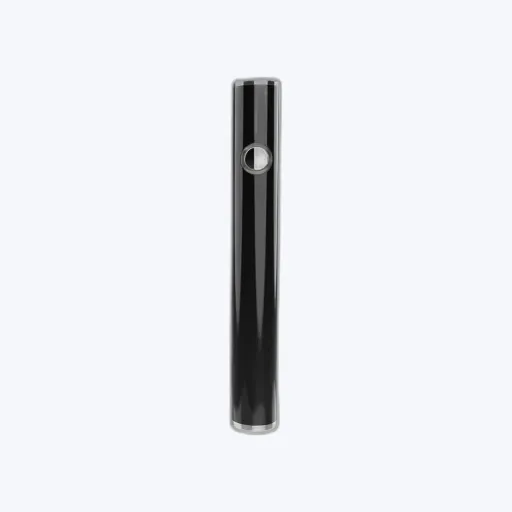
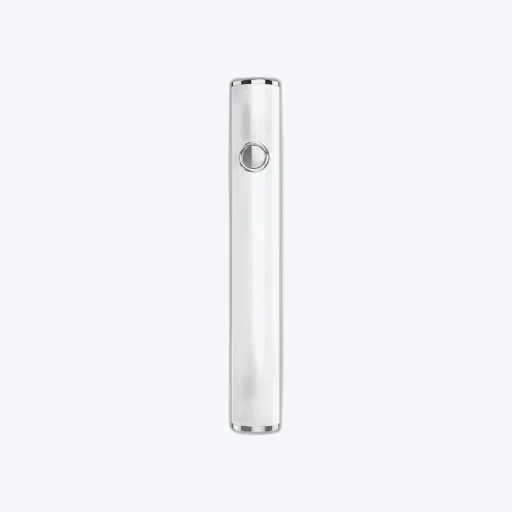
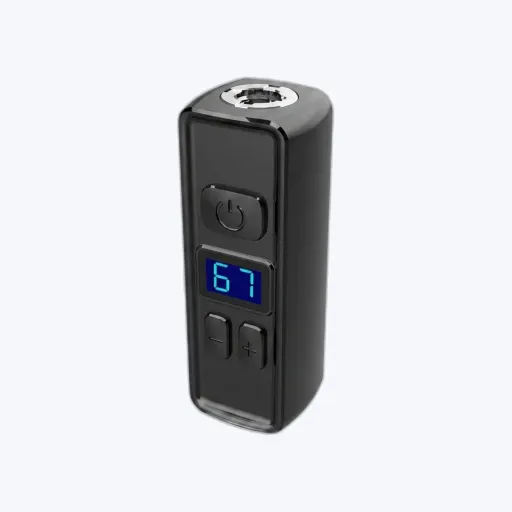
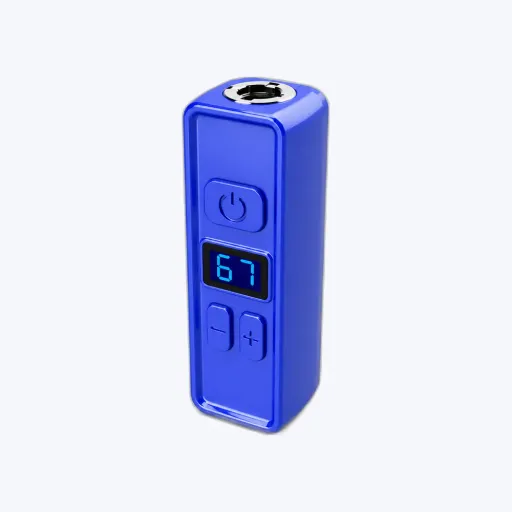
A 510 threaded battery often ships with a small charger that screws onto the battery in place of a cartridge and carries a USB plug at the other end. Four things follow, and they surprise buyers who have only bought devices with sockets.
None of that argues against the format. It argues for pricing the spare in from the start. Our 510 battery mAh guide covers the rest of what to specify on the battery itself.
Three sets of duties attach to the battery rather than the connector, so no charging decision avoids them.
Batteries. Regulation (EU) 2023/1542 governs batteries and waste batteries, including producer duties, labelling and removability. Our EU Battery Regulation guide sets out which dates apply to which articles.
Waste electricals. Directive 2012/19/EU brings registration and take-back duties for whoever places the product on the market. A cable in the box is itself an electrical item, so ask your compliance scheme how it is counted before you assume it disappears into the device's reporting. See WEEE registration.
Transport. Lithium cells are governed for shipping by the UN 38.3 test requirements, independently of the above and of the port. See UN 38.3 shipping.
Stock 510 batteries and pod systems start from around 500 units with no container minimum, and branded runs take about 15 days after sign-off. CE, RoHS, REACH and EU Battery Regulation documentation is available on request and WEEE support is available; the market registrations stay with whoever places the finished product on the market. See compliance.
Trade guidance for B2B buyers, not legal advice. We sell empty hardware only; you are responsible for the fill and for finished-product compliance in your market.
Browse the range in the shop, full specs, trade pricing after a free account, and CE and compliance docs on request.
Browse the catalogueGive us the hardware, the quantity and the market. We reply with a price, a specification and a lead time. A request for a quote is not an order.
Empty hardware only. No cannabinoids and no e-liquid. We sell to companies only.