HardwareFor this job
By the Empty Vapes trade desk. Published 2026-08-21, last updated 2026-08-21. How we write these.
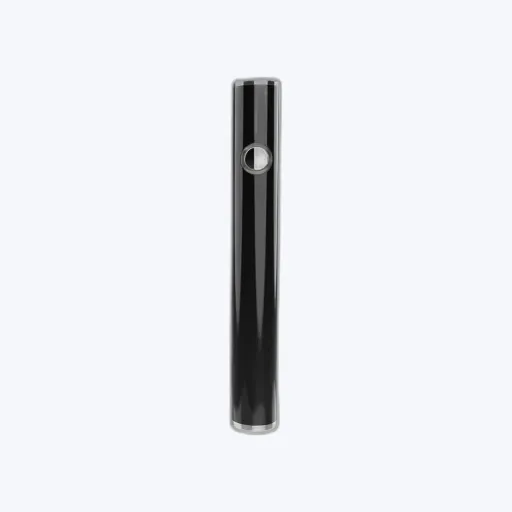
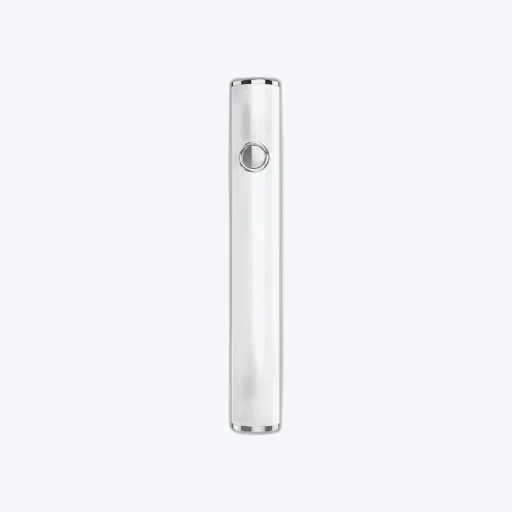
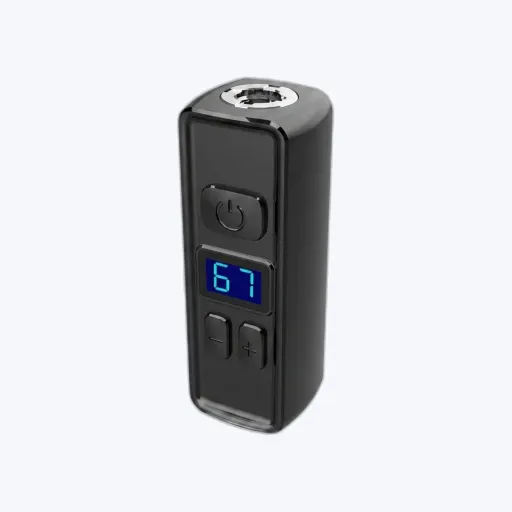
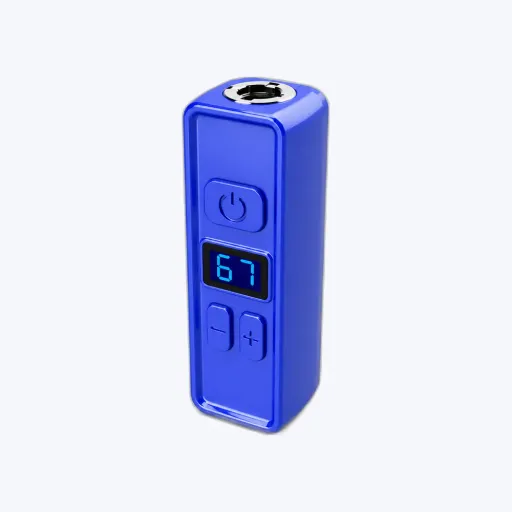
A vape battery is a lithium cell, a charge controller and a switch in a housing. The protection circuit is the part nobody sees, and the only part that decides whether a fault stays contained.
A vape battery is a lithium cell, a charge controller, a switch and a housing. The protection circuit sits between the cell and everything else, and it is the part that decides whether a fault stays a fault or becomes a fire.
Vape battery safety certification is often discussed as though it were one document. It is not. It is a set of separate obligations covering the cell, the finished device, its transport and its placing on the market, and a supplier can hold evidence for one and none of the others. The useful question is never whether a product is certified, but which standard, tested by whom, against which sample.
This page is trade guidance and not legal advice. Where a figure is not named below, it is because we will not state one we cannot source. Confirm those points with your supplier in writing.
| Function | What it prevents | What its absence looks like | What to ask for |
|---|---|---|---|
| Overcharge cut-off | The cell being charged past its upper voltage limit | Swelling, heat during charging, cells that stop holding charge | The charge cut-off voltage and the protection IC part number |
| Over-discharge cut-off | The cell being drained below its lower voltage limit | Capacity loss after storage, devices dead out of the box | The discharge cut-off voltage |
| Overcurrent and short-circuit protection | Uncontrolled current through a shorted coil or bridged contacts | Hot bodies, melted mouthpieces, devices firing in a pocket | The trip current, and whether it self-resets or latches |
| Over-temperature cut-off | The pack operating above its safe temperature | Heat at the base, thermal damage to the housing | Whether a thermistor is fitted, and where it sits |
| Puff cut-off timer | A stuck button or a bag-fired device heating without end | A device that fires until the cell is flat | The cut-off duration, and whether it is firmware or hardware |
| Charge control profile | Charging at the wrong current or the wrong profile | Long charge times, hot chargers, short cycle life | The charge current and the constant current to constant voltage profile |
| Reverse polarity and connector protection | Damage from an incorrect or faulty charger | Dead devices after a customer uses a random cable | Which connector is fitted and what input range it accepts |
| Cell-level safety features | An internal cell fault reaching the outside of the pack | No external symptom at all until the failure itself | The cell datasheet and cell manufacturer, not only the pack specification |
These are named precisely because a vague reference is worth nothing in a technical file. Applicability depends on the product and the market, so confirm the list with your supplier and, where the stakes justify it, with a conformity assessment body.
CE marking itself is not a standard and not a test. It is a declaration by the manufacturer that the applicable directives and regulations have been met. A CE logo on a box tells you someone made a claim. It does not tell you what was tested. CE marking for vape hardware covers what sits behind it.
Empty Vapes supplies CE, RoHS, REACH and EU Battery Regulation documentation on request across the battery range, with WEEE support and EU delivery. Anything not on that list should be requested from the manufacturer through us rather than assumed.
Documentation supports your file. It does not transfer your duties. Whoever places the product on the market is normally the producer for battery and WEEE registration in each member state where it is sold, and a responsible person established in the EU has to be appointed under GPSR. Those obligations follow the product to market, not the hardware to your warehouse, and they do not scale with order size: a 500 unit trial carries the same registration work as a large run.
Two habits reduce the risk. Keep a copy of every report against the batch it covers, so a later question about a specific shipment has an answer. And record anything a supplier states verbally as unconfirmed until it arrives in writing. See compliance and supplier documentation.
Trade guidance for B2B buyers, not legal advice. Empty hardware only, no cannabinoids and no e-liquid. B2B trade only, 18+ / 21+ per market. The buyer is responsible for the fill, for finished-product compliance and for product registration in their market.
Browse the range in the shop, full specs, trade pricing after a free account, and CE and compliance docs on request.
Browse the catalogueGive us the hardware, the quantity and the market. We reply with a price, a specification and a lead time. A request for a quote is not an order.
Empty hardware only. No cannabinoids and no e-liquid. We sell to companies only.