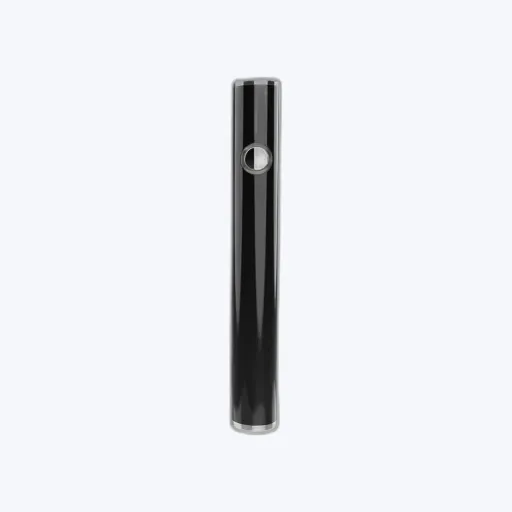
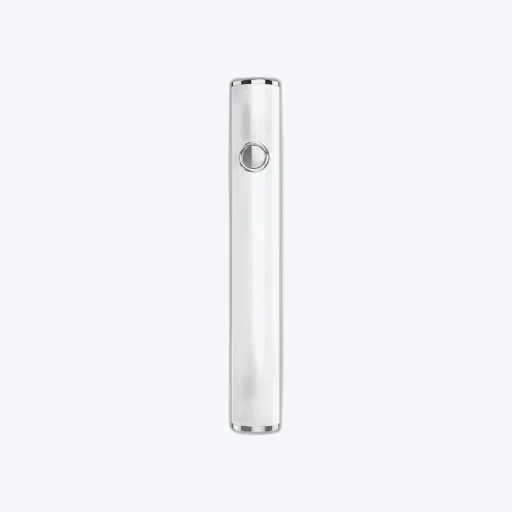
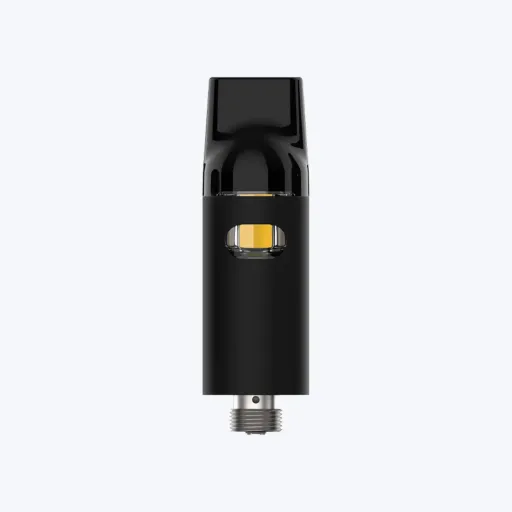
HardwareFor this job
By the Empty Vapes trade desk. Published 2026-08-21, last updated 2026-08-21. How we write these.
Pod capacity and cell capacity are set by two different people at the factory and sold to you as one product. The ratio between them decides what the customer experiences, and it is the number least often stated on a datasheet.
A specification line that says battery life and then gives one number is not saying which of these it means.
These pull in different directions. A device optimised for refills per charge carries a larger cell, which is heavier and costs more. A device optimised for cycle life is a device the customer keeps, which matters if you sell pods on repeat and matters less if you do not. Decide which one you are selling before you compare two datasheets.
Refills per charge is energy stored divided by energy spent per pod-full. Two consequences follow, and both are routinely missed at the buying meeting.
The pod plastic does not set the cost of a refill. Emptying a reservoir takes energy because the coil turns liquid into vapour, and the coil and the output decide how much energy that takes. A larger reservoir means more of that work per fill, but it is the coil resistance and the output setting that fix the rate, not the millilitre figure on the box.
Milliamp hours are charge, not energy. Two cells rated at the same mAh but at different nominal voltages hold different amounts of energy. Watt-hours is the figure that compares directly, and it is also the figure that transport paperwork tends to want. Ask for both, and ask for the nominal voltage the mAh figure was measured at. Our 510 battery mAh guide and the disposable battery mAh guide take that apart in more detail.
Pod capacity is not always yours to choose. In some markets it is fixed by product rules before it reaches the designer, which is a separate question from what the hardware can hold. The 2 ml pod page sets out where that comes from.
A puff count is stored energy divided by energy per puff, and energy per puff is power multiplied by duration. Whoever printed the number chose both of those, and neither is usually printed next to it.
Change the assumed puff length and the count changes by the same proportion, with no change to the hardware at all. Change the assumed output and it moves again. This is why two devices carrying the same headline count can behave differently in the hand, and why the same device can be listed with two different counts by two distributors.
For a trade specification, replace the puff count with four figures you can check: cell capacity in mAh, the nominal voltage, output power or voltage, and coil resistance. Those four let you compare devices against each other. If a supplier will quote a puff count but not the four figures behind it, you have learned something about the supplier.
Read the columns as the cell size relative to the pod it feeds, not as an absolute capacity.
| Dimension | Cell small for the pod | Balanced | Cell large for the pod |
|---|---|---|---|
| Refills per charge | Under one, so the device dies mid-pod | Around one to a few, so charging and refilling fall together | Several, so charging and refilling are unrelated events |
| What the customer reports | Constant charging, and a pod left half full when the device stops | Little, which is the point | Weight and bulk, rather than runtime |
| Device size and weight | Slimmest option, easiest to pocket | Middle of the range | Noticeably heavier, and harder to make slim |
| Cell share of the unit cost | Lowest | Middle | Highest, and it grows faster than the runtime it buys |
| Charge cycles per month | Most, so port and connector wear arrives soonest | Moderate | Fewest, which extends the useful life of the port |
| Freight and documentation | Lightest lithium content per unit | Middle | Higher energy per unit, so check the transport classification early |
| End of life | More devices retired per unit of use | Middle | Fewer devices retired, more lithium in each |
| Where it fits | Small closed pods and slim formats | Most refillable pod systems | Devices sold as durable hardware with pods as the consumable |
The mid column is not a compromise position, it is a design intent. A device where one charge and one pod-full run out together is a device the customer only has to think about once. That alignment is worth more than an extra hour of runtime, and it costs nothing extra to specify.
Stock pod systems and 510 batteries start from around 500 units with no container minimum, and branded runs take about 15 days after sign-off. CE, RoHS, REACH and EU Battery Regulation documentation is available on request and WEEE support is available; the market registrations stay with whoever places the finished product on the market. See compliance.
Trade guidance for B2B buyers, not legal advice. We sell empty hardware only; you are responsible for the fill and for finished-product compliance in your market.
Browse the range in the shop, full specs, trade pricing after a free account, and CE and compliance docs on request.
Browse the catalogueGive us the hardware, the quantity and the market. We reply with a price, a specification and a lead time. A request for a quote is not an order.
Empty hardware only. No cannabinoids and no e-liquid. We sell to companies only.