HardwareFor this job
By the Empty Vapes trade desk. Published 2026-08-21, last updated 2026-08-21. How we write these.
Both formats ship empty. The difference is what the pod is expected to do after it has been filled and sealed once, and that decision sets who controls the oil.
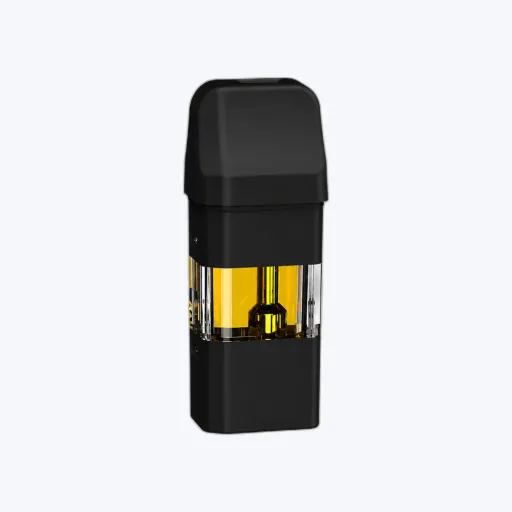
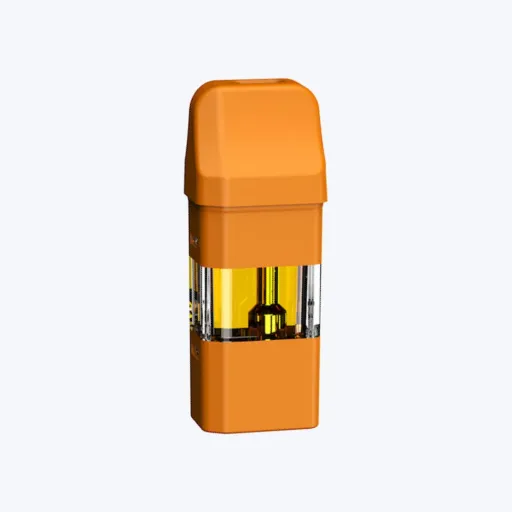
Both formats leave our warehouse empty. The open versus closed pod system distinction is about what the pod is designed to do after it has been filled and sealed once. An open pod is built to be reopened and refilled. A closed pod is built to be filled once, sealed, used and discarded.
That single design decision moves almost everything else: how you fill, who touches the oil, what leaks, what a customer can put in your hardware, and where your revenue comes from. The words are used loosely in the trade, so check the mechanism rather than the label. A pod described as open but sealed with a pressed cap is closed in practice.
| Open pod system | Closed pod system | |
|---|---|---|
| Who fills the pod | You, a co-packer, or the end user | You or your filler, once, before it leaves the facility |
| Refill after sealing | Designed for it. The seal is meant to be broken | Not designed for it. Reopening damages the seal |
| Seal type | Removable plug or a threaded or push-fit mouthpiece | Pressed, snapped or ultrasonically welded, one way |
| Filling method it suits | Hand and bench filling at low volume | Automated fill and cap lines at volume |
| Leak exposure | Higher. Every reopening is a new chance to seat the seal badly | Lower. One sealing event, under controlled conditions |
| Contamination control | Depends on how the end user handles it | Controlled inside your facility |
| Pod to battery interface | Magnetic or 510 threaded, often cross-compatible | Usually a proprietary magnetic fit |
| Cross-brand pod compatibility | Sometimes, if the interface is a common one | Rarely, and usually by deliberate design |
| Unit economics | Fewer pods sold per litre of oil | One pod sold with every fill |
| Control of what goes in your hardware | Weak. The customer can fill it with anything | Strong. Only your fill reaches the coil |
| Traceability of a returned unit | Hard. You cannot prove what was in it | Clear, if the pod carries a lot code |
| End of life | Battery and pod usually separable | Pod discarded each cycle, battery often retained |
Open systems fail on control. Once a customer can refill, they will refill with whatever they have, including oil that is far outside the viscosity the coil was specified for. The device then performs badly and the complaint arrives at your desk with your brand on the housing. You cannot test what you did not fill, and you cannot defend a warranty claim on a unit whose contents you never saw.
Closed systems fail on cost and waste. A pod goes in the bin with every fill, which means hardware cost is carried on every unit of oil sold rather than once per customer. That is a plastic and metal item discarded each cycle, and it is a visible one in a market where packaging waste is under scrutiny. It also raises your working capital: you hold pod stock proportional to your oil throughput, not to your customer count.
Neither failure mode is fatal. They are different failures, and the right answer depends on whether your risk is dilution of quality or cost per millilitre.
The filling method usually decides the format before anything else does. A closed pod suits an automatic filling and capping line because the machine performs one sealing operation per unit under repeatable conditions. Suppliers build for this: CCELL publishes its Dart and Bellos pod lines at 0.5 and 1.0 mL, and Nextvapor publishes its SnapPod with a magnetic pod to battery connection. Both are the suppliers' own published descriptions rather than figures we have verified.
An open pod can be filled the same way, but the seal has to be a mechanism a person can operate afterwards, which limits how tightly it can be closed. That is the trade-off in one sentence: a seal you can open is a seal that can open by itself.
Whichever you choose, the device still needs a settling period after filling before it is tested or shipped. See curing and settling time.
A closed pod carrying a lot code lets you tie a returned device to a fill batch and an oil lot. That is the difference between a targeted recall and a whole-range recall. An open pod gives you the hardware lot but not the fill, so an incident investigation stops at the point where the customer opened it.
Registration duties do not change between formats. Whoever places the product on the market handles battery and WEEE producer registration and appoints a responsible person, regardless of whether the pod is refillable. Empty Vapes supplies CE, RoHS, REACH and EU Battery Regulation documentation on request and offers WEEE support, but the registrations sit with you. See compliance.
Minimums start from around 500 units with no container requirement, and branded runs take about 15 days, so testing a format before committing does not require a container of hardware.
Trade guidance for B2B buyers, not legal advice. Empty hardware only, no cannabinoids and no e-liquid. B2B trade only, 18+ / 21+ per market. The buyer is responsible for the fill, for finished-product compliance and for product registration in their market.
Browse the range in the shop, full specs, trade pricing after a free account, and CE and compliance docs on request.
Browse the catalogueGive us the hardware, the quantity and the market. We reply with a price, a specification and a lead time. A request for a quote is not an order.
Empty hardware only. No cannabinoids and no e-liquid. We sell to companies only.