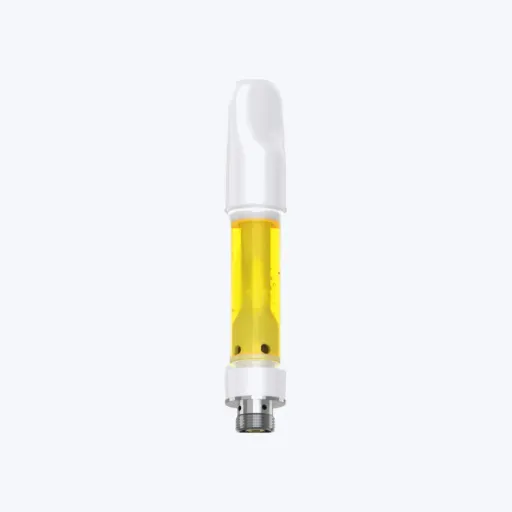
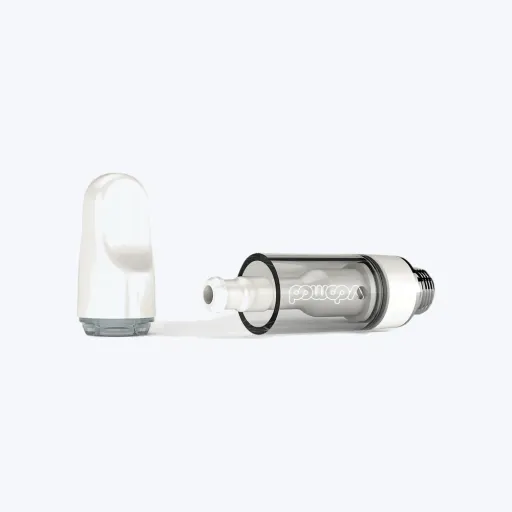
HardwareFor this job
By the Empty Vapes trade desk. Published 2026-08-21, last updated 2026-08-21. How we write these.
Cartridge coil resistance is one of the few specifications on a datasheet that is a number rather than an adjective. It is also the one most often quoted without the context that makes it mean anything.
Resistance is measured in ohms and describes how strongly a conductor opposes current. In a cartridge it is a property of the heating element: the material it is made from, how thick the conductive path is, and how far that path runs. It is fixed when the part is manufactured. Nothing the filler or the end user does changes it.
Two equations carry most of the practical meaning. Current equals voltage divided by resistance. Power equals voltage squared divided by resistance. Both say the same thing from different angles. At a fixed voltage, a lower resistance element draws more current and turns more electrical power into heat. A 1.2 ohm coil on a 3.2 V battery is doing more work than a 1.8 ohm coil on the same battery.
That is the whole mechanism. Everything below is a consequence of it.
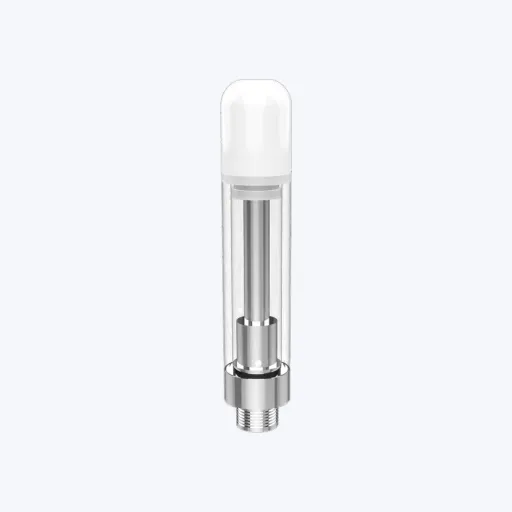
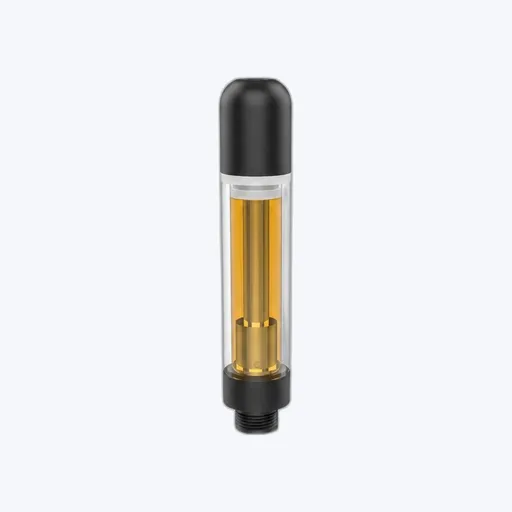
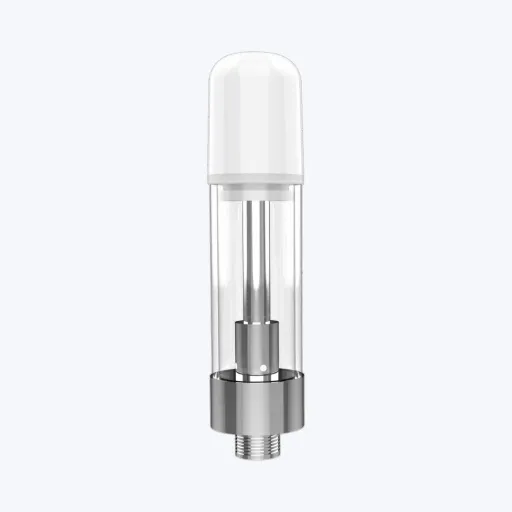
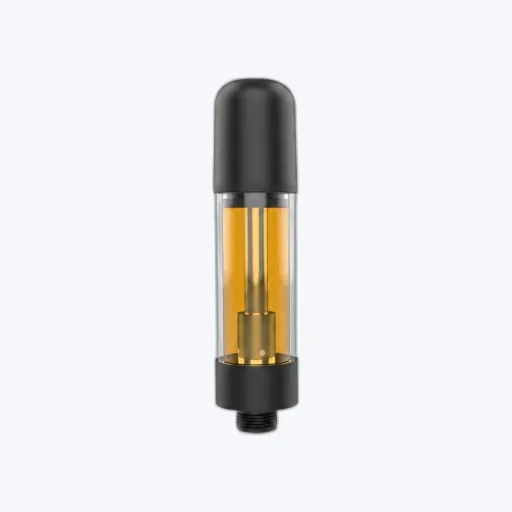
Most 510 cartridges sold into the trade sit somewhere between roughly 1.0 and 2.0 ohm. The figure is an output of the coil design rather than a feature chosen for the datasheet. CCELL publishes 1.4 ohm across several of its cartridge lines and 1.7 ohm on its EVOMAX variants. That is their published claim about their own parts, not a category standard, and other manufacturers land elsewhere.
A nominal figure on its own is incomplete. What matters in a production batch is the tolerance band around it and how consistently the factory holds it. Two cartridges both labelled 1.4 ohm behave differently if one line holds a tight spread and the other does not, and the difference shows up as an inconsistent draw across a pallet rather than as an outright failure. Ask for the tolerance and for the batch measurement record. A supplier who can quote the nominal but not the spread has given you half the specification.
The table below is arithmetic, not a product claim. It shows the power an element dissipates at three common regulated output voltages, calculated as voltage squared divided by resistance. It assumes the battery holds its set voltage under load, which regulated boards do and simple unregulated ones do not.
| Coil resistance | At 2.8 V | At 3.2 V | At 3.6 V |
|---|---|---|---|
| 1.0 ohm | 7.8 W | 10.2 W | 13.0 W |
| 1.2 ohm | 6.5 W | 8.5 W | 10.8 W |
| 1.4 ohm | 5.6 W | 7.3 W | 9.3 W |
| 1.6 ohm | 4.9 W | 6.4 W | 8.1 W |
| 1.8 ohm | 4.4 W | 5.7 W | 7.2 W |
| 2.0 ohm | 3.9 W | 5.1 W | 6.5 W |
Two things follow. A small change in resistance moves power further than buyers expect: 1.2 ohm at 3.2 V delivers around two thirds more power than 2.0 ohm at the same setting. And voltage has a squared effect, so stepping a variable battery from 2.8 V to 3.6 V raises power by roughly 65 percent whatever the coil. When a customer reports a burnt taste, the battery setting is as likely a cause as the cartridge. The guide to 510 battery voltage for a cartridge covers that side of the pairing.
Power is only half of the pairing. The other half is how fast oil can reach the element. A ceramic core wicks at a rate set by its porosity and by the intake apertures feeding it. If the coil converts oil to vapour faster than the wick replaces it, the element runs dry and the draw tastes burnt. If the coil runs cool against a thin, fast-feeding oil, the core stays saturated and the cartridge is more likely to weep.
Thick extracts move the balance. Live rosin and liquid diamonds wick considerably slower than a thin distillate at the same temperature, which is why suppliers offer larger intake apertures for them. CCELL publishes five stock cartridge intake diameters, 1.2, 1.4, 1.6, 1.8 and 2.0 mm, and pairs the larger sizes with thicker oils. Our guides to intake hole size and to intake for thick oil set out how to pick one.
The trade-off runs both ways and neither end is free. More power clears a viscous oil and gives a fuller draw, but it drives terpene loss, raises pressure inside the tank and increases leak risk through thermal expansion. Less power protects flavour and reduces leak risk, but against a thick oil it invites clogging and weak first draws. No setting wins on both counts. The workable order is to fix the oil first, then choose the intake, then choose the resistance and voltage to suit.
Empty Vapes sells empty hardware only, so the oil, the fill and the finished-product registration are yours. The specification conversation above is the part we can help with before you commit. Stock 510 cartridges start from around 500 units with no container minimum, and made to order runs are around six weeks.
Trade guidance for B2B buyers, not legal advice. We sell empty hardware only; you are responsible for the fill and for finished-product compliance in your market.
Browse the range in the shop, full specs, trade pricing after a free account, and CE and compliance docs on request.
Browse the catalogueGive us the hardware, the quantity and the market. We reply with a price, a specification and a lead time. A request for a quote is not an order.
Empty hardware only. No cannabinoids and no e-liquid. We sell to companies only.