HardwareFor this job
By the Empty Vapes trade desk. Published 2026-08-20, last updated 2026-08-20. How we write these.
The intake aperture is the single dimension that decides whether oil reaches the heating element fast enough, and whether it stays where you put it. Here is what the number means and what moves when you change it.
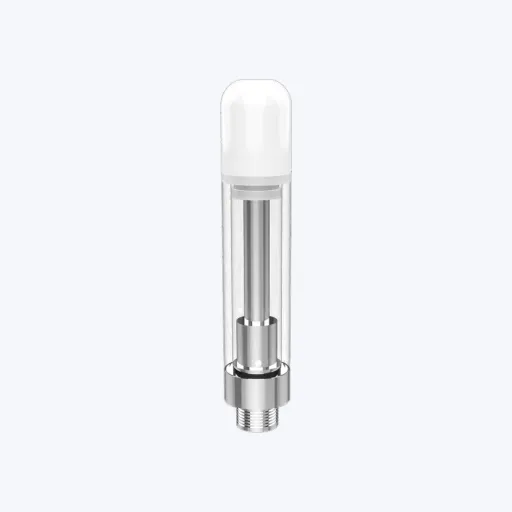
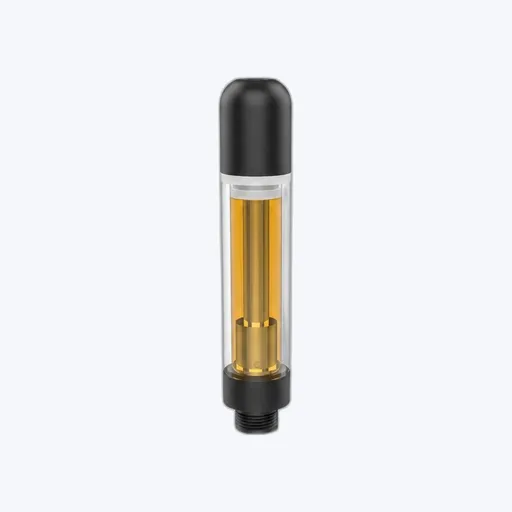
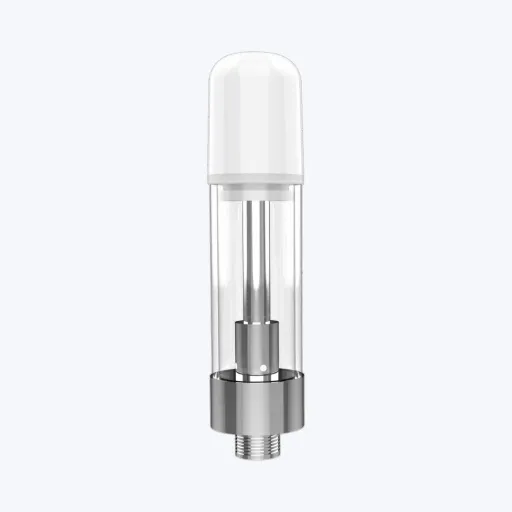
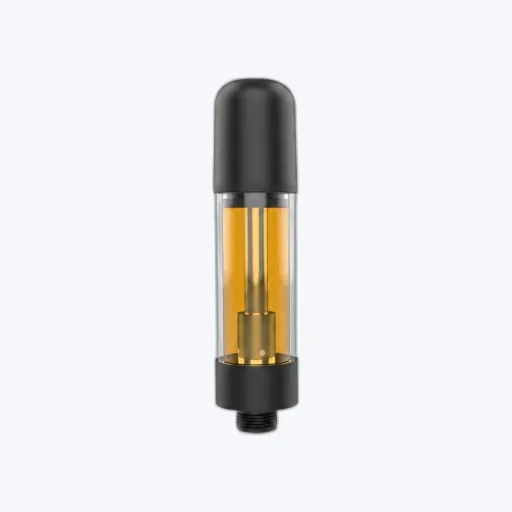
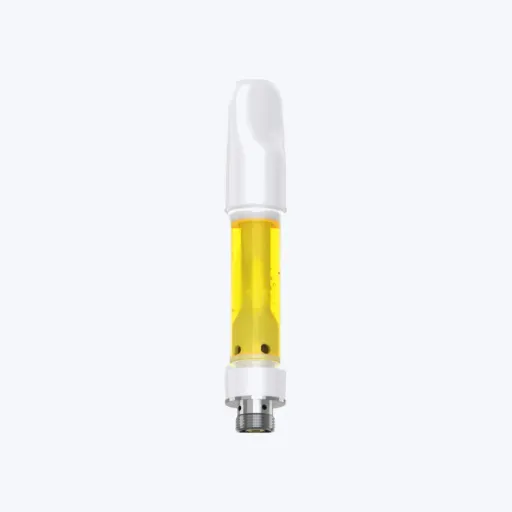
Inside a 510 cartridge, oil sits in the tank and the heating element sits in a chamber below it or beside it. The intake holes are the openings that connect the two. They are cut into the centre post on a post design, or into the base of the wick chamber on a postless design. Nothing else feeds the element. Their diameter and their count set how fast oil can move across under gravity, capillary action and the pressure drop created by a draw.
Suppliers quote intake as a diameter with a count. "4 x 1.2 mm" means four openings of 1.2 mm each. Some datasheets quote only the diameter and leave the count on the drawing, so ask for both. Two cartridges that both say "1.2 mm" can differ in total open area by a factor of two.
Most 510 platforms sit in a band from roughly 0.8 mm to 2.0 mm, offered in steps of about 0.2 mm. Counts are usually two or four. The table below is an orientation, not a specification. Confirm any starting point against a sample of your own fill at your own filling temperature.
| Intake diameter | Commonly specified for | Failure mode if mismatched |
|---|---|---|
| 0.8 mm | Thin fills and e-liquid style formulations | Slow refill and dry hits with anything viscous |
| 1.0 mm | Standard distillate, the common default | Starvation at low ambient temperature |
| 1.2 mm | Distillate with reintroduced terpenes | Seepage if the cartridge is overfilled |
| 1.5 mm | Lightly diluted live resin | Flooding when the oil is warm |
| 1.8 to 2.0 mm | Live rosin and heavy full-spectrum extracts | Leaking and pooling if the fill is thin |
These are not interchangeable. Open area scales with the square of the diameter, so four holes of 1.0 mm come to about 3.14 mm² of total area, which is almost exactly the same as one hole of 2.0 mm. The flow is not the same.
For viscous flow through a channel, resistance depends on far more than cross-sectional area. In the pipe-flow case described by the Hagen-Poiseuille relation, volumetric flow scales with the fourth power of the radius. Cartridge intakes are short orifices rather than long tubes, so real behaviour sits somewhere between area-limited and radius-limited, but the direction holds: several small holes pass thick oil more slowly than one large hole of the same total area.
Count still earns its place. Multiple holes distribute oil around the circumference of the core, which matters for even saturation and for how the cartridge behaves when it is stored on its side. A single large hole feeds one point. The trade-off is that a single large hole is easier to fill through and easier to clear of trapped air.
Give the supplier the fill, not just the number. State the extract type, the diluent if any, the filling temperature, and the tank volume. Ask for the intake diameter and the hole count as separate figures, ask whether the holes are in the post or the base, and ask which core material the platform uses. If you are choosing between architectures first, read postless versus pillar 510 cartridges. If you are matching intake to a specific extract, read matching cartridge intake size to oil viscosity.
Order a small batch and test it before you commit volume. Our MOQ starts at around 500 units, so a trial run is a realistic step rather than a favour. Made-to-order runs are around six weeks. CE, RoHS, REACH and EU Battery Regulation documentation is available on request, and the compliance page sets out what we can supply and what stays your responsibility as the party placing the filled product on the market.
Trade guidance for B2B buyers, not legal advice. We sell empty hardware only; you are responsible for the fill and for finished-product compliance in your market.
Browse the range in the shop, full specs, trade pricing after a free account, and CE and compliance docs on request.
Browse the catalogueGive us the hardware, the quantity and the market. We reply with a price, a specification and a lead time. A request for a quote is not an order.
Empty hardware only. No cannabinoids and no e-liquid. We sell to companies only.