HardwareFor this job
By the Empty Vapes trade desk. Published 2026-08-20, last updated 2026-08-20. How we write these.
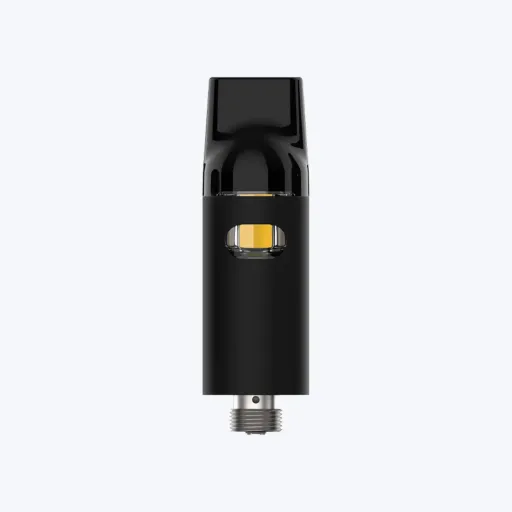
A cartridge does not have a performance rating on its own. It has a coil resistance, and what the customer experiences is decided by the battery that drives it.
The coil is a resistor. The battery applies a voltage across it. The heat produced is electrical power, and for a resistive load power equals voltage squared divided by resistance. Two consequences follow, and both are worth stating plainly because most pairing problems come from ignoring one of them.
First, power rises with the square of voltage. A modest step up in voltage is a large step up in heat. Second, a lower resistance coil draws more power at the same voltage. Swapping a cartridge for one with a lower ohm rating, on an unchanged battery setting, is a power increase even though nothing about the battery changed.
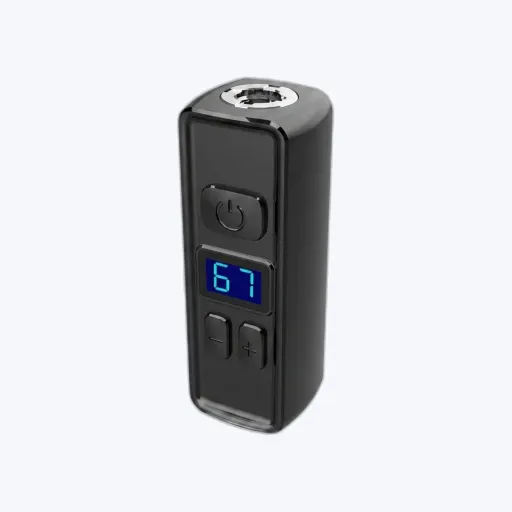
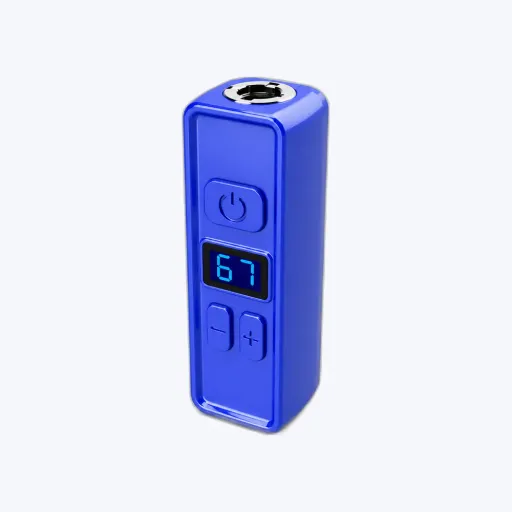
Most oil cartridge coils are quoted somewhere between roughly 1 and 2 ohms, and most adjustable 510 batteries offer settings somewhere in the low single digits of volts, often as three or four presets rather than a continuous dial. Those are ranges, not specifications. Ask for the actual figures for the parts you are buying.
Batteries differ in more than their marked voltage. A regulated battery holds its output near the set figure as the cell discharges. An unregulated battery passes raw cell voltage to the coil, which for a single lithium cell falls steadily from full charge toward empty. On an unregulated device the same cartridge is driven harder in the morning than in the evening, and customers describe that as the cartridge fading rather than the battery.
Draw activation matters too. A device that ramps power at the start of a draw delivers a different thermal profile from one that applies full power immediately, even at the same voltage. Some of that is pre-heat behaviour, which is a separate function again.
Too little power leaves oil in the wick that never fully vaporises. Vapour is thin and the flavour is flat. Users compensate by drawing longer and harder, which pulls unvaporised oil toward the mouthpiece and produces condensation, spitting and, eventually, a cartridge that reads as leaking when it is really being over-drawn. Thick oils show this first, because they need more heat to move at all.
Too much power vaporises oil faster than the wick can replace it. The coil surface runs dry in spots, the residue scorches, and the taste turns harsh or burnt. Terpenes degrade before the rest of the oil, so the first thing customers notice is that the flavour is wrong rather than that the device is hot. The damage is not reversible: once a ceramic core has been cooked it performs worse for the rest of the cartridge life.
The trade-off between the two is real. Setting a pairing low protects the oil and disappoints anyone expecting a dense draw. Setting it high satisfies that expectation and shortens the usable life of the cartridge. There is no setting that does both.
| What the customer reports | Likely cause | What to change |
|---|---|---|
| Thin vapour, flat flavour | Power below what the oil needs | Higher voltage setting, or a lower resistance coil |
| Spitting or oil at the mouthpiece | Long hard draws compensating for low power | Raise power, or check intake sizing for the oil |
| Harsh or burnt taste from new | Power above what the wick can supply | Lower voltage setting, or a higher resistance coil |
| Good at first, worse after a few days | Coil cooked early in life | Lower the default setting on the paired battery |
| Fades over a charge cycle | Unregulated battery tracking cell voltage | Specify a regulated battery |
| Poor first puff in cold weather | Oil too viscous to wick at start of draw | Battery with a pre-heat function |
| Two batches behave differently | Coil resistance tolerance between runs | Ask for the resistance tolerance, not just the nominal |
Treat the battery and the cartridge as one product, even when the customer buys them separately. Ask your supplier for the coil resistance in ohms and its tolerance across a production run, whether the battery output is regulated, the exact voltage settings available, and whether the battery ramps or applies power immediately. Then test the pairing with your own oil before the full order, because oil viscosity moves the answer more than any other single variable.
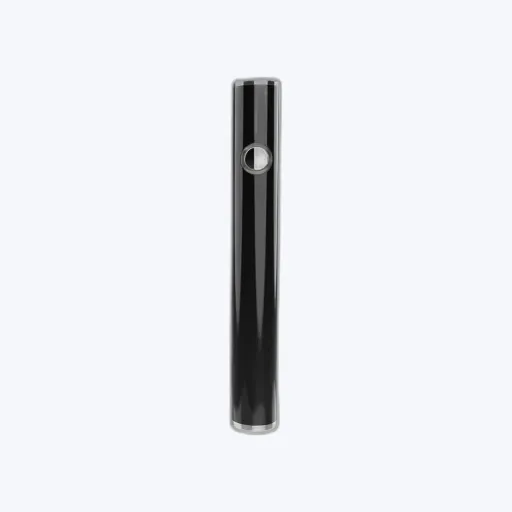
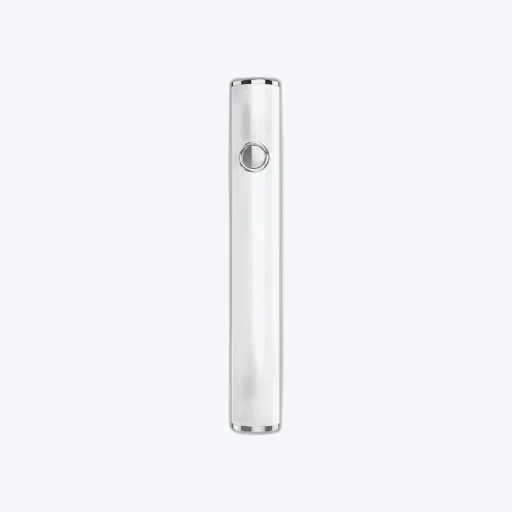
Because the 510 connector is a shared standard, any cartridge will physically fit any battery. Fitting and matching are different questions, and only the first is guaranteed. Empty Vapes supplies empty 510 cartridges and batteries as hardware only, MOQ from around 500 units, made-to-order runs around six weeks, with CE, RoHS, REACH and EU Battery Regulation documentation available on request. Battery placement on the EU market also carries registration duties; see compliance.
Trade guidance for B2B buyers, not legal advice. We sell empty hardware only; you are responsible for the fill and for finished-product compliance in your market.
Browse the range in the shop, full specs, trade pricing after a free account, and CE and compliance docs on request.
Browse the catalogueGive us the hardware, the quantity and the market. We reply with a price, a specification and a lead time. A request for a quote is not an order.
Empty hardware only. No cannabinoids and no e-liquid. We sell to companies only.