Reduction in airway meniscus clogs switching from metal center-post to postless straight-bore
Non-wetting polymer/ceramic chimney bore that prevents droplet capillary bridging
Maximum open-top dwell time after 45 C filling before positive headspace lock must be sealed
Safe warm-air clearing temperature to liquefy a chimney plug without flooding the core
1. The 3 physical causes of vape clogging: condensation meniscus vs chamber flood vs crystal plug
Every vape clog looks identical to the end customer - no airflow when pulling on the mouthpiece - but inside the hardware, three distinct fluid-mechanics failures occur at different heights in the airway.
| Clog Mechanism | Location in Airway | Primary Physical Cause | Clearing Method & Hardware Fix |
|---|---|---|---|
| Aerosol Condensation Meniscus | Upper chimney / mouthpiece throat (top 15 mm) | Hot 180 C aerosol hits cold stainless-steel center post (18 C), condensing into droplets that bridge a <1.8 mm bore. | Warm upper tip to 35-40 C, clear with gentle draw; switch to non-metallic postless 2.4 mm chimney. |
| Coil Chamber Flooding | Bottom atomizing chamber / intake ports | Tank left uncapped >30 min after 45 C filling, or barometric air-freight drop pushing oil through 2.0 mm intakes. | Store upright at 22 C, fire 2 short 2-second pulses at 2.0 V without inhaling to vaporize excess pool. |
| THCA / CBN Crystal Plug | Intake apertures & porous ceramic surface | Insufficiently decarboxylated live rosin (>50% raw THCA) or un-homogenized CBN isolate crashing out at <15 C. | Warm sealed device to 45 C for 15 minutes; enforce -18 C 20-minute freezer crash test before batch fill. |
2. Safe 4-step protocol to unclog a disposable vape or 510 cartridge without flooding the coil
Tell customers and retail staff never to suck aggressively on a cold, clogged cartridge. Pulling a hard vacuum (>400 Pa) on a cold blocked chimney acts like a syringe plunger: it sucks raw liquid oil straight out of the reservoir through the porous ceramic core into the bottom air channel, turning a minor 2 mg condensation droplet into a permanent chamber flood.
Instead, follow the 4-step thermal clearing protocol: (1) Stand the device upright for 5 minutes at room temperature (20 C to 22 C). (2) Warm the upper mouthpiece and body to 35 C to 42 C (using the battery's 1.8 V 10-second preheat mode, or holding the tank in a warm palm for 90 seconds) so the condensed oil plug drops from 40,000 cP down to 3,000 cP. (3) Apply gentle positive pressure or a light 60 Pa draw until the thin meniscus parts cleanly. (4) Take a 2-second firing draw and continue inhaling for 1 second after releasing the button to clear residual aerosol from the chimney.
3. Why traditional stainless-steel center posts act as cold vapour condensers
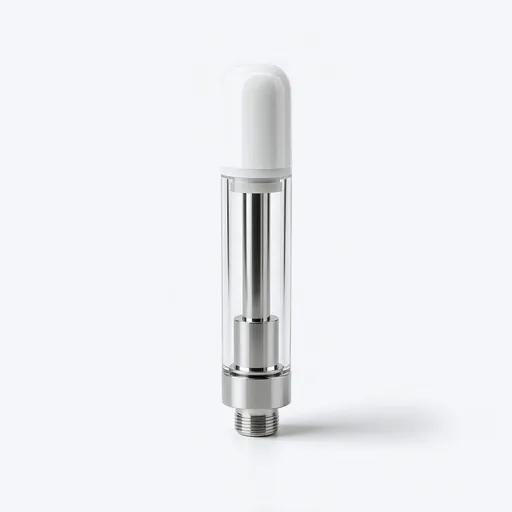
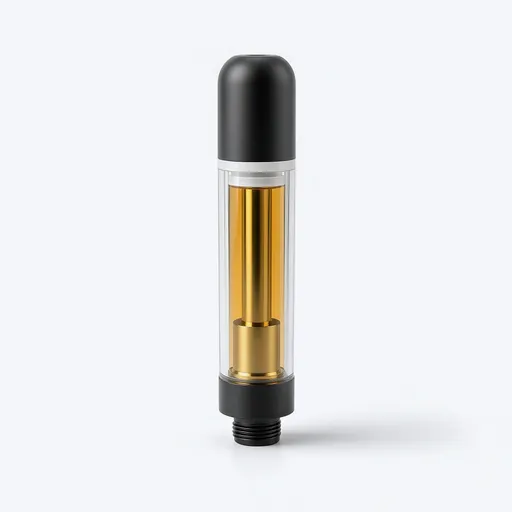
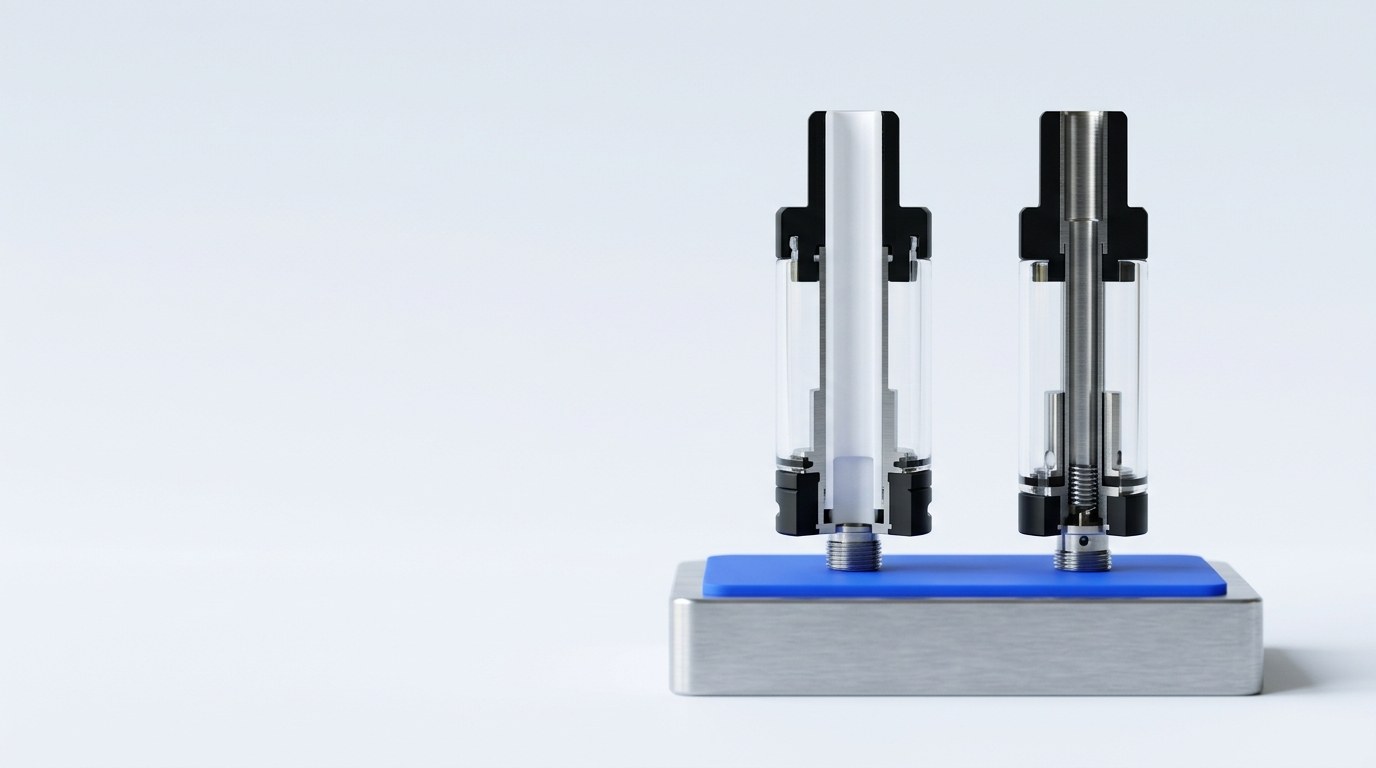
In a conventional 510 cartridge or pillar disposable, a hollow 316L stainless-steel or brass tube runs right through the middle of the oil reservoir from the bottom coil to the mouthpiece. Metal has a thermal conductivity of 16 to 110 W/(m*K) - roughly 50 to 300 times higher than medical-grade PCTG polymer (0.22 W/(m*K)) or zirconia ceramic (2.5 W/(m*K)).
Every time hot cannabinoid vapour (vaporized at 175 C to 210 C at the coil) travels up that 35 mm metal tube surrounded by 18 C liquid oil, the metal wall strips heat out of the aerosol stream. Roughly 4% to 7% of every puff condenses back into sticky liquid oil on the inside wall of the metal tube. Once that film reaches 0.25 mm thickness inside a 1.6 mm bore, surface tension snaps it into a solid liquid bridge across the tube.
4. How postless straight-bore airways and 2.4 mm chimneys cut clogging by 78%
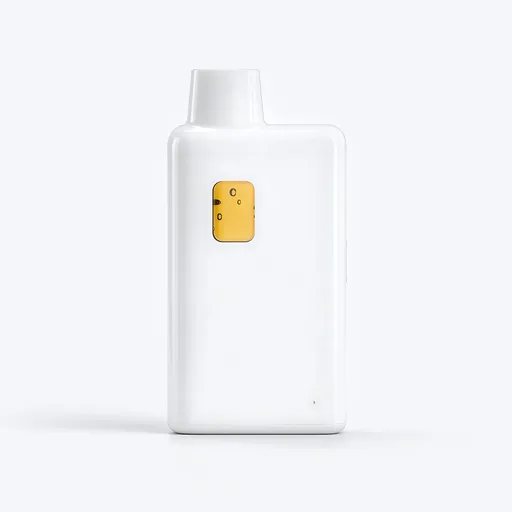
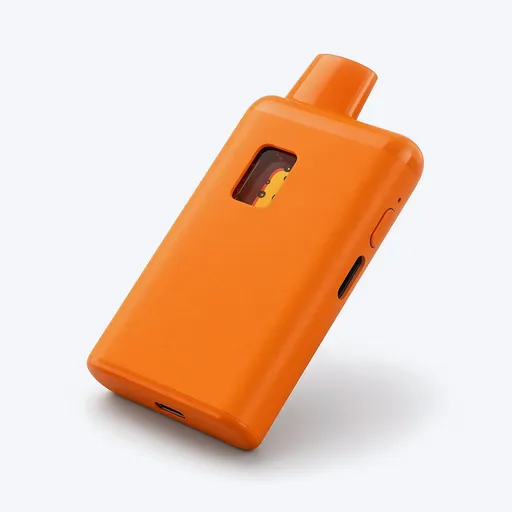
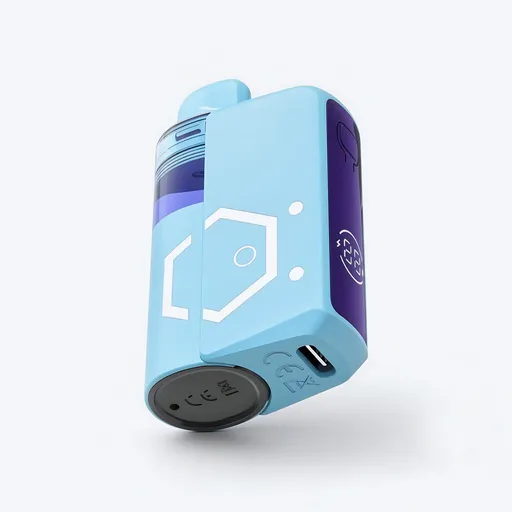
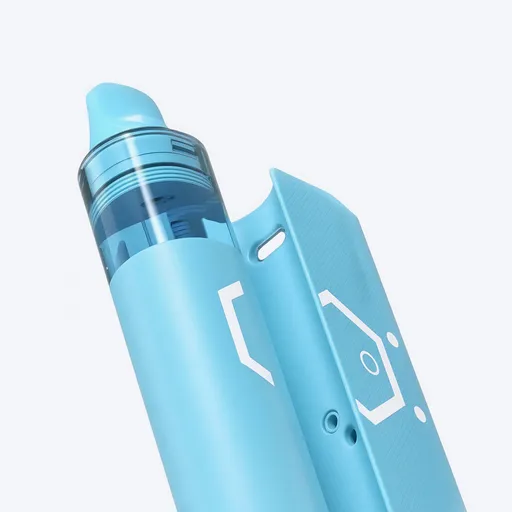
Postless all-in-one disposables (such as the Empty Vapes WukongBar 510 and postless ceramic range) remove the central metal chimney completely. The heating element sits flat at the base of an unobstructed reservoir, and vapour travels through an insulated, non-metallic 2.2 mm to 2.8 mm aerodynamic channel molded into the housing wall.
Because the polymer or ceramic airway wall has low thermal conductivity and a wider cross-sectional area (4.5 mm2 vs 2.0 mm2), vapour stays warm until it exits the mouthpiece and droplets cannot bridge the wider gap. In 1.0 ml and 2.0 ml live resin and distillate stress tests across 250 draws, straight-bore postless hardware reduces clog events by 78% compared to standard metal center-post cartridges.
5. Filling-line rules: the 45 C viscosity ceiling and the 30-minute capping rule
When an entire batch clogs on the very first draw out of the retail box, the cause is almost always filling-line dwell time. While a cartridge or disposable is open at the top, atmospheric pressure (101.3 kPa) pushes down on the warm 45 C oil column with zero vacuum lock above it. If operators leave filled trays uncapped for more than 30 minutes, warm oil saturates right through the 20-micron ceramic pores into the central airway. Always cap within 15 to 30 minutes of filling to establish the top silicone vacuum lock.
FAQ
- Why do 2.0 ml disposable vapes clog more often in the second half of the tank than 0.5 ml or 1.0 ml vapes?
- A 2.0 ml tank processes twice the total aerosol mass (400 to 600 puffs) through the same chimney bore. In a traditional center-post device, cumulative wall condensation exceeds the 0.25 mm bridging threshold around puff 250. For 2.0 ml capacities, always specify a postless disposable with a >=2.4 mm insulated airway and instruct users to clear the chimney after each puff.
- Does blowing into the bottom USB-C or airflow hole of an auto-draw disposable safely clear a clog?
- Only if done very gently (<100 Pa) while the mouthpiece is warmed to 35 C. Blowing hard into the bottom intake of a cold auto-draw disposable can invert the silicon MEMS microphone diaphragm or force oil droplets into the PCB cavity.
Sources
- Directive 2011/65/EU on the restriction of the use of certain hazardous substances in electrical and electronic equipment (RoHS) (recast), the official text on EUR-Lex.
- Regulation (EC) No 1907/2006 concerning the Registration, Evaluation, Authorisation and Restriction of Chemicals (REACH), the official text on EUR-Lex.
- Regulation (EU) 2023/1542 concerning batteries and waste batteries, the official text on EUR-Lex.
Trade guidance for B2B buyers, not legal advice. We sell empty hardware only; you are responsible for the fill and for finished-product compliance in your market.