HardwareFor this job
By the Empty Vapes trade desk. Published 2026-08-21, last updated 2026-08-21. How we write these.
Almost every cartridge on the market has ceramic in it somewhere. That is why the phrase on a datasheet tells you very little until you know which part is ceramic and which part is not.
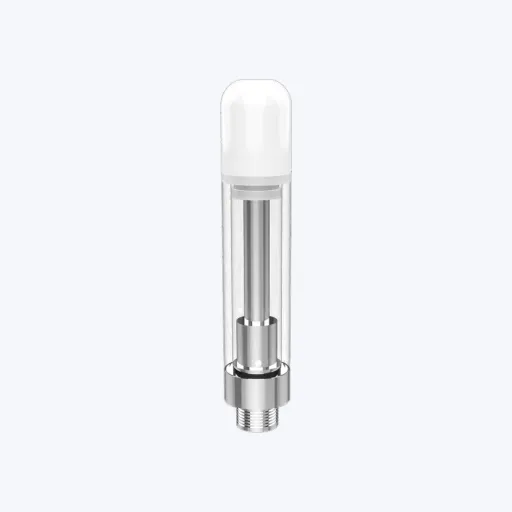
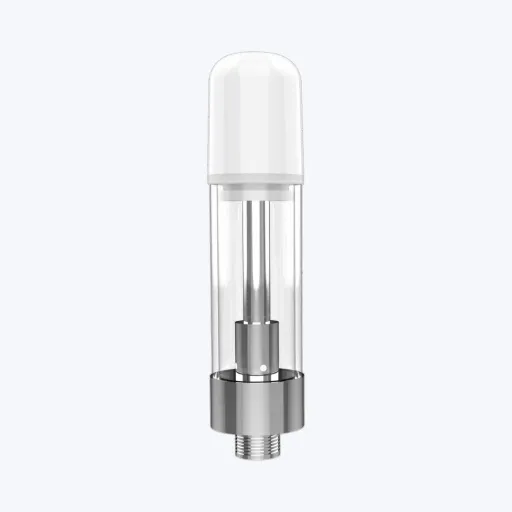
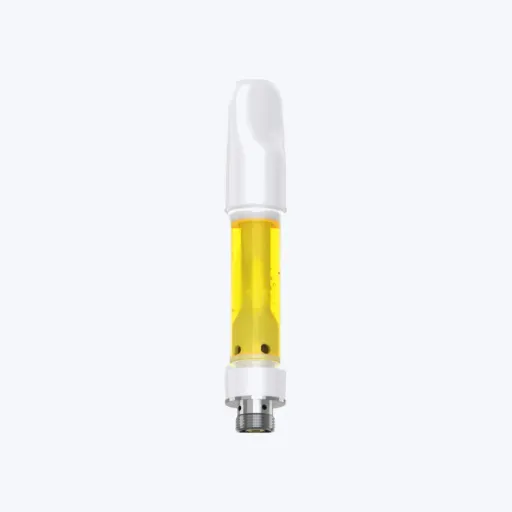
The mainstream cartridge is a glass tank with a porous ceramic heating core inside it, held by metal fittings and a centre post. CCELL describes its Flex platform as using a proprietary patented porous ceramic heating core, and lists ceramic heating elements across most of its cartridge range. That is a ceramic-core cartridge. The ceramic is the wick and the heater; the tank around it is glass and the structure around that is metal.
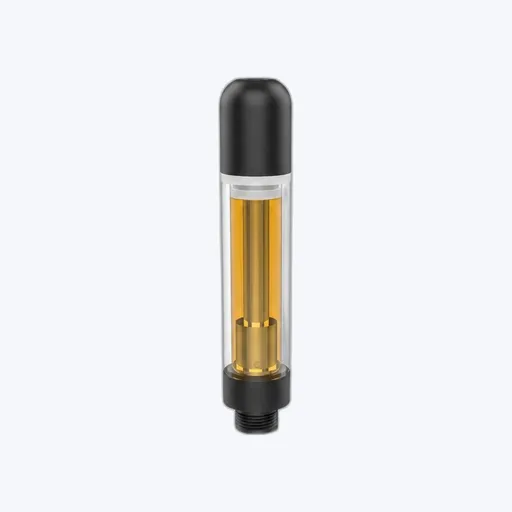
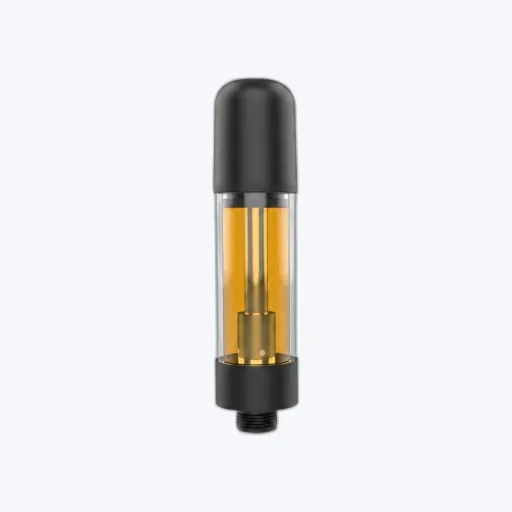
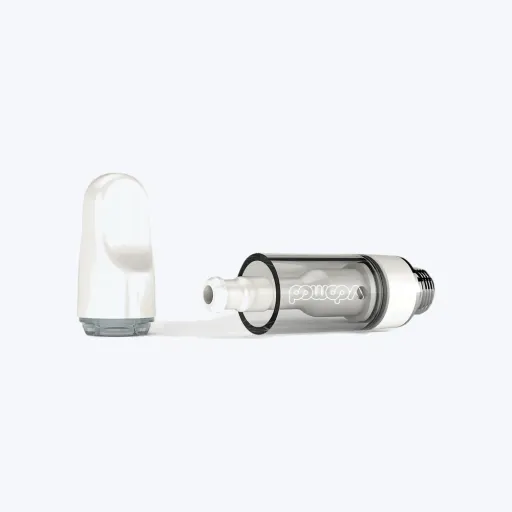
A full ceramic cartridge moves ceramic outward from the core into the structure. Depending on the design, that means a ceramic tank body, a ceramic centre post, or both, so that the surfaces the oil rests against are ceramic rather than glass and metal. CCELL sits a version of this middle ground in its Blanc, which it lists with a zirconia ceramic centre post while keeping a conventional tank.
There is no standard behind the phrase. A supplier can print full ceramic against a cartridge whose only ceramic part is the core, and nothing in the term prevents it. Treat it as a question rather than a specification.
| Dimension | Full ceramic | Ceramic core, glass tank |
|---|---|---|
| What the tank body is | Ceramic, opaque | Borosilicate glass, transparent |
| Where the ceramic sits | Heating core plus structure, and in some designs the centre post | Heating core only |
| Metal in the oil path | Reduced, though contacts and seals remain | Present in the fittings and usually the centre post |
| Oil level visible | No, unless a window is added | Yes, which helps filling and reassures the end user |
| Behaviour if dropped | Chips and cracks; damage can be hard to see on an opaque body | Glass breaks visibly, so a failed unit is obvious on inspection |
| Wall thickness and size | Thicker walls for the same capacity, so a larger or heavier part | Thinner walls, lighter for the same tank volume |
| Unit cost | Higher, and ceramic bodies add freight weight | Lower, and the volume produced across the industry keeps it there |
| Choice available | Narrower; fewer capacities, intakes and mouthpiece options | Wide, in stock, with more intake and capacity combinations |
| Minimum and lead time | Often a made-to-order tier, so a longer wait and a higher minimum | Frequently stock, so from around 500 units with no container minimum |
Less than the marketing suggests, and the parts that do change are worth separating from the parts that do not.
What does not change. Draw resistance is set by the airpath geometry, so swapping glass for ceramic changes nothing there. Wicking rate is set by the porous core and the intake apertures, which exist in both constructions. Flavour differences between two cartridges are usually traceable to the core, the coil resistance and the voltage, which is why a comparison has to run at a fixed voltage. See coil resistance.
What does change. The number of dissimilar materials in contact with the oil goes down. That removes some of the interfaces where a solvent-heavy oil can act on an adhesive or a plating, and it reduces the surface count migration testing has to account for. It does not remove the need for that testing. Every cartridge still has electrical contacts, and ceramics have their own composition to evidence. The heavy metal testing guide covers what to commission.
Thermal behaviour changes too, in both directions. A ceramic body holds heat, so the device warms more slowly and stays warm longer after use. Some users read that as smoothness; others notice a warm tank in a pocket.
Four costs, and the first two are the ones missed at quotation.
Against that, the honest case for it: a distinct hand feel, a materials story a brand can stand behind if it is documented, and fewer dissimilar surfaces in contact with an aggressive oil.
Trade guidance for B2B buyers, not legal advice. We sell empty hardware only; you are responsible for the fill and for finished-product compliance in your market.
Browse the range in the shop, full specs, trade pricing after a free account, and CE and compliance docs on request.
Browse the catalogueGive us the hardware, the quantity and the market. We reply with a price, a specification and a lead time. A request for a quote is not an order.
Empty hardware only. No cannabinoids and no e-liquid. We sell to companies only.