ISO/IEC 17025 accreditation is granted for named tests, not for a whole lab
A report you cannot tie to your delivery proves nothing about it
Composition and migration answer different questions
Migration results depend on temperature, time and medium
Two different tests, often confused
A bulk composition test measures what the materials of the hardware are made of. The sample is digested and analysed, and the answer is a set of concentrations in the material. A leachate or migration test is different: the hardware is exposed to oil or to a defined simulant under stated conditions of temperature and time, and the liquid is then analysed for what transferred into it.
The two answer different questions. Composition tells you what is present. Migration tells you what moves. A clean composition result does not on its own establish what a filled product will contain after weeks on a shelf, and a migration result taken under mild conditions does not describe a cartridge left in a hot vehicle. When a report lands, the first thing to establish is which of the two it is, and under what conditions.
Where metals come from in a cartridge
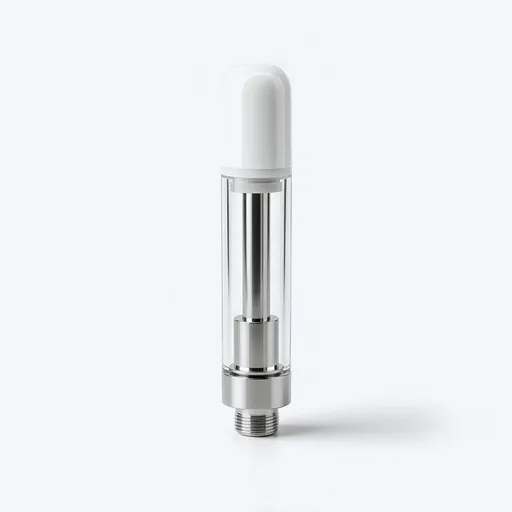
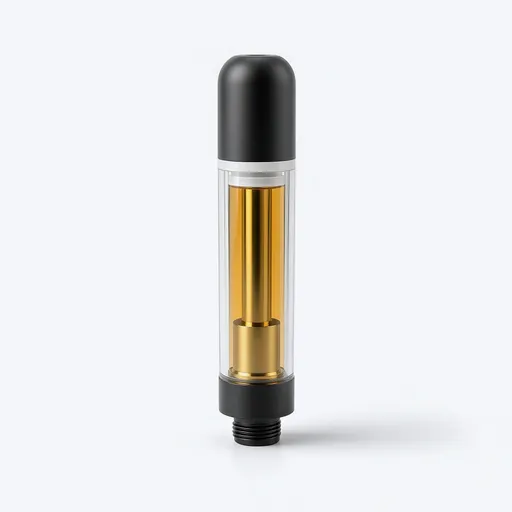
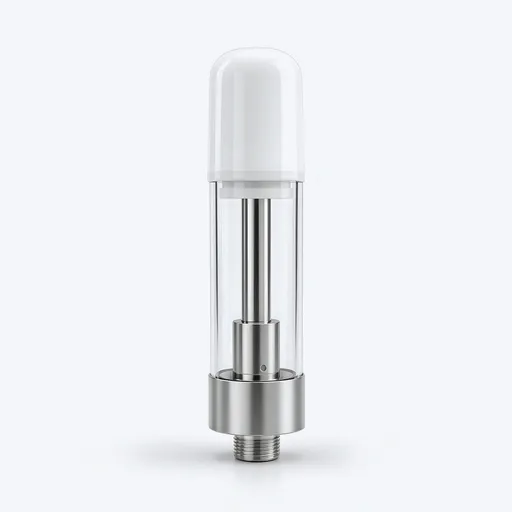
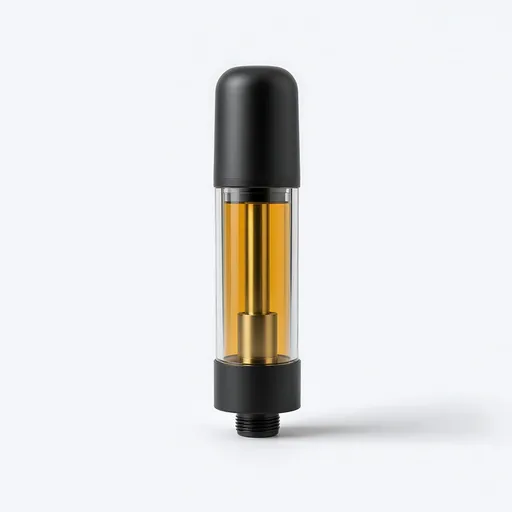
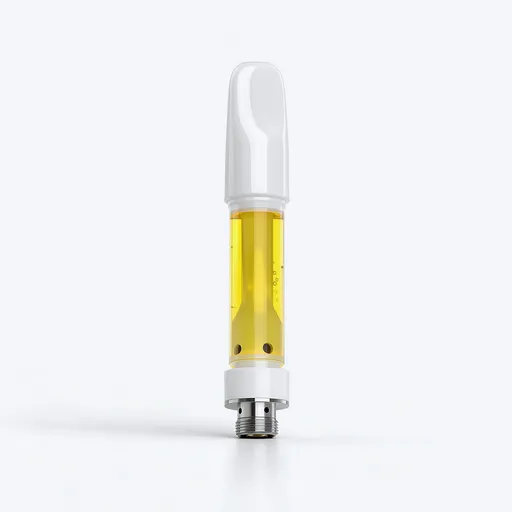
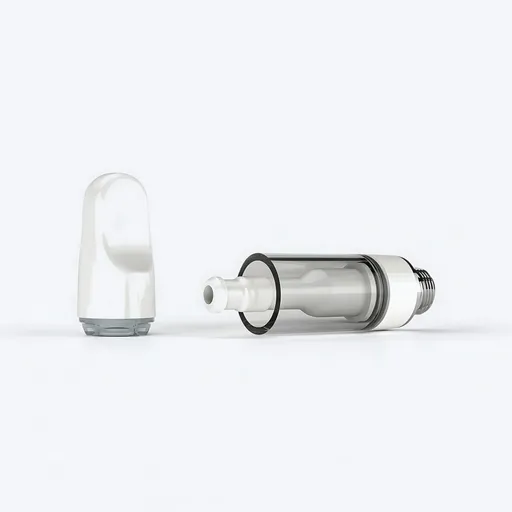
A 510 cartridge is an assembly of several materials in contact with oil and with heat. The candidates are the metal base and threads, plated or coated surfaces, joints and any solder or braze, the heating element and its leads, and the seals. Brass alloys used in fittings can contain lead by design, which is why the alloy specification of the base is worth asking about rather than assuming.
Material choice in the parts that touch oil narrows the exposure. Dense, inert ceramics absorb nothing and shed nothing, which is one reason they appear in the oil path; that comparison is in zirconia, ceramic and quartz cartridge cores. Architecture matters too, because a postless design changes which joints sit in the oil path, as set out in postless versus pillar 510 cartridges.
Which elements get screened
Lead, cadmium, arsenic and mercury are the four that appear on nearly every panel used in this sector. Extended panels commonly add chromium, nickel, copper, antimony and zinc. Inductively coupled plasma mass spectrometry is the usual analytical technique for trace levels, with optical emission spectrometry used where concentrations are higher.
RoHS is a separate instrument and covers different ground. It restricts lead, mercury, cadmium and hexavalent chromium among other substances in electrical and electronic equipment. A RoHS declaration is not a heavy metals report and neither substitutes for the other. Ask for both, and keep them filed separately.
What a certificate of analysis has to contain
Thresholds differ by market, by product category and by whether the article is regulated as a consumer product, a medical device or something else. This page does not state limits, because the applicable number is a question for your regulatory adviser and your competent authority. What follows is about whether the document itself can be relied on at all.
| What to request | Why it matters | A weak answer looks like |
|---|---|---|
| Accredited laboratory and scope | ISO/IEC 17025 accreditation is granted for named tests, not for a whole lab | A logo, or "our lab is certified" with no scope named |
| Lot and sample identity | A report you cannot tie to your delivery proves nothing about it | No lot number, no date of receipt, no sample description |
| Test type, stated explicitly | Composition and migration answer different questions | A report that never says which was performed |
| Exposure conditions | Migration results depend on temperature, time and medium | "Leach test passed" with no conditions given |
| Element list with numeric results | You need the value, not a verdict written by the supplier | A pass or fail column and no concentrations |
| Limit of quantitation per element | "Not detected" is meaningless without the detection floor | ND with no LoQ stated |
| Method reference | Lets a second lab reproduce the work | No method named, or a method that does not match the matrix |
What to ask a supplier for
Put the request in writing and ask for it against a named lot rather than as a general reassurance. Ask for the alloy specification of the metal parts, the material of every component in the oil path, and confirmation of whether any solder or braze is present in that path. Ask whether testing is performed per production lot, periodically, or once at qualification, and ask to see the most recent report with its date. A supplier who tested once in 2022 and has changed factory since is telling you very little.
Ask a second question that most buyers skip: who holds the retained samples, and for how long. If a complaint arrives eighteen months after delivery, a retained sample from that lot is the only thing that settles it.
What we supply and what we do not claim
CE, RoHS, REACH and EU Battery Regulation documentation is available on request, along with WEEE support for the EU market. We do not publish thresholds or interpret them for your market, and we do not assess your filled product. Empty Vapes supplies empty hardware; the party placing the filled product on the market carries the finished-product obligations. The division of responsibility is set out on the compliance page. MOQ starts at around 500 units with no container minimums and branded runs take about 15 days, so a qualification batch for your own independent testing is a normal order rather than an exception.
FAQ
- What does heavy metal testing on a vape cartridge measure?
- There are two different tests and they answer different questions. A bulk composition test measures what the materials are made of. A leachate or migration test exposes the hardware to oil or a simulant under stated conditions and then measures what transferred into it. Ask which one a report describes, because a clean composition result does not by itself tell you what migrates in use.
- Which elements are usually screened?
- Lead, cadmium, arsenic and mercury are the four that appear on nearly every panel. Extended panels often add chromium, nickel, copper, antimony and zinc. RoHS separately restricts lead, mercury, cadmium and hexavalent chromium among other substances, so a RoHS declaration and a heavy metals report are not the same document.
- What should I ask a hardware supplier for?
- Ask for a report from an ISO/IEC 17025 accredited laboratory that names its accreditation scope, identifies the lot tested, states whether it is a composition or a migration test, names the analytical method, and gives a numeric result and a limit of quantitation for every element. Ask separately for the RoHS and REACH documentation for the article.
Sources
- Directive 2011/65/EU on the restriction of the use of certain hazardous substances in electrical and electronic equipment (RoHS) (recast), the official text on EUR-Lex.
- Regulation (EC) No 1907/2006 concerning the Registration, Evaluation, Authorisation and Restriction of Chemicals (REACH), the official text on EUR-Lex.
- Regulation (EU) 2023/1542 concerning batteries and waste batteries, the official text on EUR-Lex.
- Directive 2012/19/EU on waste electrical and electronic equipment (WEEE) (recast), the official text on EUR-Lex.
Trade guidance for B2B buyers, not legal advice. We sell empty hardware only; you are responsible for the fill and for finished-product compliance in your market.