HardwareFor this job
By the Empty Vapes trade desk. Published 2026-08-21, last updated 2026-08-21. How we write these.
Cartridge brands add dry herb because the customer already exists. The hardware is a different business from the one they are running, and the differences show up in after-sales and cash flow rather than in the product brief.
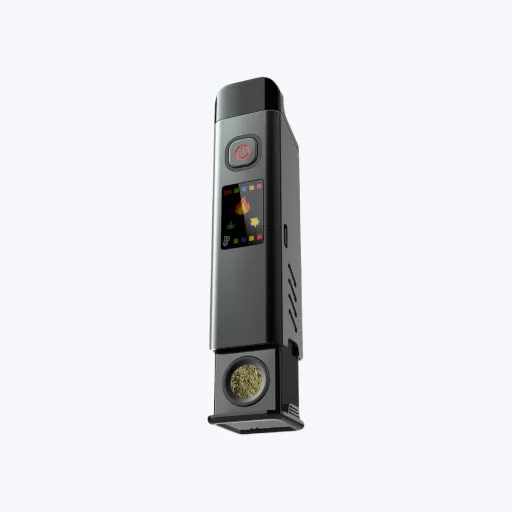
In cartridges, white label runs from a badge on an existing part to a mould cut for you. In dry herb, the top of that spectrum is rarely available and rarely wise. A herb device has the highest part count of the categories we hold: a chamber, a heater, insulation, a control board, an indicator, a screen, a mouthpiece, an airpath, a cell and a charge circuit. Tooling that from scratch is a capital project, not a branding exercise.
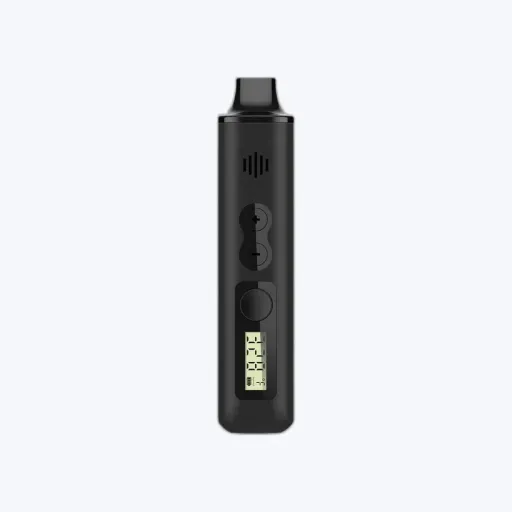
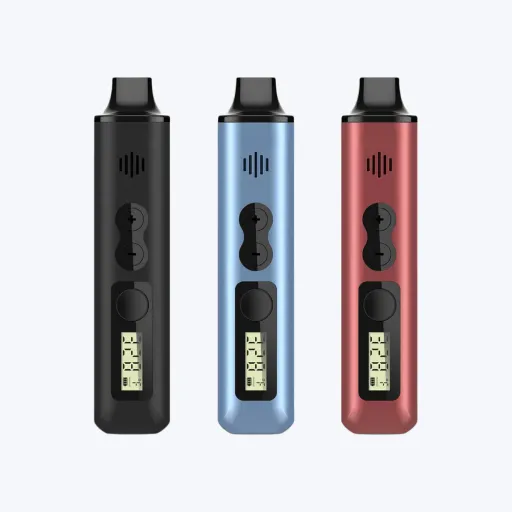
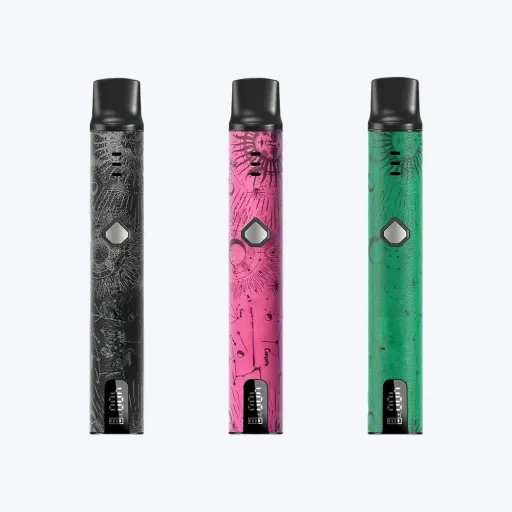
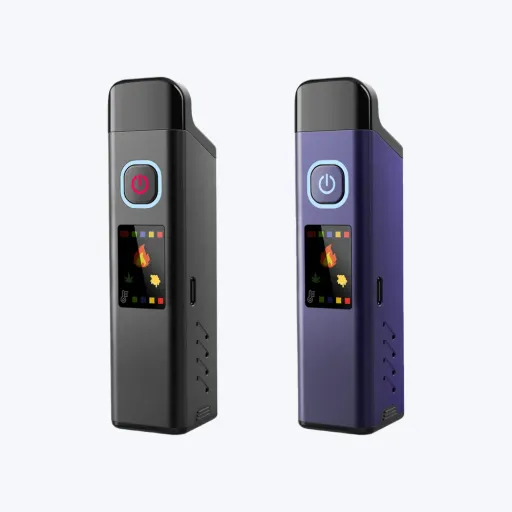
So a dry herb white-label programme in practice means selecting an existing platform and changing what sits on the outside. Finish and colour. Logo, by laser or print. Mouthpiece style where the platform offers options. Packaging and inserts. Sometimes firmware branding, if the device has a screen. The internals stay as the factory built them, which is a constraint worth accepting rather than fighting. OEM, ODM and white label sets out which arrangement you are actually in, and briefing a factory covers how to write it down.
| 510 cartridge programme | Dry herb device programme | |
|---|---|---|
| What the customer buys | A consumable. Bought again every time the oil runs out | A durable. Bought once and expected to last years |
| Where your revenue repeats | The fill. Hardware is the vehicle for oil sales | Nowhere by default. You have to build a spares and accessory line to get repeat revenue |
| Customisation route | Print, colour, mouthpiece, capacity, and tooling if the volume justifies it | Finish, logo, mouthpiece option and packaging. Internals stay as built |
| Minimum order tier | Lowest of the categories. Stock from around 500 units, no container minimum | Stock behaves the same. Customised tiers start higher because part count is higher |
| After-sales function | A fault is a credit note against a low unit value | A fault is a repair, a spare part or a warranty replacement against a high unit value |
| Spares you must hold | None. The unit is the spare | Screens, mouthpieces, glass, seals, cleaning tools, charge cables, held in Europe |
| Returns diagnosis | Visual. Leaking, clogged, cosmetic | Technical. Heater, board, cell or charge fault, and often user technique instead |
| Packaging | Small box, minimal insert | Larger box, retention, accessories, a printed manual and often a warranty card |
| Retail channel | Volume-led. Shelf space and price | Consultative. Staff need product training before they can sell it |
| Cash cycle | Fast turns at low unit value | Slow turns at high unit value. More cash tied up per unit of shelf space |
Four functions have to exist that a cartridge business can usually do without.
There is real upside against that. A durable device carries a higher unit price and a higher absolute margin, it puts your brand in a customer's hand for years rather than a week, and it does not depend on a fill you may not be able to supply everywhere. The trade is repeat revenue for brand presence and unit margin. Whether it works depends on your channel, and unit economics is where to run the numbers.
The frameworks do not change. A dry herb device with a lithium cell needs a CE mark backed by an EU Declaration of Conformity and a technical file, with RoHS and REACH evidence behind it, WEEE and EU Battery Regulation producer registrations in each market, a GPSR responsible person established in the EU, and UN38.3 before the cell can be transported. Putting your brand on the device makes you the manufacturer in EU law, so the declaration and the file become yours.
Two things scale up rather than staying flat. The cell is larger than in a cartridge battery, which affects packing, transport classification and what carriers will accept. And if the device pairs with a phone over Bluetooth, it becomes radio equipment under Directive 2014/53/EU, which brings conformity work that no cartridge ever triggers. Ask early whether the platform has wireless, because it is easy to inherit that obligation without noticing it.
We provide CE, RoHS, REACH and EU Battery Regulation documentation on request and support WEEE, and we deliver within the EU. The producer registrations still belong to whoever places the product on the market. See compliance and the EU Battery Regulation guide.
Start with stock hardware rather than a branded run. Stock starts from around 500 units with no container minimum, enough to test whether your channel sells a device at all, and it leaves nothing to write off if it does not. Branded runs take around six weeks after artwork sign-off, so the second order can carry your identity once the first has told you something.
Sample before either, and sample with the material your customers actually use. Buy spares in the same order, because a screen costs less bought alongside the device than shipped alone later. And set the warranty period and the returns route in writing before the first unit ships, since a policy written under pressure is always more generous than one written calmly. The dry herb vaporizers range shows the formats we hold, and the MOQ guide explains why the customised tiers sit where they do.
Trade guidance for B2B buyers, not legal advice. We supply empty hardware only, with no cannabinoids and no e-liquid, B2B trade only, 18+ or 21+ according to your market. You are responsible for the fill, for finished-product compliance and for product registration in the markets you sell into.
Browse the range in the shop, full specs, trade pricing after a free account, and CE and compliance docs on request.
Browse the catalogueGive us the hardware, the quantity and the market. We reply with a price, a specification and a lead time. A request for a quote is not an order.
Empty hardware only. No cannabinoids and no e-liquid. We sell to companies only.