HardwareFor this job
By the Empty Vapes trade desk. Published 2026-08-21, last updated 2026-08-21. How we write these.
Two ways to get heat into plant material, and the choice decides the device around it: how big the battery has to be, how much support your customers need, and what the thing costs to build.
Conduction heats by contact. The material sits against a hot surface, usually a ceramic or stainless oven wall, and heat travels inward from that surface through the load. The oven is the heater.
Convection heats by moving air. An element raises the temperature of an air stream, and that air passes through the load and carries heat to every surface it touches. The material never touches the element. Air is the heater, and it only heats while you are drawing.
That single difference generates everything below. Contact heating is fast, cheap and uneven. Air heating is slow, costly and even. Neither is the better engineering choice in the abstract. They suit different products and different customers.
One disclosure before the table. Neither of the manufacturer content packs we hold, from CCELL or from Nextvapor, covers dry-herb hardware, so nothing on this page is drawn from a supplier specification. It is heat transfer applied to a product category, and every device still has to be sampled and measured on its own terms.
| Conduction | Convection | |
|---|---|---|
| Heat-up | Fast. Only a small oven mass has to reach temperature, and the load is already touching it | Slower to the load. The element may be quick, but the air has to move through the material before anything vaporises |
| Flavour | Warmer and heavier. Material at the wall runs hotter than material in the middle, and the first draws taste different from the last | Cleaner and more consistent through a session, because nothing is pressed against a scorching surface |
| Extraction evenness | Uneven without intervention. Users are expected to stir or shake the chamber part way through | Even, if the load is ground and packed correctly. Air finds every surface it can reach |
| Scorching and combustion | A real failure mode. An overpacked bowl against a hot wall can char rather than vaporise | Lower risk. Heat arrives at the load already limited to the air temperature |
| Cleaning | Residue bakes onto the oven wall and needs regular attention, but there is only one place to clean | The chamber stays cleaner. Residue instead spreads along a longer airpath with more parts to reach |
| Battery drain | Lower. The oven stores heat in its own mass and returns it to the load between draws | Higher. Heat leaves with the air, so the element works for the whole length of every draw |
| Bill of materials | Lower. Fewer components, simpler thermal design, less insulation, a smaller cell | Higher. A dedicated heater, an engineered airpath, tighter control and usually more capacity |
| User technique | Forgiving on grind, punishing on packing density. Needs a stir | Punishing on grind. A loose or coarse load lets air channel through and the draw goes thin |
| Support burden | Low. Most complaints are about taste or a dirty oven | Higher. Most complaints are about weak vapour, and the cause is usually how the chamber was filled |
A large share of devices marketed as convection are hybrids, and a share of those are conduction with a longer airpath. The honest definition is simple: if the material rests against a heated surface, conduction is doing part of the work, whatever the listing says.
Hybrids exist for a good reason. Pure convection is slow to first vapour, and customers dislike waiting. A hybrid uses conduction to bring the load up quickly and convection to even it out and finish it. The result usually sits between the two columns above on every row, including the ones you were hoping to avoid.
The problem is descriptive rather than technical. Convection carries a premium, so it appears on spec sheets loosely. Ask where the heating element physically sits relative to the chamber wall, and ask for a section drawing. That is harder to answer vaguely than a question about heating method.
The heating method is not only an engineering decision, because it sets three commercial variables at once.
The retail read matters too. Conduction suits a value or entry device where fast first vapour and a low price are what the customer is buying. Convection suits a considered purchase, where the customer already knows the vocabulary and will forgive a slower start for a cleaner session. Choosing convection for a price-led range usually produces a device that is expensive to build and hard to sell on its advantages.
Six, in writing, before you sample. Where does the element sit relative to the chamber wall, with a section drawing. What is the chamber capacity and what grind is it designed for. What temperature settings are offered, and is temperature controlled by a sensor or estimated from power. What is the cell capacity and the charge current. What materials are in the airpath from chamber to mouthpiece, and is there documentation for their food-contact or thermal suitability. And what is the cleaning procedure the device is designed around, since that becomes your support script.
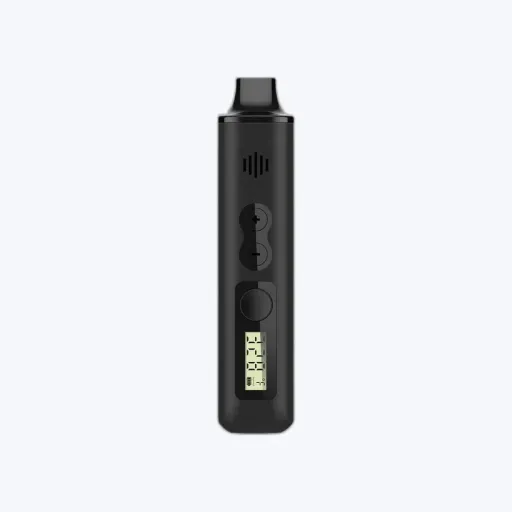
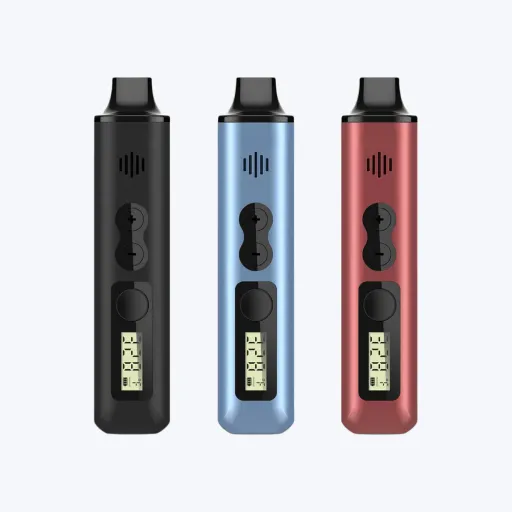
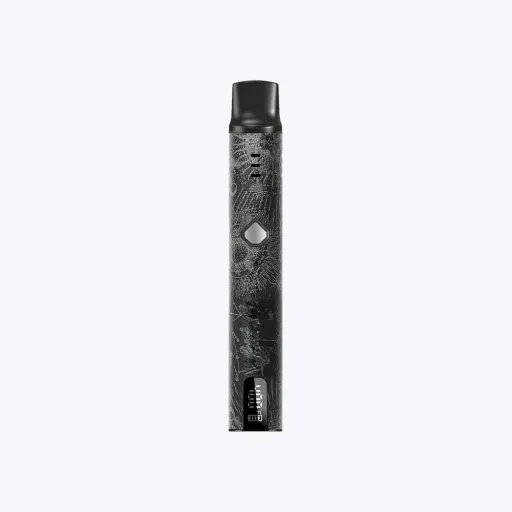
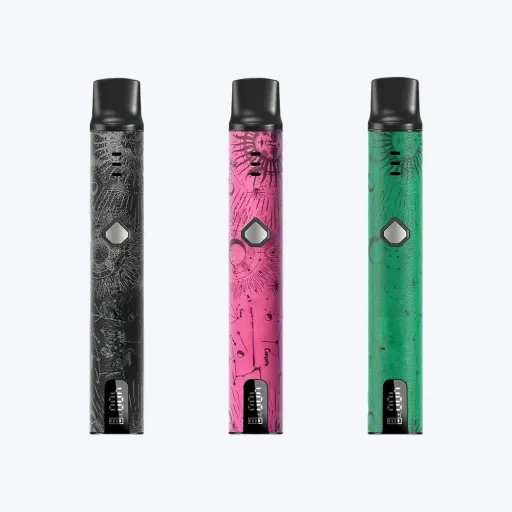
Then sample before you commit, because thermal behaviour is the specification most likely to differ from the datasheet. Our sampling guide covers how to run that properly, and the dry herb vaporizers range shows the formats we hold. If you are weighing dry herb as an addition to an existing cartridge brand, the dry herb white-label guide covers what changes commercially.
Trade guidance for B2B buyers, not legal advice. We supply empty hardware only, with no cannabinoids and no e-liquid, B2B trade only, 18+ or 21+ according to your market. You are responsible for the fill, for finished-product compliance and for product registration in the markets you sell into.
Browse the range in the shop, full specs, trade pricing after a free account, and CE and compliance docs on request.
Browse the catalogueGive us the hardware, the quantity and the market. We reply with a price, a specification and a lead time. A request for a quote is not an order.
Empty hardware only. No cannabinoids and no e-liquid. We sell to companies only.