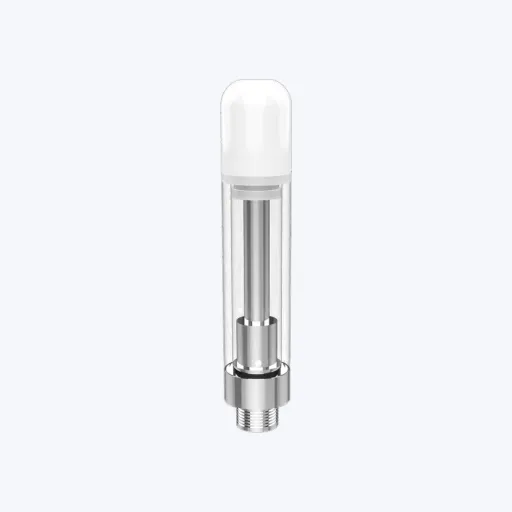
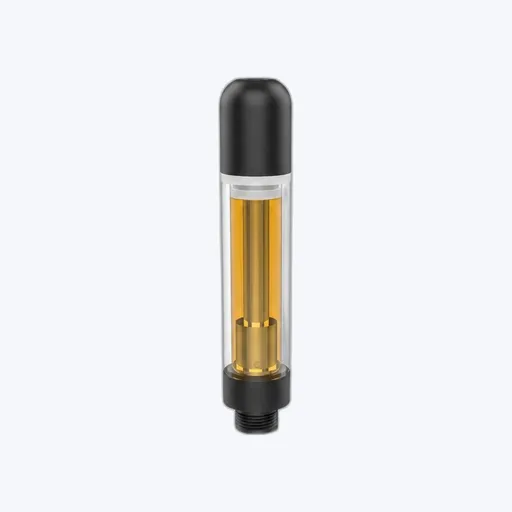
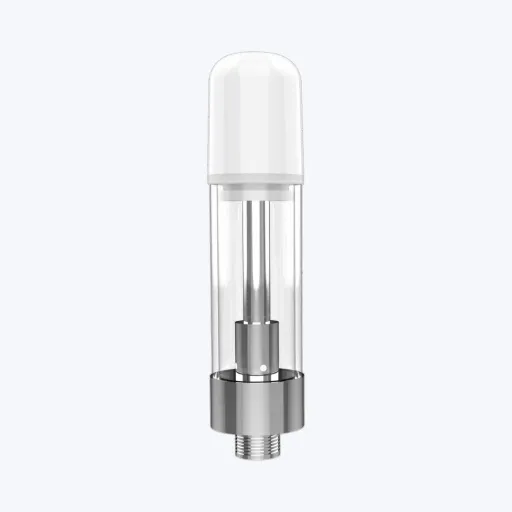
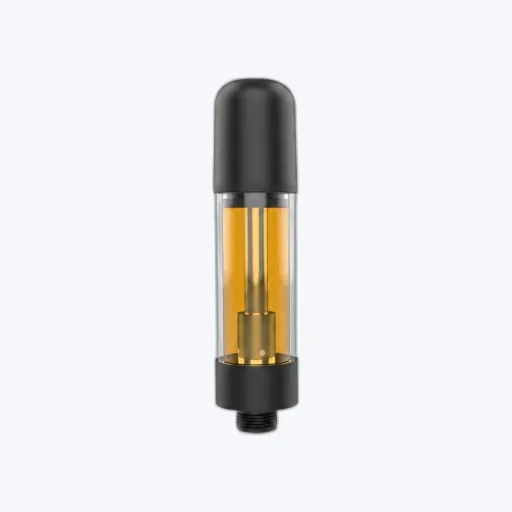
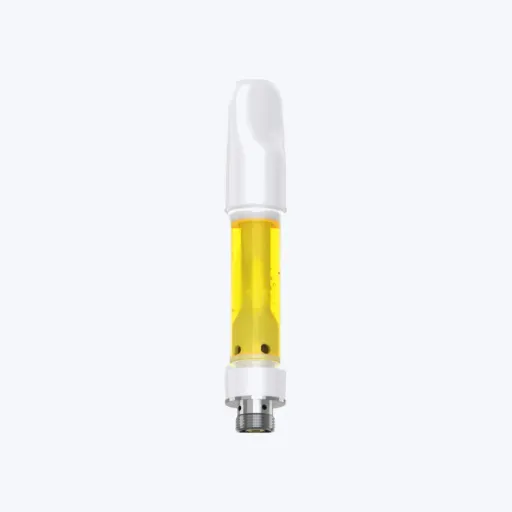
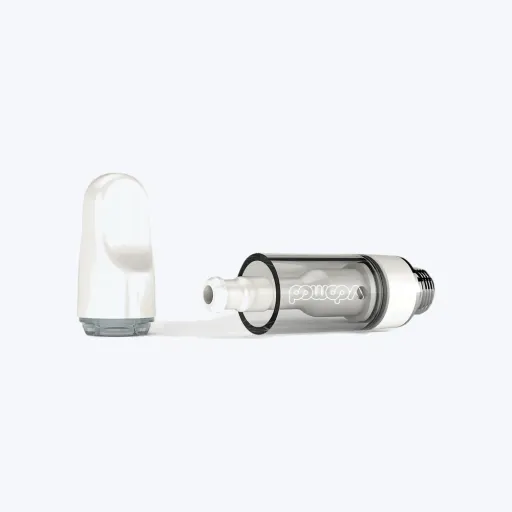
HardwareFor this job
By the Empty Vapes trade desk. Published 2026-08-21, last updated 2026-08-21. How we write these.
Two parts can both be made correctly and still leave a visible gap when they are screwed together. That is what 510 thread tolerance actually means in practice, and it is a sourcing problem before it is an engineering one.
510 is a convention rather than a published standard. It spread because it worked and everyone copied it, not because a standards body issued it. Our what is 510 thread guide describes it as a screw connector with ten threads of roughly 0.5 mm pitch, and that description is about as far as the shared definition goes.
When there is no published tolerance table, each factory works to its own internal drawings. Two parts from two factories can both pass their own inspections and still fit each other imperfectly, because they were never measured against the same reference. Nobody is at fault in the ordinary sense, which is exactly what makes the conversation difficult when it happens to your batch.
So treat "510 compatible" as a claim about a family of parts rather than a guarantee about two specific ones. The only thing that settles it is putting your cartridge on your battery.
A cartridge sitting flush is the outcome of four separate measurements agreeing, and only one of them is the thread.
Notice how few of these are the thread. That is why "the thread is out of tolerance" is usually the wrong diagnosis, and the wrong first check.
The table is the differential diagnosis. The last two columns are the point: some causes are cosmetic and some stop the device working, and some are yours to fix while others belong to the supplier.
| Cause | What you see | How to confirm it | Effect on function | Who resolves it |
|---|---|---|---|---|
| Male thread longer than the battery well is deep | An even gap all round, and the cartridge stops turning firmly | Fit the cartridge to a different battery. If it seats there, the pairing is the issue | None, in most cases. The pins still meet | Change one of the two parts, or accept it as a pairing limit |
| Cartridge centre pin too proud | The cartridge stops early and feels springy at the end of the turn | Compare the pin height against a cartridge that seats correctly on the same battery | None immediately, but it loads the battery pin every time | Supplier. It is a dimensional fault against the drawing |
| Base diameter wider than the battery face | The cartridge overhangs and rests on the rim, with a step rather than a gap | Look from the side. The gap is at the edge, not under the centre | None. It is a shape mismatch | Nobody. Pair the cartridge with a battery designed for the format |
| Thread damage or debris | An uneven gap, and the cartridge feels gritty or tight partway down | Look into the well with light. Try a second cartridge on the same battery | Can be severe. A cross threaded start damages both parts | You, by cleaning, or scrap if the thread is already cut |
| A gasket or seal ring stacking height | A small, even gap, and the joint feels soft | Check whether a ring is fitted, and whether it is meant to be | None, and it can improve the seal | Nobody. A design feature, not a defect |
| Cartridge started off square | A wedge shaped gap, wider on one side | Unscrew fully, restart by turning backwards until the threads drop | Severe if forced. This is how threads get cut | You. A training point |
A visible gap is the complaint that reaches you, because a customer can photograph it. The more expensive fault is the reverse, and it arrives disguised as something else.
Forcing a cartridge down beyond the point where it seats pushes the battery centre pin below its intended travel, and on many batteries the pin does not spring back fully afterwards. The customer then fits a different, perfectly good cartridge, gets nothing, and reports a dead battery. The cause was the previous cartridge, and nobody will find it unless they are looking.
Two consequences. A cartridge that sits slightly proud but fires reliably is often the better outcome, so telling a customer to keep turning is bad advice. And if you are getting battery returns that pass every other test, check the centre pin travel before accepting them as faulty. Our cartridge QC checklist covers the reference battery method that catches this at goods in.
You do not need instrumentation. You need two reference parts and a rule about when they are used.
Most of this is settled at specification time. Ask for a dimensioned drawing rather than a marketing sheet, carrying overall length, base diameter, male thread length, centre pin height and the tolerance on each. Without a tolerance beside each figure you have a target rather than a specification, and nothing to reject against. The spec sheet guide covers which fields are usually missing.
Ask separately what the supplier inspects and how. A factory that gauges its threads and records the result gives you a consistency a factory checking by feel cannot. Ask too whether the design has changed since the drawing was issued, because a quiet revision between runs is the most common source of a batch that no longer fits parts you already hold.
If the cartridge will be sold alongside a specific battery, say so on both specifications and hold a sample pair. The battery voltage guide covers the electrical half of the same pairing decision, and stock 510 cartridges and 510 batteries can be sampled together before you commit to either. CE, RoHS, REACH, EU Battery Regulation and WEEE documentation is available on request; producer registration remains with whoever places the finished product on the market. See compliance.
Trade guidance for B2B buyers, not legal advice. We supply empty hardware only, with no cannabinoids and no e-liquid, B2B trade only, 18+ or 21+ according to your market. You are responsible for the fill, for finished-product compliance and for product registration in the markets you sell into.
Browse the range in the shop, full specs, trade pricing after a free account, and CE and compliance docs on request.
Browse the catalogueGive us the hardware, the quantity and the market. We reply with a price, a specification and a lead time. A request for a quote is not an order.
Empty hardware only. No cannabinoids and no e-liquid. We sell to companies only.