HardwareFor this job
By the Empty Vapes trade desk. Published 2026-08-21, last updated 2026-08-21. How we write these.
A rechargeable disposable vape is not a premium version of a single-charge one. It is a different answer to a specific engineering problem, and it introduces costs of its own. The choice comes down to how large your fill is and which failure mode you would rather explain.
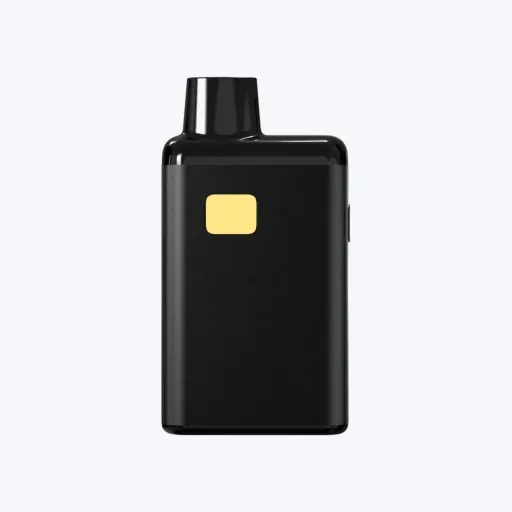
A single-charge disposable ships charged and has no way to take power back in. The cell, the board and the tank are sized together so that, in theory, the battery lasts as long as the oil. When either runs out the device is finished.
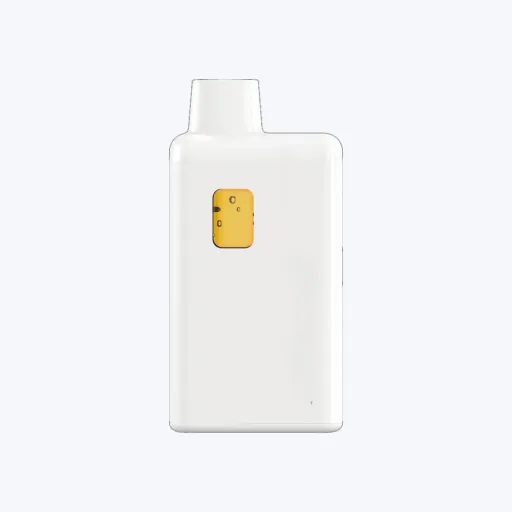
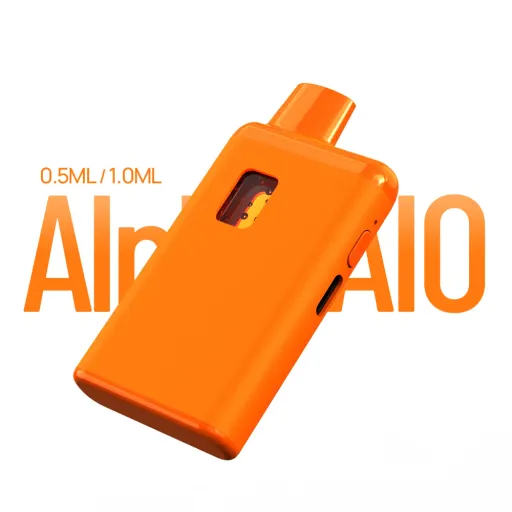
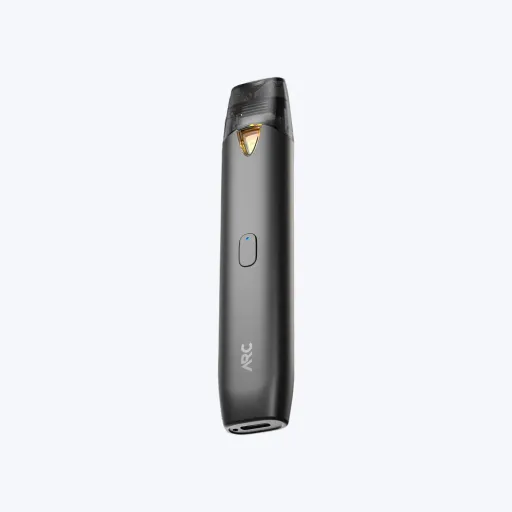
A rechargeable disposable is the same device with a charge port, almost always USB-C now, and the circuitry behind it. The tank is still fixed and the device is still discarded when the oil is gone. The only thing that changes is that the cell can be topped up along the way, which decouples battery life from oil volume.
Supplier ranges show the pattern. Nextvapor publishes battery capacities in the 280 to 380 mAh band across its disposable lines, lists USB-C charging on several, and offers tank options of 0.5, 1.0 and 2.0 mL. Those are their published figures for their own hardware. The cell size barely moves while the tank size triples.
| Spec | Rechargeable | Single-charge |
|---|---|---|
| Charge port | USB-C on most current hardware, with a charge circuit behind it | None. Sealed unit |
| Cell size relative to fill | Small cell can serve any tank size, because it is refilled | Cell must be matched to the tank, so a larger fill needs a larger cell |
| Oil stranded at end of life | Close to none. The customer charges and finishes the tank | Real risk. A cell that dies early leaves paid-for oil in the tank |
| Component count | Higher. Port, charge circuit, protection, sometimes an indicator | Lower. Fewer parts to fail and fewer to test |
| Unit hardware cost | Higher for the same tank size | Lower for the same tank size, until the cell has to grow |
| Device size and weight | Slimmer at larger fills, since the cell stays small | Grows with the fill. A large single-charge unit is a heavy object |
| Customer dependency | Needs a cable the customer already owns and remembers to use | None. Works out of the box until it stops |
| Failure the customer reports | Port damage, charge faults, blaming a cheap cable | Device dead with visible oil still in the tank |
| Technical file scope | Includes charging behaviour and connector safety | Narrower. No charging function to declare |
The whole decision reduces to one relationship. A tank of a given size takes a certain amount of energy to vaporise, and a cell of a given capacity holds a certain amount. Match them and a single-charge unit works. Mismatch them in either direction and something is wasted.
At small fills the balance is straightforward. A modest cell empties a 0.5 ml tank with margin, so a port adds cost and a failure point for no benefit. As the fill grows the cell has to grow with it, in physical volume, so the device becomes longer, thicker or both, and the extra cell is bought and shipped whether the customer uses it or not.
At 2 ml and above the arithmetic usually favours a port. A small cell charged two or three times delivers the same total energy as a large cell used once, at a fraction of the material. That is an engineering case rather than a marketing one. Our 2 g disposable guide works through the same trade-off at the larger end.
The counter-argument is real. Every port is an opening in a sealed housing, a route for moisture and a place for lint. Every charge circuit is a component that can fail. And a customer who cannot find a cable has a device that does nothing, which reads worse than one that has honestly run out.
Both formats are electrical and electronic equipment containing a battery, so both carry WEEE and battery producer registration in each market where the finished product is placed. A smaller device does not attract a smaller duty. Both also need a GPSR responsible person established in the EU.
Where they differ is the technical file. Adding a charge function brings charging behaviour, the connector and the related safety testing into scope of what you are declaring. That is more work rather than a barrier, but it is work that should be planned rather than discovered.
The EU Battery Regulation also contains a requirement for portable batteries incorporated in appliances to be removable and replaceable by the end user, with an application date in 2027 and a set of derogations. Whether and how it binds a particular vape format is a question for your responsible person, and it is worth asking before you commit to a format. Our EU Battery Regulation guide covers the current position, and compliance sets out which duties sit with us and which sit with you.
Both formats sit in the empty disposables range alongside 510 batteries for buyers who would rather sell the cartridge and battery separately. That comparison is in the disposable and cartridge guide. Stock lines start from around 500 units with no container minimum, made to order runs are around six weeks, and CE, RoHS, REACH and EU Battery Regulation documentation is available on request with WEEE support available.
Trade guidance for B2B buyers, not legal advice. We sell empty hardware only; you are responsible for the fill and for finished-product compliance in your market.
Browse the range in the shop, full specs, trade pricing after a free account, and CE and compliance docs on request.
Browse the catalogueGive us the hardware, the quantity and the market. We reply with a price, a specification and a lead time. A request for a quote is not an order.
Empty hardware only. No cannabinoids and no e-liquid. We sell to companies only.