HardwareFor this job
By the Empty Vapes trade desk. Published 2026-08-21, last updated 2026-08-21. How we write these.
Most brands treat a supplier switch as a purchasing decision and discover afterwards that it was also a documentation decision. It is easier to sequence it correctly than to unpick it.
Your documentation describes the product as you sell it, so a changed part means a changed description. That is the whole idea, and everything practical follows from it.
It cuts both ways, which is the useful part. Because the file describes a product rather than a supplier, changing supplier is not automatically a compliance event. A carton printed by a different printer to the same artwork changes nothing. A cell from a different manufacturer changes the evidence you hold about the cell. So the question is never "do I need a new file", it is "which parts of the file describe the thing that changed". Answer that part by part and the job is usually smaller than it looked.
Work down this table with your own product in front of you. The right-hand column is a question rather than an instruction, because what has to be redone depends on your product, your market and which instruments apply to it.
| What changed | What in your documentation describes it | The question to answer before you switch |
|---|---|---|
| The cell | Battery documentation, transport documentation, the safety assessment, anything printed about capacity or charging | Does every battery document you hold name the new cell, or the old one |
| The board or its firmware | Electrical test evidence, the instructions, anything describing modes, cut-offs or indicators | Has any behaviour the customer sees or the tests measured changed |
| The charging port | Electrical evidence, accessories supplied, packaging and instructions | Does the pack still describe the port fitted |
| Housing material | Material declarations, substance evidence, the recycling and marking information | Do you hold declarations for the new material or only the old |
| Any part in the air path | Material declarations per part, and any material testing you commissioned | Which parts moved, and do the declarations name them individually |
| The heating core or element | Specification, electrical evidence, any performance claim you publish | Does the resistance or the construction differ from what you tested |
| Thread or mechanical dimensions only | Specification, compatibility claims, packaging fit | Do your compatibility statements and your tray still hold |
| Mouthpiece fitting method | Specification, assembly and capping instructions, closure claims | Has anything you say about the closure stopped being true |
| Retail packaging or insert | Artwork, printed information, any certified closure | Is a certified feature involved, and is the certificate for this pack |
| Marking or logo only | Artwork files and the marking drawing | Is the required marking still legible and in the right place |
| A new factory, same drawing | Audit records, lot marking scheme, the supplier side of your quality records | Whose evidence do you hold, the drawing owner's or the new plant's |
Two rows deserve emphasis. Firmware is the change most often missed, because nothing about the object looks different. And the same drawing built in a different plant is a different production origin, so the audit and lot records behind it are not the ones you already have. See factory audits.
Plenty, and it is worth naming so the exercise stays proportionate. Your company, your role in the supply chain, your producer registrations, your brand and your customer contracts are all yours and unaffected by who made the part.
The instruments that apply to your product also do not change simply because the supplier did. If RoHS and REACH applied to your product last month they apply to it this month; what changes is whose evidence you are relying on to satisfy them. The same holds for the EU Battery Regulation and for WEEE, and for your obligations as the party placing the product on the market under the General Product Safety Regulation. Our compliance guides cover each of those separately: CE marking, RoHS and REACH, the Battery Regulation, WEEE registration and the GPSR responsible person.
One thing you should not do is overwrite. The units already sold are described by the documentation current when they were made, so keep the old set attached to the batches it describes and start a new set for the new part. A file edited in place can no longer tell you which product a complaint belongs to.
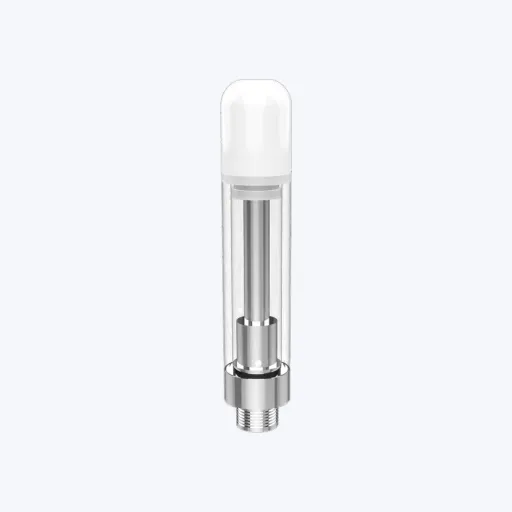
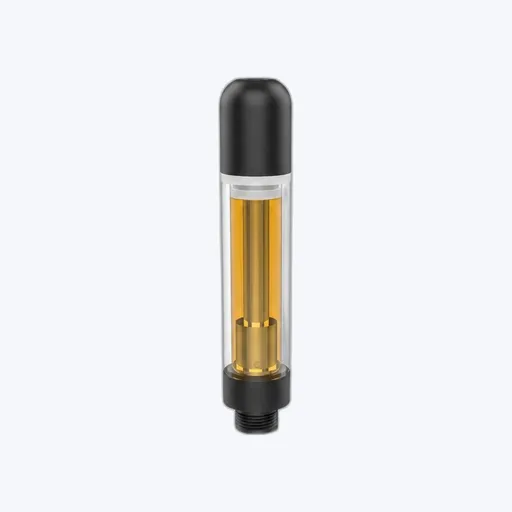
Two cartridges quoted to the same nominal specification are not interchangeable, and the reason is not usually quality. A specification is a summary. Overall length, shoulder position, thread tolerance, intake count and mouthpiece height can all differ inside a description that reads identically, and the things that break first are your tray, your carton and your filler's fixtures. That is a tooling and artwork cost arriving after the price comparison was signed off, and it is invisible on a quotation.
The evidence is the second trap. Like-for-like describes the numbers, not the paperwork. Your test reports and declarations name the part you tested, so a part with the same numbers from a different maker is still a part you hold no evidence for. Treat it as new and decide what has to be repeated.
It gives you no retention periods, no article numbers and no notification duties. Those depend on which instruments apply to your product and on the market you sell into, and they belong in the primary text or with an adviser rather than in a supplier's guide. The instruments are linked above and again below.
What we can tell you is the hardware side. Stock 510 cartridges and the rest of the range ship with specifications, and CE, RoHS, REACH, Battery Regulation and WEEE documentation is available on request, naming the SKU rather than a family. The market registrations stay with whoever places the finished product on the market. See compliance.
Trade guidance for B2B buyers, not legal advice. Empty hardware only, no cannabinoids and no e-liquid. B2B trade only, 18+ / 21+ per market. The buyer is responsible for the fill, for finished-product compliance and for product registration in their market.
Browse the range in the shop, full specs, trade pricing after a free account, and CE and compliance docs on request.
Browse the catalogueGive us the hardware, the quantity and the market. We reply with a price, a specification and a lead time. A request for a quote is not an order.
Empty hardware only. No cannabinoids and no e-liquid. We sell to companies only.