HardwareFor this job
By the Empty Vapes trade desk. Published 2026-08-21, last updated 2026-08-21. How we write these.
A screen and a power button are two separate additions to a disposable, and catalogues sell them as one feature. Each has its own cost, its own failure mode and its own line on your specification.
A variable wattage disposable and a display disposable are usually the same product in a catalogue, and they are two different decisions. The display is an output: it tells the user something. The power control is an input: it lets the user change something. You can buy either without the other, and a device can carry a screen that reports state while offering no adjustment at all.
Both are additions to the board, both draw from the same cell that runs the coil, and both add parts, assembly steps and inspection checks. That is not a reason to avoid them. It is the reason a display device costs more than a plain one at the same tank size, and the reason its quality plan is longer.
The rows are the dimensions that change what you buy and what you support. Fill in the blanks from your own supplier's quotation rather than from a category name.
| Plain disposable | Display, no adjustment | Variable power with display | |
|---|---|---|---|
| What the user sets | Nothing | Nothing | One of a small number of preset power levels |
| What the user can see | An indicator light, if any | Battery state, and whatever else the board reports | The same, plus which level is selected |
| Board content added | None | Screen, driver and its connection | Screen, driver, button and mode logic |
| Energy available for vapour | All of the cell | Less. The screen draws from the same cell | Less again, and it varies with the level chosen |
| Assembly and inspection steps | Fewest | Screen alignment and a lit-screen check on every unit | Both, plus cycling the button through every mode |
| Failure modes added | None | Dead or partial screen, misaligned window, ingress at the window | All of those, plus a button that sticks or fires unintentionally |
| Instruction needed on the pack | None. The user inhales | How to read the screen | How to read the screen, and what the levels do |
| What you must get in writing | Coil resistance, cell capacity, cut-off | Screen type, what each reading is derived from | The above, plus the power at each level and its tolerance |
| Effect on returns handling | Vague reports. Nothing to read back | The customer can quote a reading, which speeds triage | The same, and a mode setting that explains some complaints |
| Where it fits | Volume lines and price-led ranges | Mid and upper ranges where run time is a selling point | Ranges where one device must suit more than one fill |
Screens on this hardware fall into two broad groups. A segment display lights fixed shapes: bars, digits, an icon. A graphic screen can draw anything, costs more and is what a supplier means when the datasheet says colour. A segment display is cheaper, is usually easier to read outdoors, and cannot be changed after the tooling exists, which matters if you want your own mark on it.
Treat every reading as a claim to be checked, not as a measurement.
Check what the screen does when the cell is flat, and check it in daylight. Both are conditions your customer will meet on the first day and neither shows up in a photograph.
On a 510 platform, voltage control and wattage control genuinely differ, because the battery meets cartridges whose coil resistance it does not know. That argument is set out in variable voltage against variable wattage. A disposable is the opposite case: the coil is inside the device, its resistance is fixed, and the manufacturer knows it. Once the resistance is known and constant, a voltage step and a wattage step describe the same delivered power. The choice between the two words changes the box, not the draw.
So the useful questions are about the presets themselves. How many are there. What power does each deliver into the coil in that device, and with what tolerance. Does the board hold that power as the cell discharges, or does output sag with the cell. Where is the cut-off. A supplier who can answer those four has built a regulated board. A supplier who answers with mode names has not told you anything.
Mode names carry no standard meaning. Soft, standard and boost are marketing words, and one factory's boost can sit below another factory's standard. If your pack prints the names, print the figures next to them, and keep the figures your supplier confirmed in writing.
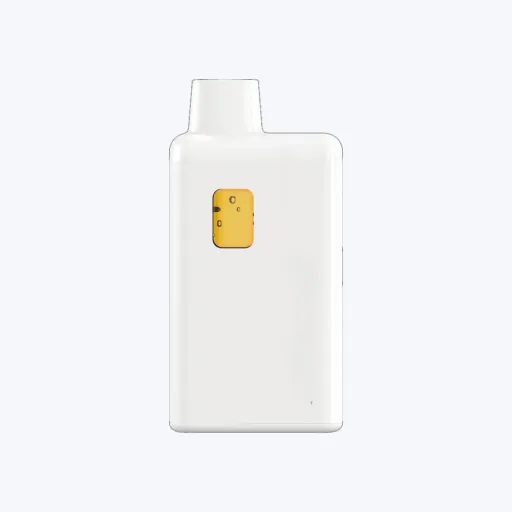
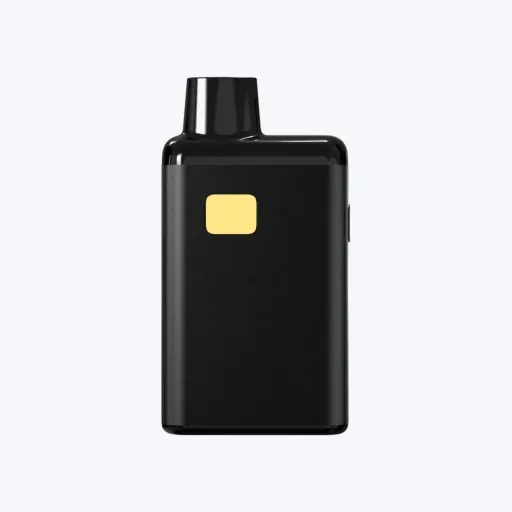
The window is the first place to look. A screen needs an opening in the housing, which is both a cosmetic reject class and a path for moisture and oil. Ask how the window is sealed and add it to the drop and vibration checks.
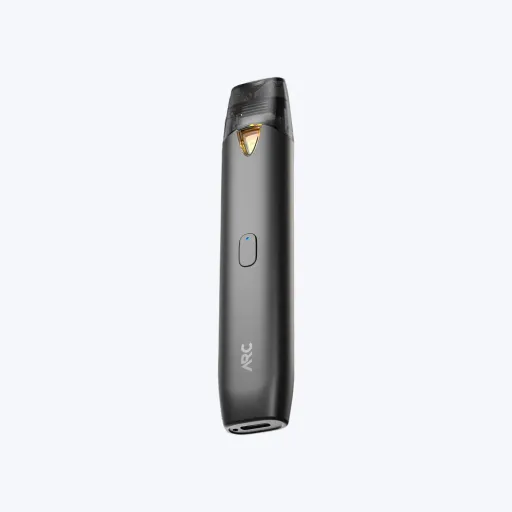
The second is the button. A device with a fire or mode button has a moving part that can be pressed in a pocket or in a carton. Ask whether there is a lock sequence, what it is, and whether the device leaves the factory locked.
The third is the reading itself. A screen converts a vague complaint into a specific one, which is an advantage for triage and a liability if the reading is wrong. A device that reports half a tank when the tank is empty generates more support work than a device with no screen at all.
Empty disposable bodies ship without fill, and the cell inside them still carries producer duties. CE, RoHS, REACH and EU Battery Regulation documentation is available on request and WEEE support is available; the registrations stay with whoever places the finished product on the market. See compliance.
Trade guidance for B2B buyers, not legal advice. Empty hardware only, no cannabinoids and no e-liquid. B2B trade only, 18+ / 21+ per market. The buyer is responsible for the fill, for finished-product compliance and for product registration in their market.
Browse the range in the shop, full specs, trade pricing after a free account, and CE and compliance docs on request.
Browse the catalogueGive us the hardware, the quantity and the market. We reply with a price, a specification and a lead time. A request for a quote is not an order.
Empty hardware only. No cannabinoids and no e-liquid. We sell to companies only.