HardwareFor this job
By the Empty Vapes trade desk. Published 2026-08-21, last updated 2026-08-21. How we write these.
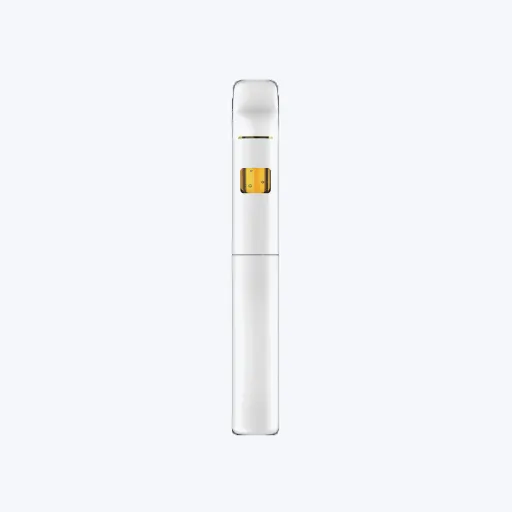
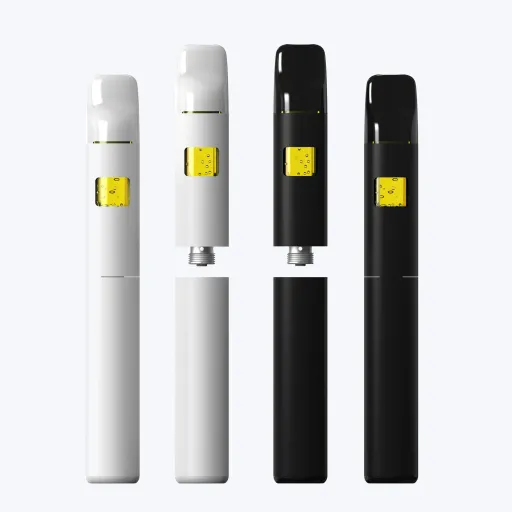
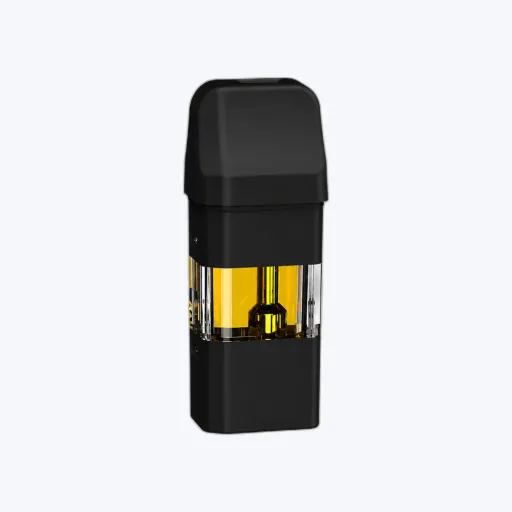
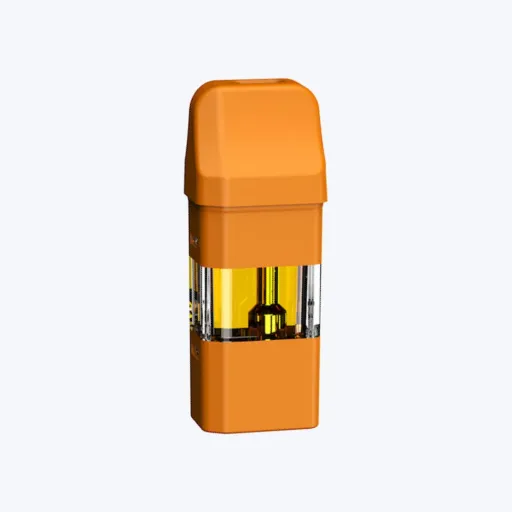
A refillable pod moves the fill from the factory to your line. Everything else a buyer needs to check follows from that single change: how the oil gets in, what holds it there, how many times the part survives it, and what happens between fills.
Refillable covers three arrangements and suppliers use the word for all of them. A pod your line fills once and caps, reaching the consumer sealed. A pod your line fills, sells, takes back and fills again. And a pod the consumer fills from a bottle. For cannabis-oil hardware in Europe the first case dominates, and it is the one this guide is written for. The open versus closed pod guide covers who gets to fill; pod system or 510 covers the format decision.
One structural point gets missed at the buying stage. A pod platform is two products with different lifetimes. The battery outlives many pods; the pod outlives one fill, or a few. Your reorder ratio is not one to one, and it drifts as returning customers stop buying batteries. Plan pods and batteries as separate stock lines from the first order.
The route the oil takes determines whether your line can be automated and where the pod is likely to leak. Five arrangements are common.
| Route | How the oil goes in | Automation fit | Usual leak point | Trade-off |
|---|---|---|---|---|
| Top port with press-in plug | Needle or nozzle through a dedicated port, plug pressed home after | Good. A port at a fixed position is what filling machines expect | The plug seat, if under-pressed or out of tolerance | You carry a second component with its own tolerance and its own sub-supplier |
| Under a removable mouthpiece | Mouthpiece lifts off, oil runs down the reservoir wall, mouthpiece presses back | Good when the mouthpiece is a press fit, poor when it screws | The mouthpiece seal, after repeated removal | The part that keeps oil in is the part the consumer handles daily |
| Base plug, filled inverted | Pod is turned over and filled through the base | Workable, but needs a fixture that holds the pod upside down | The base plug and the coil seat around it | Inversion adds a handling step and can put oil into the airpath |
| Cartridge inside a pod housing | A cartridge is filled on existing equipment, then dropped into the housing | Easiest, because nothing about your filling line changes | The cartridge, not the pod | You pay for a housing wrapped around a part you could sell on its own |
| Full disassembly | Pod splits into components, is filled, then reassembled | Poor. Manual, slow and hard to validate | Any joint that was reopened | Only sensible at sample and pilot volumes, never at scale |
Ask for the fill port diameter and its position relative to the pod datum before you quote a filling line. A machine builder cannot price a fixture from a photograph.
A pod has one more place to leak than a cartridge does. Three interfaces matter.
Leak-resistant on a spec sheet is a claim, not a measurement. Ask for the method: orientation, temperature, duration, oil viscosity, and what counted as a failure. Nextvapor publish leak-resistant and anti-clogging against several products in their range with no test protocol behind those words. Treat the phrase as positioning until a protocol arrives, as why cartridges leak sets out for cartridges.
Nobody publishes a validated refill-cycle count for cannabis pod hardware, and neither of the supplier content packs we hold contains one. That is worth stating plainly rather than filling the gap with a guess. Four things degrade with each cycle.
So the question is not whether the pod is refillable. It is how many fills, of what oil, with what cleaning, and what counts as failure. If the answer has no number in it, cost the platform as single-fill and treat reuse as upside.
If you intend to refill a used pod, cleaning becomes part of the product. Confirm which solvents the housing, seals and mouthpiece tolerate, because a solvent that clears residue can also craze plastic or swell seals. Confirm the drying step, since residual solvent in an airpath reaches the consumer on the first draw. And keep a batch record tying each refill to an oil lot, because a recall you cannot trace is a recall of everything.
The honest conclusion for most European fillers is that documented cleaning costs more than a new pod. Refillable then means refillable at your line before first sale, not refillable in service.
Six things, and they fit in one email. Fill port dimensions and position. Reservoir capacity per pod, and which capacities share a housing. The leak test method with its pass criterion. The refill-cycle figure and the test behind it. Contact plating and expected mating cycles. And the compliance file, because the battery half holds a lithium cell whatever the pod does.
On our side, stock pod hardware starts from around 500 units with no container minimum, branded runs take about 15 days after artwork sign-off, and CE, RoHS, REACH and EU Battery Regulation documentation is available on request with WEEE support. The registrations sit with whoever places the product on the market. See pod systems and compliance.
Trade guidance for B2B buyers, not legal advice. We supply empty hardware only, with no cannabinoids and no e-liquid, B2B trade only, 18+ or 21+ according to your market. You are responsible for the fill, for finished-product compliance and for product registration in the markets you sell into.
Browse the range in the shop, full specs, trade pricing after a free account, and CE and compliance docs on request.
Browse the catalogueGive us the hardware, the quantity and the market. We reply with a price, a specification and a lead time. A request for a quote is not an order.
Empty hardware only. No cannabinoids and no e-liquid. We sell to companies only.