HardwareFor this job
By the Empty Vapes trade desk. Published 2026-08-21, last updated 2026-08-21. How we write these.
A pod that only fits your device locks your customer to your refills. It also locks you to whoever can make that pod. The second half of that sentence is the one that decides whether this works.
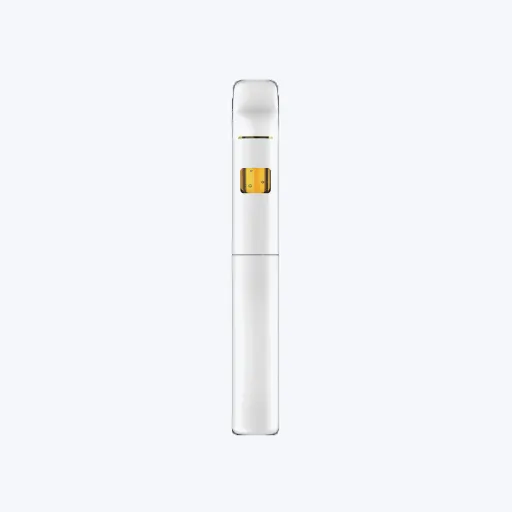
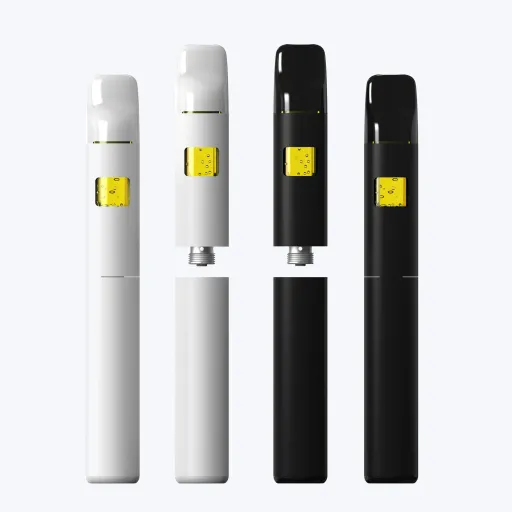
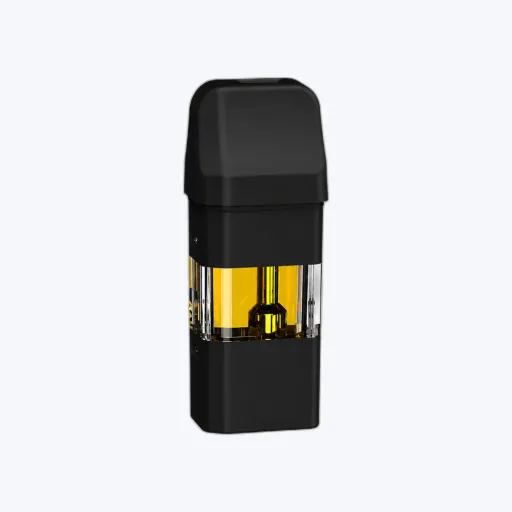
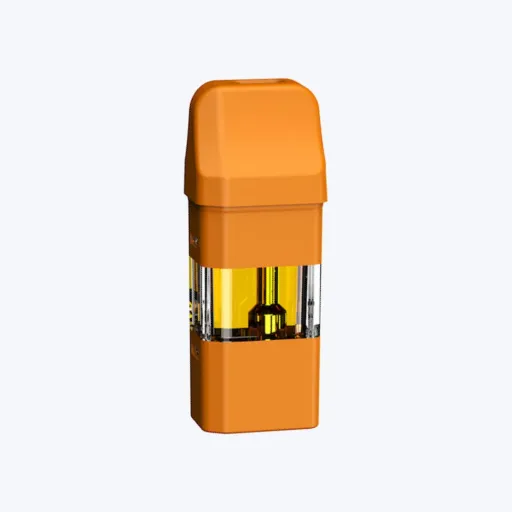
A proprietary vape pod is one whose fit to the battery is specific rather than shared. Another brand's pod does not seat in your device, and your pod does not seat in theirs. The fit can be mechanical, magnetic, electrical or all three at once, and the mechanism matters less than the consequence: the pod and the device are sold as one system whether or not they are sold in one box.
The opposite end of the range is the 510 thread, which is the closest thing this trade has to an open standard. In between sits a middle case that is easy to miss: a format that is not open, but is offered by a factory to many customers, so several brands ship hardware that happens to be interchangeable. That is not lock-in. It looks like it on a datasheet and behaves nothing like it in a market.
This page is about the commercial consequences of the choice. Whether the pod is designed to be refilled at all is a separate decision and it is covered in open against closed pod systems.
Ask one question before any other: whose property is this format. There are two answers and they lead to opposite outcomes.
Yours. You paid for the tooling, you hold or control it, and the supply agreement says what happens to it if the relationship ends. You carry the up-front cost and the forecasting risk, and in exchange you hold the platform. What that tooling costs and how long it takes is set out in custom vape mould cost.
The factory's. The format is theirs, offered to you and possibly to others. You pay no tooling. You also have no platform: you are selling into someone else's, on their terms, for as long as they choose to make it. Every device you sell is a promise to supply pods that only they can produce.
Both are legitimate. Only one of them is a moat, and it is not the cheap one. A range built on a factory-owned format has the lock-in pointed at you rather than at your competitors.
| Open 510 | Shared pod format | Proprietary pod | |
|---|---|---|---|
| Who can supply the customer's next refill | Anyone in the market | Several brands on the same format | Only you |
| Who can supply the hardware to you | Many factories | The factories running that format | Whoever holds the tooling |
| Up-front cost to enter | Stock only | Stock only | Tooling, samples and its lead time before a single unit ships |
| Minimum commitment | One minimum, on one part | One minimum per part | Two halves, each with its own minimum, held in ratio |
| Changing factory mid-life | Routine | Possible, within the format | Not possible without new tooling and a new qualification run |
| Your position on price after launch | Strongest. You can leave | Workable. You have alternatives | Weakest, unless you own the tooling |
| If the platform is discontinued | Little effect. Replace the part | Some effect. Move within the format | The installed base is stranded and the complaints are yours |
| Control over what enters your hardware | None | Partial | Full, which is the point of it |
| Repeat revenue on refills | Open to the whole market | Shared with the format | Captured |
| Cost of a forecasting error | Low. Stock stays sellable | Low to medium | High. Batteries without pods are dead stock, and the reverse |
| What a retailer is committing to | A product | A product | Shelf space for a platform, plus its refills |
| Warranty and support exposure | Shared with the standard | Partly shared | Entirely yours, on both halves |
None of those arrive automatically. They arrive if the platform sells, and they are worth nothing on a range that does not reach volume.
The first cost is the one on the invoice: tooling, samples, a qualification run and the weeks they take. That is the cost people plan for.
The second cost is stock in two halves. You are forecasting devices and pods separately and buying both at their own minimums, and an error in either direction leaves you holding hardware that cannot be sold on its own. Minimums are covered in MOQ explained. Working capital, not tooling, is what usually catches a first proprietary range.
The third cost is the loss of a second source. On an open format a late shipment or a price rise is answered by moving factory. On a proprietary one it is answered by accepting it. That is a permanent change in your negotiating position and it arrives quietly, months after launch, when the leverage has already moved.
The fourth cost is the obligation you have created. Every device in a customer's hand is a commitment to keep supplying pods for as long as that device works. Discontinuing a platform is not like discontinuing a flavour: it strands people who already paid you, and the support and reputational cost lands in full.
Choose an open or shared format when you are entering a market, testing a fill, or cannot yet fund tooling and two-sided stock. It costs less to enter and, more importantly, it costs almost nothing to leave. Most ranges should start here.
Choose a proprietary pod when you have volume that amortises the tooling, working capital for both halves, a real reason to control what goes into your hardware, and a supply agreement that survives the factory losing interest. If any one of those four is missing, the lock-in is pointed at you.
Either way, the device half carries producer duties that the pod does not. Our pod systems ship empty. CE, RoHS, REACH and EU Battery Regulation documentation is available on request and WEEE support is available; the registrations stay with whoever places the finished product on the market. See compliance.
Trade guidance for B2B buyers, not legal advice. Empty hardware only, no cannabinoids and no e-liquid. B2B trade only, 18+ / 21+ per market. The buyer is responsible for the fill, for finished-product compliance and for product registration in their market.
Browse the range in the shop, full specs, trade pricing after a free account, and CE and compliance docs on request.
Browse the catalogueGive us the hardware, the quantity and the market. We reply with a price, a specification and a lead time. A request for a quote is not an order.
Empty hardware only. No cannabinoids and no e-liquid. We sell to companies only.