HardwareFor this job
By the Empty Vapes trade desk. Published 2026-08-21, last updated 2026-08-21. How we write these.
The cannabinoid a brand builds on has changed several times in the last few years. The cartridge has not. Building the brand on the hardware rather than the molecule is what makes that survivable.
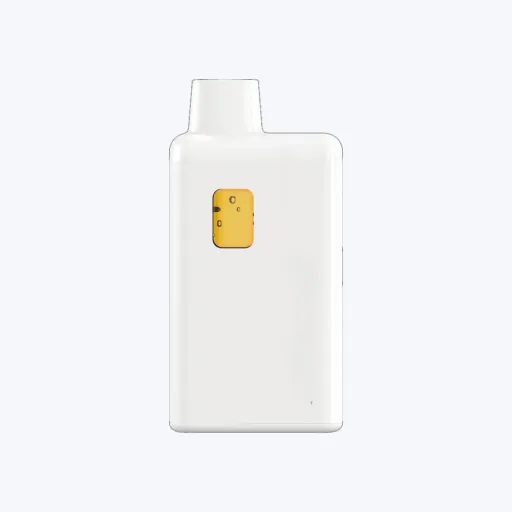
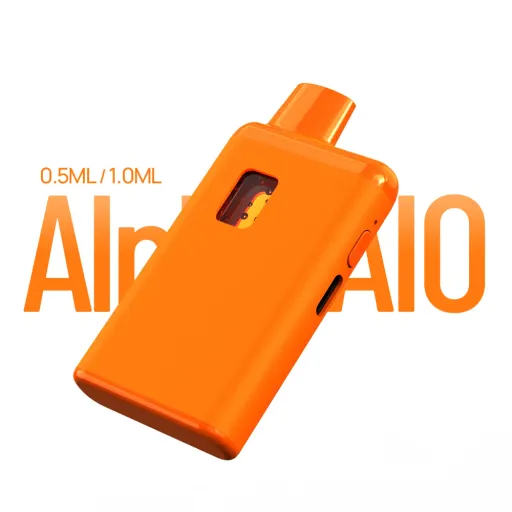
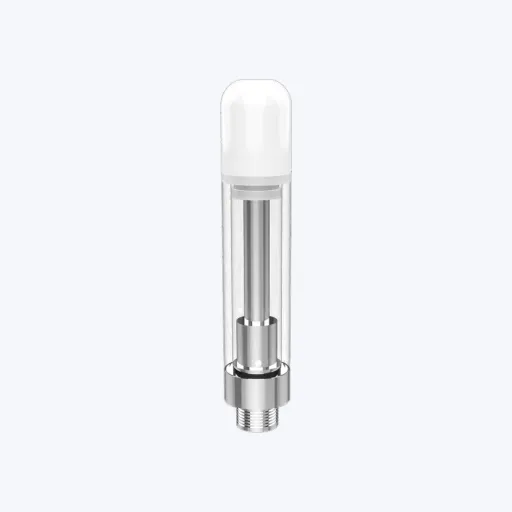
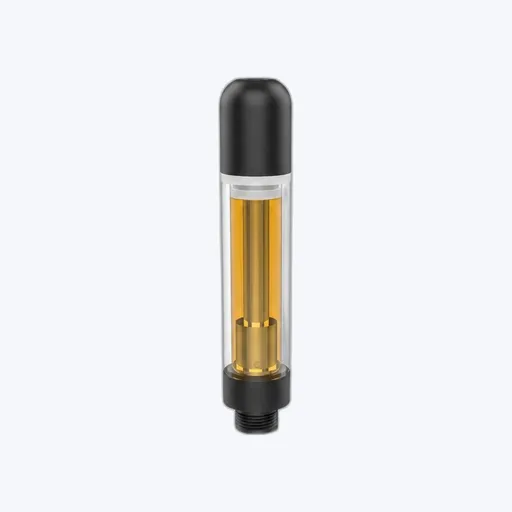
A 510 cartridge is a tank, a coil, a wick or porous core, a set of seals and a mouthpiece. It responds to how thick the liquid is, how hot it gets, how aggressive the solvents and terpenes are, and how much air moves through it. It has no way of responding to the name of the cannabinoid, because that name is not a physical property. Two formulations at the same viscosity and the same terpene load behave identically in the same cartridge whether one is labelled CBD and the other something else.
That is the engineering fact underneath the commercial argument. Hardware marketed as being for a particular molecule is making a claim about a market segment, not about a component. When you are handed such a spec, ask which physical figure changed. Usually the honest answer is none.
Empty hardware sold with no cannabinoid and no e-liquid in it is regulated as an electronic device with a built-in cell: CE marking, RoHS 2011/65/EU, REACH 1907/2006, WEEE 2012/19/EU, the EU Battery Regulation 2023/1542 and GPSR 2023/988, plus UN38.3 in transport. It is not a product under the Tobacco Products Directive (2014/40/EU), which is built around nicotine, as set out in TPD and empty vape hardware. None of that framework mentions a cannabinoid, and none of it changes when you change what you put in the device.
What you fill is a different matter entirely, and it is governed by national rules, not by the hardware. Cannabinoid classification is a member-state competence and the member states do not agree with each other. Some cannabinoids sit under national narcotics law in one country and outside it next door. Novel food, medicines and consumer-protection rules can all apply depending on the substance and the presentation. The position also moves: newer cannabinoids have gone from unlisted to controlled inside a single product cycle in several markets, and they did not do so simultaneously or identically. The EU Drugs Agency, formerly the EMCDDA, monitors new psychoactive substances and publishes country-level information, which is a reasonable starting point. It is not a substitute for confirming the current position for your specific molecule and market with a local specialist.
This page is general guidance for trade buyers and is not legal advice. Nothing here says any particular substance is lawful to sell anywhere. Confirm your own position before you formulate, label or place a product on the market.
Switching molecule sometimes changes the formulation's physics and sometimes does not. Get the figures rather than the label. Three numbers from your extractor decide most of the hardware spec.
| Item | Molecule-driven or neutral | What to do about it |
|---|---|---|
| CE Declaration of Conformity | Neutral | Describes the device. Unaffected by the fill |
| RoHS and REACH evidence | Neutral | Request per SKU. Vapour-path materials matter for any fill |
| WEEE and battery EPR registration | Neutral | National, per market, and unrelated to the contents |
| Intake aperture diameter | Driven, by viscosity | Specify from a viscosity figure at a stated temperature |
| Seal, gasket and mouthpiece material | Driven, by terpene and solvent load | Run a compatibility soak test with your actual formulation |
| Coil resistance and voltage window | Driven, by viscosity and terpene load | Validate on your own fill, not on the datasheet alone |
| Tank capacity | Driven, by dose and by market rules | Confirm any national limits on the finished product first |
| Legality of the contents | Driven, entirely by national law | Confirm per market and per molecule with a local specialist |
| Child-resistant packaging and labelling | Driven, by the finished product and market | Decide after the fill is settled, before artwork goes to print |
| Brand name and artwork | Your choice, and worth keeping neutral | Naming a brand after a molecule ties its life to that molecule's |
The resilient structure is the same one that makes operational sense anyway. Specify hardware from physical figures, so a change of fill is a re-test rather than a re-sourcing exercise. Keep the compliance file at hardware level, where it does not need rewriting when the formulation moves. Qualify a second intake option alongside your primary one so you are not starting from zero if viscosity changes. Keep the brand name and the artwork free of molecule references, since a printed run of boxes naming a substance becomes scrap the day that substance is reclassified. And buy in small quantities while the fill is unsettled: minimums from around 500 units and no container requirement exist so that a first order can be wrong cheaply.
One more point that is easy to miss. Because the hardware documentation is molecule-neutral, it is also transferable. The CE declaration, RoHS and REACH evidence and battery testing behind an empty 510 cartridge support that cartridge under any fill you lawfully put in it, and your WEEE and battery registrations cover the device rather than the contents. What has to be redone on a change of fill is the finished-product work: national classification, labelling, testing and any market notification. Keeping those two files separate from the start is what makes the second one cheap to redo. See the EU compliance pillar for the hardware-side documentation, and vape compliance in the Netherlands for how a single national market handles both halves.
Trade guidance for B2B buyers, not legal advice. We sell empty hardware only; you are responsible for the fill and for finished-product compliance in your market.
Browse the range in the shop, full specs, trade pricing after a free account, and CE and compliance docs on request.
Browse the catalogueGive us the hardware, the quantity and the market. We reply with a price, a specification and a lead time. A request for a quote is not an order.
Empty hardware only. No cannabinoids and no e-liquid. We sell to companies only.