HardwareFor this job
By the Empty Vapes trade desk. Published 2026-08-21, last updated 2026-08-21. How we write these.
Distillate is the oil hardware suppliers worry about least. That is exactly why the failures it does produce arrive in whole batches rather than in ones and twos.
Distillate is a refined, largely homogeneous oil. It carries less particulate than a solventless extract, does not separate the way a high-terpene product can, and wicks into a ceramic core predictably. Manufacturers price that difference. CCELL positions its SE heating tier as the standard, lowest-cost option for distillate-dominant brands across a range of viscosities, and reserves EVOMAX for rosin, liquid diamonds and live resin as well. Nextvapor treats oil viscosity compatibility as a customisation input rather than a fixed property.
So the hardware choice is wider and generally lower cost than for rosin. The trap is what buyers conclude from that. A forgiving oil hides a marginal hardware decision until something changes, and when it does the whole batch behaves the same way, because it shares the same intake, seal and oil. Three variables cause most of it: intake sizing, temperature after the goods leave you, and the viscosity range inside the word distillate.
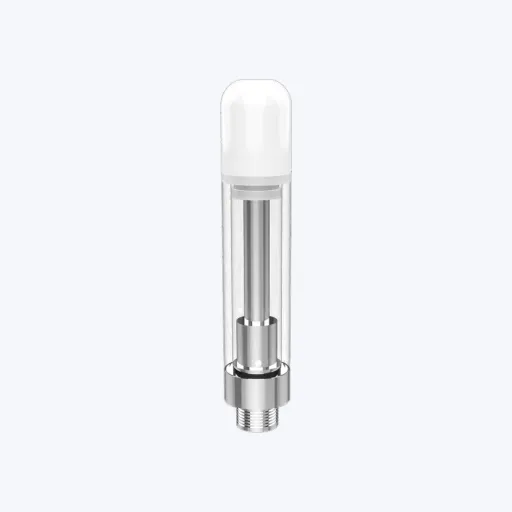
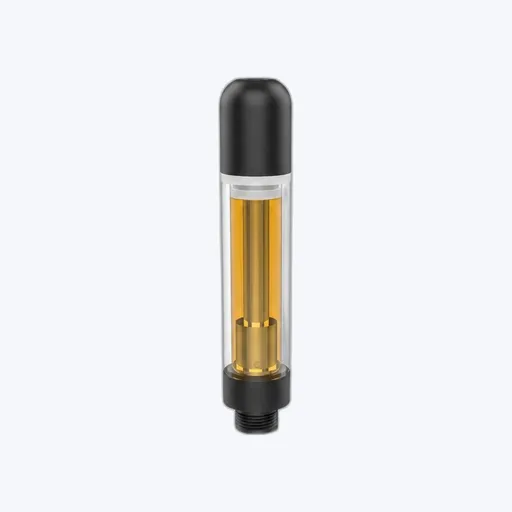
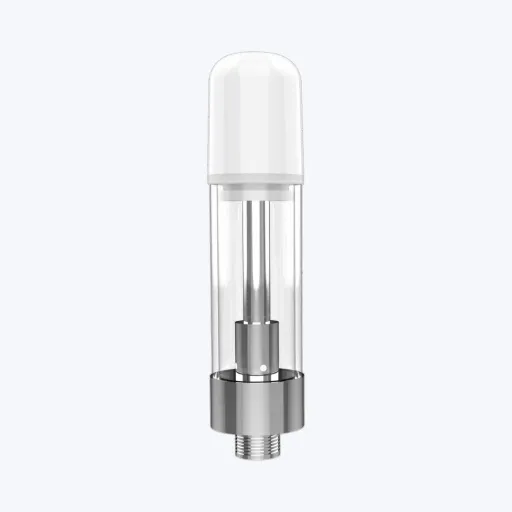
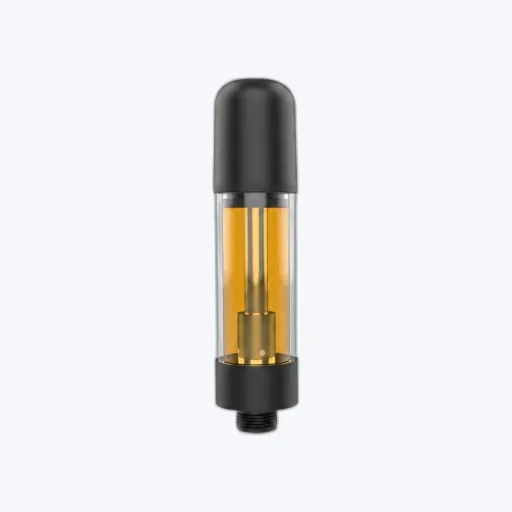
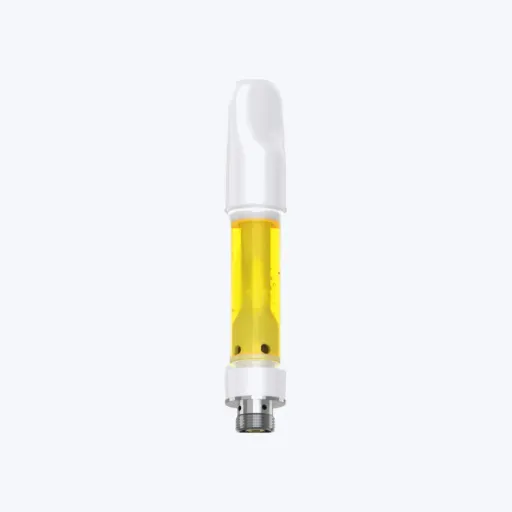
The intake holes are small openings at the base of the internal barrel that meter how much oil reaches the heating core. They are the most consequential spec for oil compatibility, and the one most often left to the supplier's default.
CCELL publishes its inlet holes in five standard diameters, 1.2mm, 1.4mm, 1.6mm, 1.8mm and 2.0mm, states that the size is customisable to the customer's oil, and names both failure modes: an oversized hole allows suction leakage, and an undersized hole starves the core and produces a burnt taste. That trade-off applies well beyond that one manufacturer.
In practice there is no correct intake size for distillate as a category, only a correct one for your blend at the temperature it will be used. A heavy terpene or cutting agent load behaves like a thinner oil and wants a smaller hole. A tight, low-terpene distillate behaves thicker and wants a larger one. Our guides on intake hole size and why cartridges leak cover the mechanism.
Viscosity is temperature dependent, and almost all sampling happens in a heated room. That mismatch produces more winter complaints than any component defect. Oil that sat correctly in a given intake on an office bench becomes more mobile in an unheated van, and a correct intake becomes oversized.
The reverse case exists too. Oil held cold can be slow to feed a core on the first draws even after it warms, which reads to the user as a weak or burnt first hit rather than a storage problem. See priming a 510 cartridge.
We give no temperature thresholds, because they depend on your formulation and a number quoted for someone else's oil is worse than none. Test at the temperatures your own supply chain produces: cold, ambient and warm holds, upright and inverted. That takes days, and it is the difference between finding out on a sample tray and on a pallet.
The third failure is slower and harder to see. Distillate is not a single specification. Two deliveries described identically can differ in terpene percentage, cutting agent, residual moisture and holding temperature before filling. Each shifts viscosity inside the window your intake was chosen for.
Two things make it worse. Filling warm reduces viscosity temporarily, so a line running hotter than usual pushes oil into the core faster than the design assumed and the cartridge can weep before it ships. And a change of oil supplier, even for a nominally identical product, is a formulation change.
The mitigation is procedural. Fix and record your fill temperature and the terpene or cutting agent load on every batch. Requalify on any change to the oil, the supplier or the fill equipment, using a sample run rather than the production order. Keep retained samples, so a complaint six weeks later has something to compare against. Our 510 cartridge range lists the intake and material options, CE, RoHS, REACH and EU Battery Regulation documentation is on request, and WEEE support is available. Registration sits with the party placing the finished product on the market. See compliance.
Change one variable at a time. A run that alters the intake, the body material and the fill temperature together produces a result you cannot attribute to anything.
Trade guidance for B2B buyers, not legal advice. Empty Vapes supplies empty hardware only, with no cannabinoids and no e-liquid, B2B trade only, 18+ or 21+ according to your market. You are responsible for the fill and for product registration in the market it sells into.
Browse the range in the shop, full specs, trade pricing after a free account, and CE and compliance docs on request.
Browse the catalogueGive us the hardware, the quantity and the market. We reply with a price, a specification and a lead time. A request for a quote is not an order.
Empty hardware only. No cannabinoids and no e-liquid. We sell to companies only.