HardwareFor this job
By C. Chai, Empty Vapes Published 2026-08-20, last updated 2026-08-21. How we write these.
Child resistance is a mechanical property of the pack, tested and documented, not a claim you print on a box. This guide covers the common formats, the evidence to demand, and what CR does to your artwork.
A child-resistant pack is one that a young child finds difficult to open and an adult can still open. That difficulty is demonstrated by testing with panels of people, not by a design intention. Two consequences follow.
First, child resistance belongs to the pack, not to the device inside it. A CR box makes the box child-resistant. It says nothing about the cartridge, the battery or what you fill. So CR is a specification you set on your packaging order, and it is yours to own, not the hardware factory's.
Second, a pack is only child-resistant in the exact configuration that was tested. Same board weight, same closure mechanism, same internal dimensions, same liner, same adhesive. Move from a 60 mm tube to a 78 mm tube, or change the cap supplier to save a few cents, and the existing report no longer describes what you are shipping. Buyers get caught by this at the second production run, not the first.
Be careful here, because suppliers state this with more confidence than the facts support. There is no single EU-wide child-resistance rule covering all vape packaging. Requirements are national, and they depend heavily on what the pack contains. An empty device is a different regulatory object from a device filled with a cannabinoid, and the markets that require CR usually attach the duty to the filled product and to whoever filled it.
Practically, that means three things. Confirm the position for every destination market in writing before you lock a format. Ask a local specialist rather than a packaging salesperson. And where the market position is unclear but the product will be filled with a cannabinoid, treat CR as the default rather than the exception, because the cost of retrofitting it after launch is a second tooling run and a second artwork approval. The EU frameworks that do apply across the bloc regardless of CR, including WEEE, the Battery Regulation and GPSR, are set out in the EU compliance pillar.
Four formats cover almost every vape launch. They differ in unit cost, in how much they protect the device in transit, and in how much printable surface they give you.
| Format | Typical fit | Print surface | Main trade-off |
|---|---|---|---|
| Pop-top tube | Single cartridge or a slim disposable | Wrap label or sleeve, curved | Cheap and fast, but the tube is the whole pack, so shelf presence is limited and label registration on a curve is fussy |
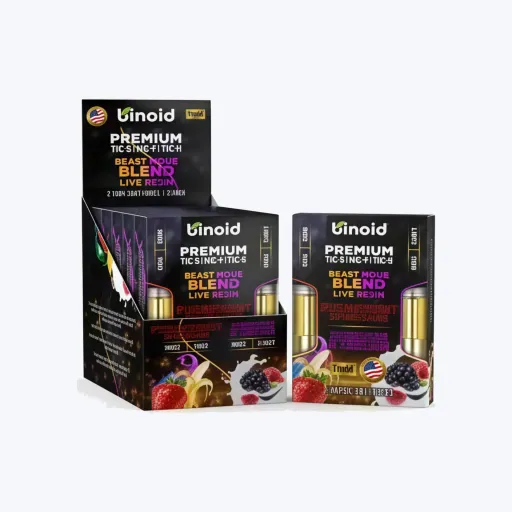
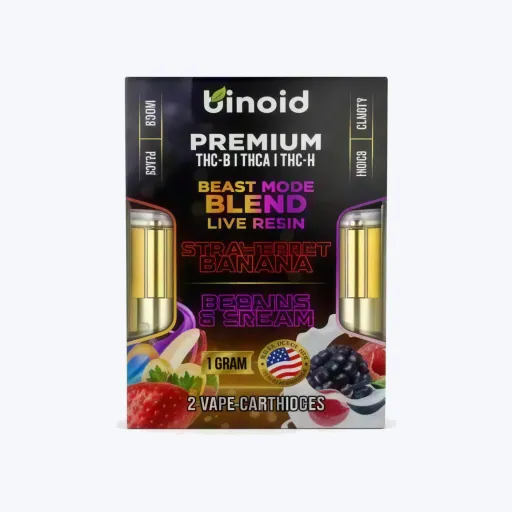
| CR box | Device plus charger, inserts, multi-packs | Full colour on all panels | Largest brand surface and the closest fit for a retail shelf, but locking tabs eat panel area and the structure needs a dieline before artwork |
| CR mylar pouch | Accessories, refills, low-cost or e-commerce lines | Front and back, flexible | Lowest cost per unit and light to ship, but it offers little physical protection and reads as a budget pack |
| CR tin | Multi-cartridge sets, premium single units | Lid and base, printed or embossed | Durable and reusable, which customers like, but heavier freight and a higher unit cost than board |
Match the format to the device before you shop on price. A 510 cartridge and a disposable have different lengths and different fragilities, and a pack sized for one will rattle around the other. Our packaging range covers boxes, tubes and blisters produced alongside the hardware, so the internal dimensions match the device you actually ordered.
Ask for documents that identify your pack, not the category. A supplier who can only send a category-level PDF has not tested the thing you are buying. The list to request:
Keep those documents in the same technical file as your CE and battery paperwork. If a market-surveillance authority ever asks, they will ask for one file, not six inboxes.
Child resistance takes space away from your design, and it takes it from predictable places. On a CR box, the locking tabs and the glue lines cannot carry critical print. On a push-and-turn tube, the cap orientation is not guaranteed, so nothing on the cap should need to line up with the body. On a mylar pouch, the seal zone at the top and the tear notch are unprintable in practice.
The working order that avoids reprints is: structure first, marks second, brand third. Agree the dieline with the packaging supplier. Place the fixed regulatory elements on it, including the crossed-out bin symbol, the producer and importer identification and the battery information. Then design around what is left. Doing it the other way round produces a beautiful layout that has to be redrawn once the dieline arrives, which is the single most common cause of a delayed launch. If you are working through the wider sequence, the launch checklist for a vape brand in Europe puts artwork in its proper place in the timeline.
One cost note. CR tooling is a fixed cost, so it lands hardest on small runs. At low volumes a stock CR tube with a printed wrap is usually the cheaper route into the format, and a custom CR box makes more sense once your reorder volume is proven.
Trade guidance for B2B buyers, not legal advice. We sell empty hardware only; you are responsible for the fill and for finished-product compliance in your market.
Browse the range in the shop. Full specs, trade pricing after a free account, and CE and compliance docs on request.
Browse the catalogueGive us the hardware, the quantity and the market. We reply with a price, a specification and a lead time. A request for a quote is not an order.
Empty hardware only. No cannabinoids and no e-liquid. We sell to companies only.