HardwareFor this job
By the Empty Vapes trade desk. Published 2026-08-21, last updated 2026-08-21. How we write these.
The pctg vs glass cartridge decision is usually framed as quality against cost. That is not quite what it is. The two materials fail in different ways, and which failure you would rather absorb depends on how your product travels and who handles it.
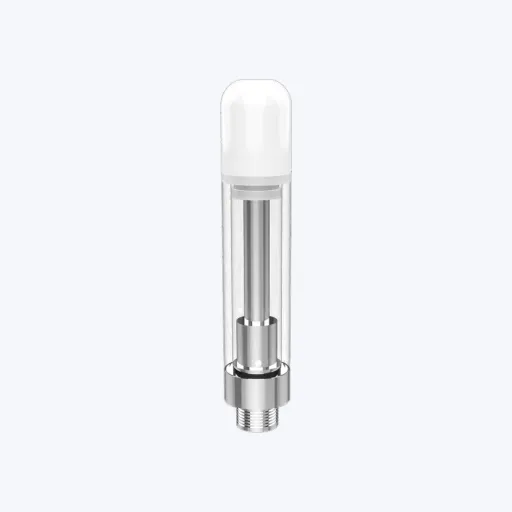
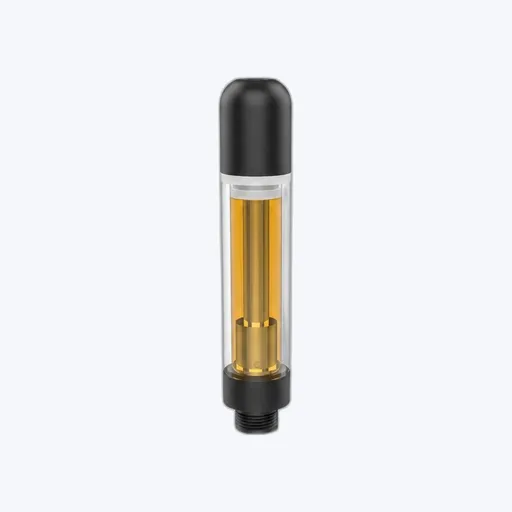
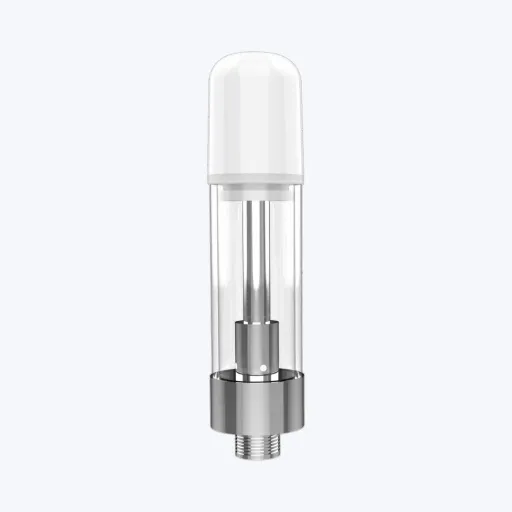
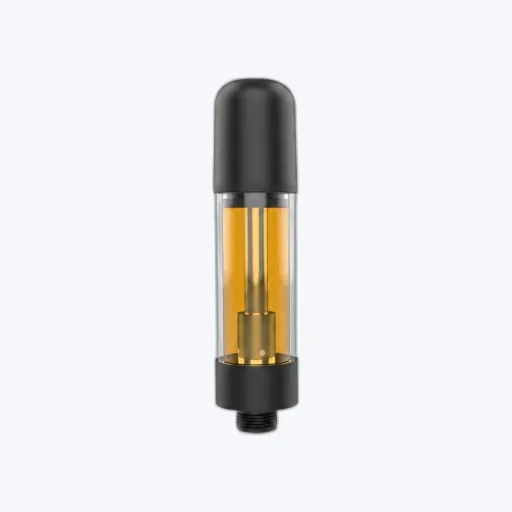
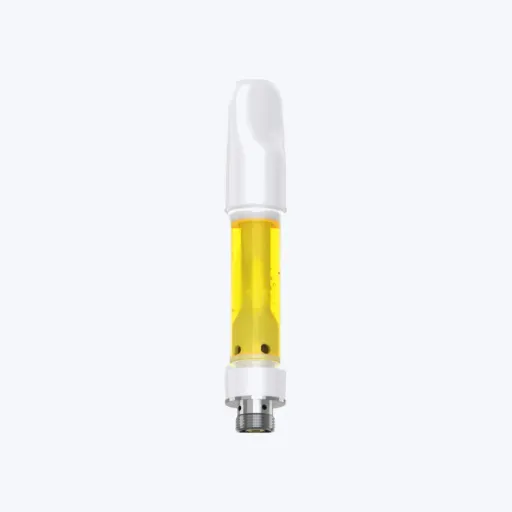
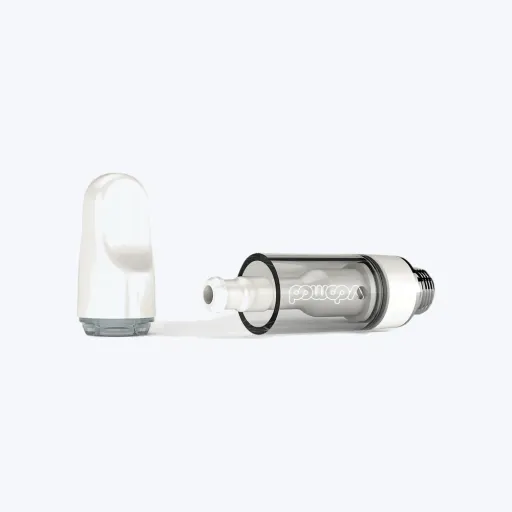
Cartridge glass is borosilicate, the same family used for laboratory glassware. It has a low thermal expansion coefficient, so it tolerates the temperature swing between a cold warehouse and a warm coil without stressing. It is chemically inert against effectively everything an extract contains. CCELL, for example, publishes a borosilicate glass oil tank on its Klean cartridge and a glass oil tank on Blanc.
PCTG is a glycol-modified copolyester. It is injection moulded rather than fabricated from tube, it is amorphous so it is clear rather than translucent, and food-contact grades are common. In hardware terms the important consequence is that it is a thermoplastic: it is tough rather than brittle, and it softens at a temperature far below anything glass cares about.
Both are used for the tank body only. The core, the seals and the mouthpiece are separate decisions, and a glass tank with poor seals leaks exactly as readily as a polymer one.
| Spec | Borosilicate glass | PCTG |
|---|---|---|
| Optical clarity | High, and it stays high. Does not yellow or haze with age | High when new. Can haze over time from scratching and from contact with aggressive terpenes |
| Weight per unit | Heavier. The tank is the densest part of the cartridge | Lighter. Noticeable in hand and in air freight weight for a full pallet |
| Breakage in transit | Brittle. A drop or a crushed carton produces shards and a total write-off | Impact resistant. Survives drops that break glass, usually with a scuff rather than a failure |
| Chemical resistance | Inert to extracts, terpenes and cleaning solvents | Good for most formulations, but terpene-rich extracts can attack polymers. Needs a grade-specific compatibility statement |
| Heat tolerance | Unaffected at coil temperatures and in a hot vehicle | Softens well below glass. Sustained heat can distort the tank slightly and change seal compression |
| Scratch resistance | Hard surface. Resists pocket wear | Softer surface. Marks from keys and from repeated handling accumulate |
| Unit cost | Higher at most volumes. Glass tube is fabricated and finished rather than moulded | Lower at volume once tooling exists, though a bespoke shape carries its own tool cost |
| Buyer perception | Frequently read as the premium cue, especially on a shelf next to a competitor | Read as functional. Perception varies sharply by market and by price tier |
| End of life | Glass, metal and ceramic separate cleanly for recycling | Polymer, metal and ceramic in one assembly. Harder to separate |
Glass fails suddenly and completely. A pallet handled badly at a cross-dock produces a proportion of cartridges that are unsellable and, if they were filled, a mess that contaminates the rest of the carton. There is no partial failure to inspect for. It is either intact or it is not, which at least makes incoming inspection simple.
PCTG fails gradually and ambiguously. A tank that has spent a summer in a delivery van may have deformed by a fraction of a millimetre, enough to loosen a seal without being visible. A tank exposed to a high-terpene extract for months may craze, which shows as fine surface cracking, or go slightly cloudy. Neither is a write-off on day one, and both generate customer complaints in month three that are difficult to trace back to a batch.
That difference matters more than the material comparison itself. Glass moves your risk to logistics, where it is visible, insurable and countable at goods-in. PCTG moves it to the field, where it is none of those things. Our guide to why cartridges leak covers the seal side of the same problem.
This is the one area where the two materials are not close. Glass is inert. PCTG is a polymer, and terpenes are solvents. Limonene in particular is used industrially as a degreaser, and a high-terpene extract sitting against a polymer wall for months is a longer and more aggressive exposure than most food-contact testing covers.
The practical consequence is that a food-contact declaration for the grade is necessary but not sufficient. It confirms the material is approved for food use; it does not confirm behaviour against your specific formulation at your specific terpene load over your intended shelf life. If you are filling distillate at a modest terpene percentage, this is a low concern. If you are filling live rosin or a heavily reintroduced terpene blend, ask for a compatibility statement covering that case, and run your own hold test on a small quantity before committing to a run.
Glass sidesteps the question entirely, which is why it remains the default for high-terpene products even where the cost case favours polymer. The material choice is separate from the core material choice, which our ceramic and glass guide covers.
Both materials appear in the 510 cartridge range. Either way, CE, RoHS, REACH and EU Battery Regulation documentation is available on request and WEEE support is available, but placing the finished product on the market is your registration duty rather than ours. See compliance for what sits with whom.
Trade guidance for B2B buyers, not legal advice. We sell empty hardware only; you are responsible for the fill and for finished-product compliance in your market.
Browse the range in the shop, full specs, trade pricing after a free account, and CE and compliance docs on request.
Browse the catalogueGive us the hardware, the quantity and the market. We reply with a price, a specification and a lead time. A request for a quote is not an order.
Empty hardware only. No cannabinoids and no e-liquid. We sell to companies only.